Can You Put Aluminum Foil in an Air Fryer?
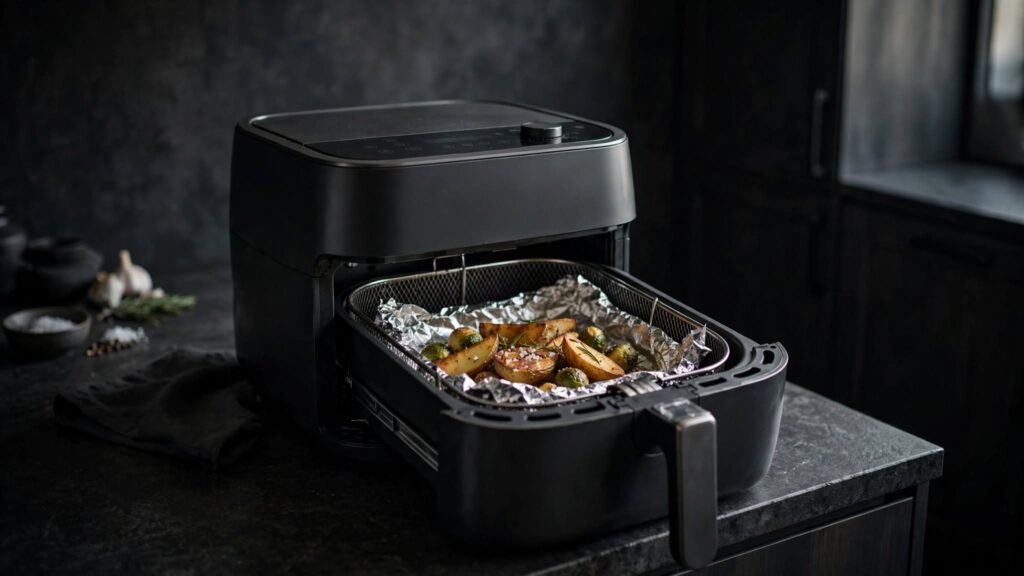
Can you put aluminum foil in an air fryer? In many air fryers, aluminum foil can be used in certain situations, but it is not automatically appropriate for every model or every recipe.
The main issue is not the foil itself. It is how the foil affects airflow and whether your air fryer manufacturer allows it.
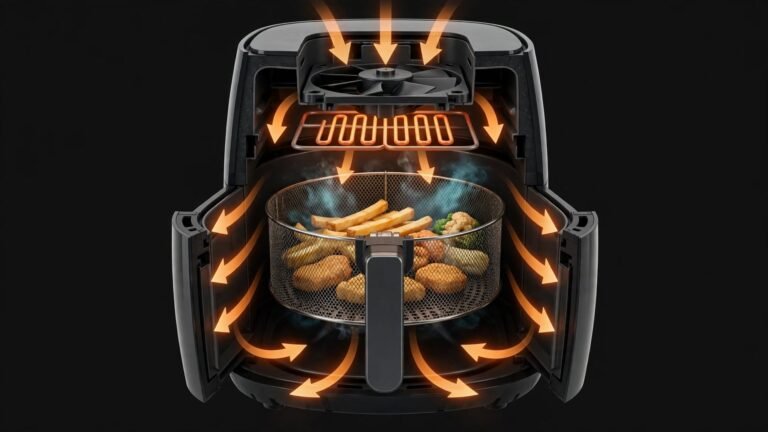
An air fryer cooks by moving hot air around the food. If a sheet of foil covers important openings, sits loosely in the basket, or moves toward the heating element, it can interfere with cooking and create a safety problem.
So before using foil, check your air fryer’s instructions. If foil is permitted, use only enough to serve a specific purpose and keep the appliance’s airflow paths clear.
If you’re completely new to air fryers, our guide to what is air fryer? explains the appliance itself without getting into foil-specific questions.
Can You Put Aluminum Foil in an Air Fryer?
Often, yes, but it depends on the air fryer and how the foil is used.
Some manufacturers permit aluminum foil in specific situations, while others advise against it. For example, Philips currently states that baking paper and tin foil are not recommended for certain Airfryer models because they can reduce airflow and, if used without food holding them down, can be pulled toward the heating element.
That means there is no universal rule that applies to every air fryer.
If your manufacturer’s instructions allow foil, the basic principles are:
- Keep the foil secured.
- Do not allow it to contact the heating element.
- Do not cover airflow openings unnecessarily.
- Use only the amount you actually need.
- Avoid using foil simply because it is convenient when the recipe benefits from maximum airflow.
- Follow your specific model’s instructions if they differ from general guidance.
The goal is to use foil without turning the air fryer basket into a sealed pan.
When Can You Use Aluminum Foil in an Air Fryer?
When the manufacturer permits it, foil can be useful for certain foods and cooking situations.
1. Catching Drips and Messy Juices
Some foods release fat, juices, cheese, or sauce as they cook.
A properly positioned piece of foil can make cleanup easier by catching some of that mess.
This can be particularly useful for foods such as:
- marinated chicken
- certain fish preparations
- burgers
- sausages
- foods with sticky sauces
However, foil should not be used in a way that blocks the air fryer from circulating air properly.
2. Supporting Delicate Foods
Some foods are difficult to lift from a perforated basket without breaking.
A small foil support can make handling easier for delicate foods such as a fragile fish fillet or a small baked preparation.
The foil should support the food without unnecessarily covering the basket’s airflow openings.
3. Separating Sticky Foods From the Basket
Foil may also help with foods containing sticky marinades, melted cheese, or other ingredients that tend to adhere to the cooking surface.
But there is a trade-off: the more surface you cover, the more you can interfere with the airflow that makes air frying work well.
4. Certain Baking Applications
Foil can sometimes be useful when an air-fryer recipe calls for covering part of a dish or protecting a surface from excessive browning.
For actual baking, however, an appropriately sized oven-safe baking dish may be a better choice than covering the basket with foil.
How to Use Aluminum Foil Safely in an Air Fryer
If your model permits aluminum foil, use it deliberately rather than lining the entire basket automatically.
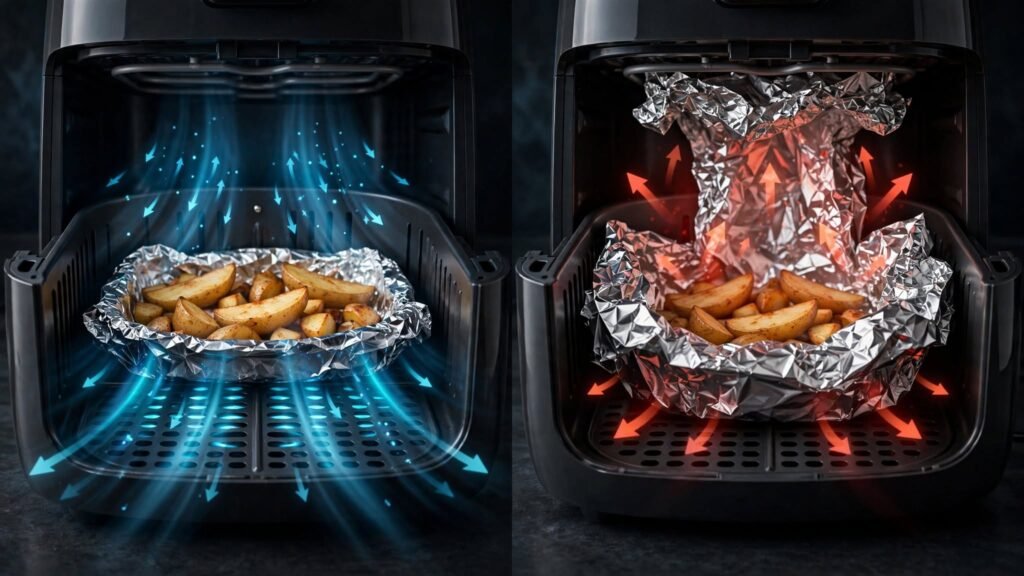
1. Check Your Air Fryer’s Instructions First
This is the most important step.
Air fryer designs differ. Basket shapes, heating elements, airflow paths, and manufacturer’s instructions are not identical.
If your manual says not to use aluminum foil, follow the manual.
2. Use Only Enough Foil for the Job
You generally do not need a large sheet covering the entire basket.
Cut a piece that fits the food or the specific area that needs protection.
Less foil also means less chance of interfering with airflow.
3. Keep the Foil Secure
Loose foil is a bad setup.
Air fryers use moving air, and a lightweight sheet can shift during cooking.
Food placed on top can help hold foil in position when the manufacturer’s instructions permit its use.
Never put loose foil into an empty air fryer and assume it will stay where you placed it.
4. Keep the Heating Element Clear
The foil should never be positioned where it can contact the heating element.
This is especially important because the heating element is typically above the cooking basket.
5. Don’t Seal Off the Basket
An air fryer is not designed to work like a completely enclosed foil packet for every recipe.
Avoid covering every opening simply to make cleanup easier.
The appliance needs appropriate airflow to cook food effectively.
6. Check the Food During Cooking
Foil can change how heat and air reach the food.
If a recipe normally relies on airflow underneath the food, using foil may change browning or crisping.
Check the food rather than assuming the original cooking time will always produce exactly the same result.
For general air-fryer setup, cooking, shaking, temperature selection, and cleaning, use our guide on how to use an air fryer.
When Should You Avoid Aluminum Foil?
There are several situations where foil is unnecessary or potentially counterproductive.
Avoid Foil When Maximum Airflow Is the Goal
Foods such as fries, some breaded foods, and other items that depend heavily on circulating air generally benefit from having as much exposed surface as possible.
Covering the basket with foil can reduce that exposure.
If crispiness is your priority, cooking directly in the basket may produce a better result.
Avoid Loose Foil
Never place an empty sheet of foil into the air fryer and walk away.
Without food holding it down, moving air can shift the sheet.
Avoid Contact With the Heating Element
This should be treated as a firm rule whenever foil is permitted by the manufacturer.
Keep the foil well away from the heating element and make sure it cannot move into that area.
Be Careful With Highly Acidic or Salty Foods
Aluminum can react with certain foods, particularly highly acidic or salty ingredients.
USDA notes that salt, vinegar, and highly acidic or spicy foods can cause reactions with aluminum foil, which may lead to pitting or changes in the foil.
For recipes containing ingredients such as tomato, lemon, vinegar, or strongly acidic sauces, a suitable food-safe baking dish may be preferable when direct foil contact is a concern.
This is different from saying that aluminum foil is universally dangerous with acidic food. The practical point is to avoid unnecessary direct contact when another suitable cooking surface is available.
Does Aluminum Foil Affect Air Frying?
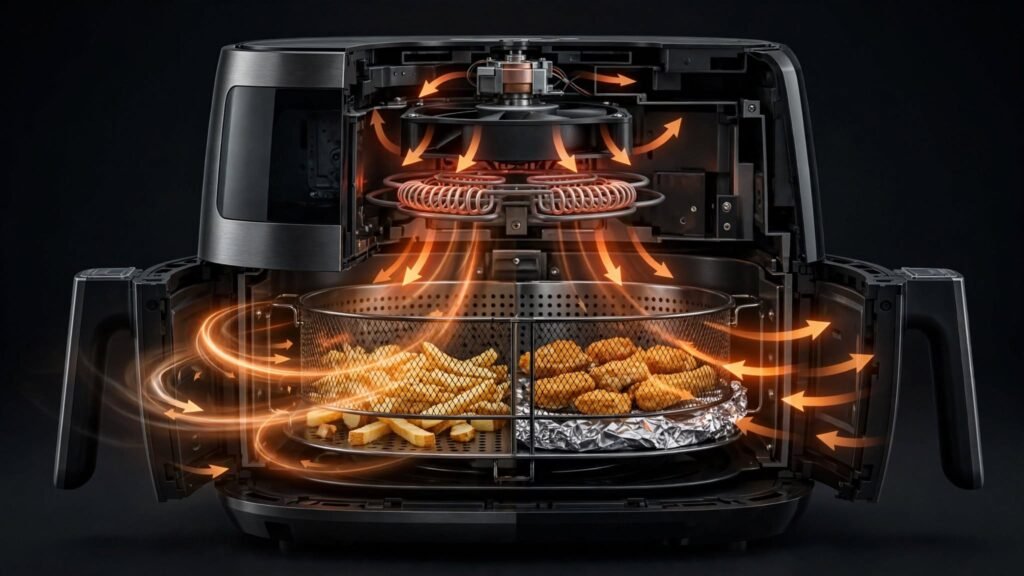
It can.
The effect depends on how much foil you use, where it is placed, the food being cooked, and the design of the air fryer.
Crispiness
If foil covers an area where air would normally reach the food, the bottom or covered surface may brown differently.
This matters most for foods where crispness is the main goal.
Airflow
Air circulation is fundamental to air frying. USDA notes that overcrowding an air fryer can restrict circulation and contribute to uneven cooking.
A large sheet of foil can create a similar problem if it unnecessarily covers the basket’s openings.
Cooking Results
Using foil does not automatically mean food will cook badly.
It simply changes the cooking environment.
A small, properly positioned piece may have little practical effect, while covering most of the cooking surface can make a noticeable difference.
Foods That Can Work With Aluminum Foil
There is no universal list of foods that require foil. The better question is whether the food benefits from what foil provides.
| Food | Can foil be useful? | Why |
|---|---|---|
| Salmon | Sometimes | Can help with handling and catching juices |
| Chicken | Sometimes | Useful for messy marinades or easier cleanup |
| Burgers | Sometimes | Can help contain drippings |
| Sausages | Sometimes | May make cleanup easier |
| Delicate fish | Sometimes | Provides support during handling |
| Sticky foods | Sometimes | Can reduce sticking |
| French fries | Usually unnecessary | Direct airflow is more useful for crisping |
| Chicken wings | Usually unnecessary | Exposed airflow helps the skin crisp |
| Breaded foods | Usually unnecessary | Foil can reduce airflow around the coating |
The table is a guide, not a substitute for your appliance’s instructions or the specific recipe.
Aluminum Foil vs. Parchment Paper in an Air Fryer
Both materials can be useful in the right situation, but neither should automatically line the basket for every recipe.
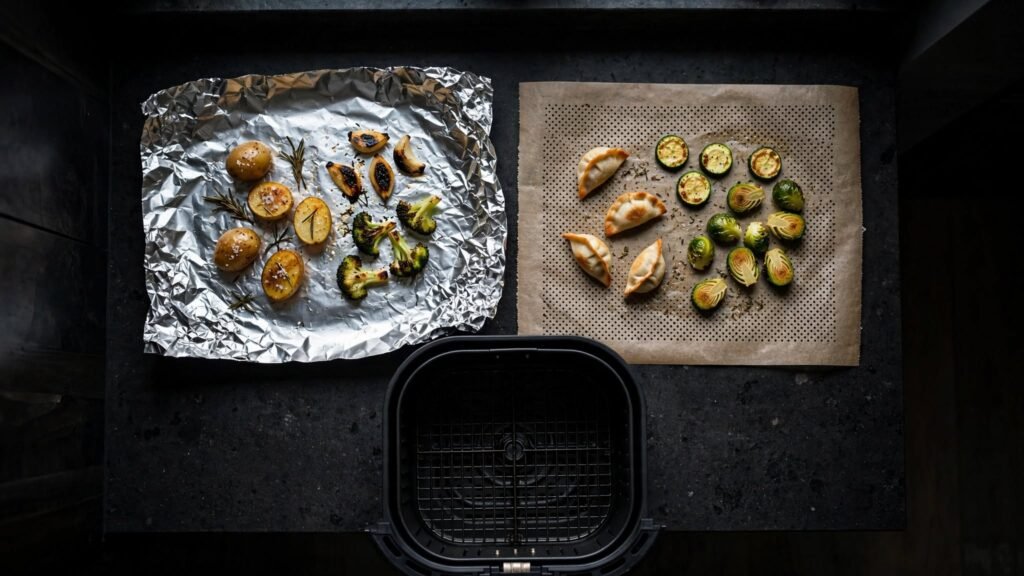
| Feature | Aluminum Foil | Parchment Paper |
|---|---|---|
| Main advantage | Strong and useful for messy foods | Helps reduce sticking |
| Best use | Supporting or containing certain foods | Certain baking and sticky foods |
| Airflow | Can restrict airflow if it covers openings | Can also restrict airflow if oversized |
| Crisping | May reduce crisping where it blocks airflow | Same concern |
| Main caution | Loose foil and heating-element contact | Loose paper and heating-element contact |
| Manufacturer guidance | Always check | Always check |
Parchment paper is not automatically safer simply because it is paper.
The same basic principle applies: use only products appropriate for your appliance and keep them from moving into the heating element.
Common Aluminum Foil Mistakes to Avoid
1. Covering the Entire Basket
A full layer of foil can interfere with the airflow the appliance depends on.
2. Using Foil During Preheating Without Food
A loose sheet has nothing to hold it down.
If your air fryer does not permit foil use, do not use it. If it does, follow the manufacturer’s specific instructions.
3. Letting Foil Touch the Heating Element
This is one of the most important mistakes to avoid.
4. Using Too Much Foil
A large sheet is rarely necessary.
Use the smallest practical piece for the job.
5. Expecting Foil to Make Food Crispy
Foil is not a crisping tool.
In some situations it can actually reduce the airflow reaching the food.
6. Assuming Every Air Fryer Has the Same Rules
They do not.
A feature or accessory allowed by one manufacturer may not be recommended for another model.
7. Ignoring Changes in Cooking Results
If the bottom of your food is suddenly pale or less crisp after adding foil, the foil may be changing airflow or surface exposure.
Do You Need Aluminum Foil in an Air Fryer?
No.
Most air-fryer cooking does not require aluminum foil.
Foil is simply an optional tool for situations where it solves a specific problem, such as supporting delicate food or making cleanup easier.
If your recipe depends on strong airflow around the food, adding foil may provide little benefit and can work against the texture you’re trying to achieve.
A good rule is:
Use foil because the recipe benefits from it, not simply because the basket is easier to clean afterward.
Air Fryer Food Safety When Using Foil
Foil does not replace normal food-safety practices.
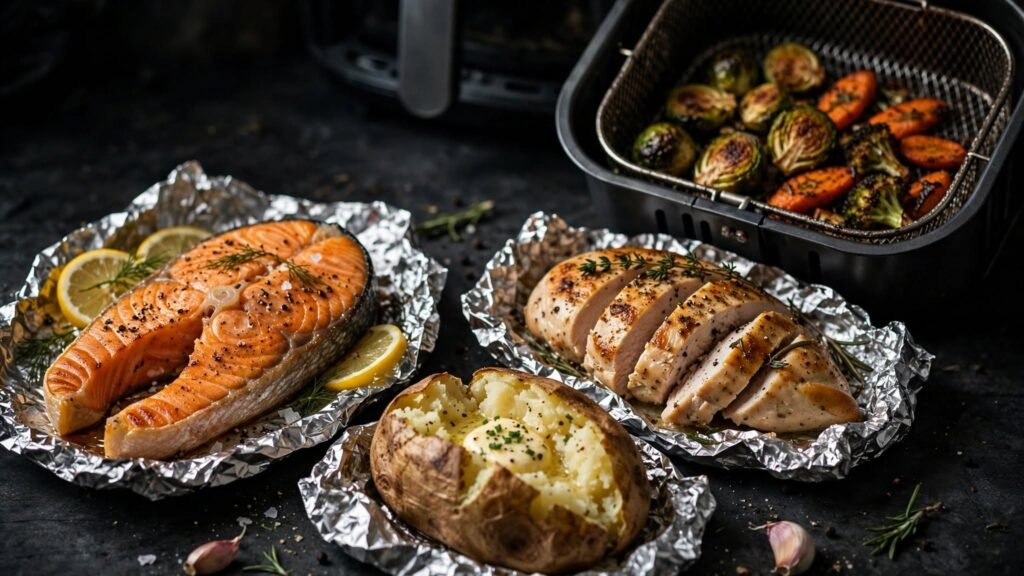
When cooking meat, poultry, or seafood, make sure the food reaches a safe internal temperature rather than relying only on appearance or the air fryer’s timer.
USDA recommends:
- Poultry: 165°F (74°C)
- Ground meats: 160°F (71°C)
- Fish: 145°F (63°C)
- Whole cuts of beef, pork, veal, and lamb: 145°F (63°C), followed by a 3-minute rest
Use a food thermometer to check the center of the food.
The exact cooking time can vary considerably with the air fryer, food thickness, quantity, and starting temperature, so a timer should not be treated as a guarantee of doneness.
Frequently Asked Questions
Can you put aluminum foil in an air fryer?
In many models, aluminum foil can be used in certain situations, but not every manufacturer recommends it. Check your air fryer’s manual first, then use foil only in a way that does not interfere with airflow or contact the heating element.
Can you line an air fryer basket with foil?
It depends on the model. If foil is permitted, avoid covering the basket in a way that unnecessarily blocks airflow. Some manufacturers specifically advise against lining their air-fryer baskets with foil.
Can aluminum foil touch the heating element?
No. Keep foil away from the heating element and make sure it cannot shift toward it during cooking.
Can I use aluminum foil for chicken in an air fryer?
It may be useful for certain chicken preparations, particularly when you want to contain drippings or support the food. However, foil is not necessary for most chicken recipes, and it should not prevent proper airflow.
Can I use aluminum foil for French fries?
You can only do so if your air fryer manufacturer permits it, but foil is usually unnecessary for fries. Direct exposure to circulating air generally makes more sense when crispiness is the goal.
Is aluminum foil better than parchment paper?
Neither is universally better. Foil is stronger and can be useful for certain messy or delicate foods, while parchment can be useful for reducing sticking. Both can interfere with airflow if used incorrectly.
Can I use foil with tomato or lemon-based foods?
It is better to avoid unnecessary direct contact between aluminum foil and highly acidic foods. Acidic and salty ingredients can react with aluminum.
Does aluminum foil make food cook faster?
Not necessarily. Depending on where it is placed, foil can change airflow and how heat reaches the food. Cooking time should be adjusted based on the actual food and your air fryer rather than assuming foil will speed up cooking.
Should I use foil every time I use my air fryer?
No. There is no need to use foil for every recipe. Foods that benefit from maximum airflow often cook better without it.
Final Conclusion
Can you put aluminum foil in an air fryer? In many cases, yes, but the correct answer depends on your air fryer’s design and manufacturer instructions.
When foil is permitted, use it sparingly. Keep it secure, keep it away from the heating element, and avoid covering airflow openings unnecessarily. For foods that need maximum crisping, cooking directly in the basket is often the better approach.
The biggest mistake is treating aluminum foil as a universal air-fryer liner. It is better viewed as an optional cooking aid for specific situations.
And if your manufacturer says not to use foil, don’t try to work around that instruction. Air fryers are designed differently, and the manufacturer’s guidance for your particular model takes priority. Philips, for example, specifically warns against foil in some of its Airfryer models because of airflow and heating-element concerns.
Used thoughtfully, foil can make certain air-fryer jobs cleaner and easier. Used automatically, it can interfere with the very airflow that makes the appliance work.