What Is an Air Fryer? Complete Beginner’s Guide
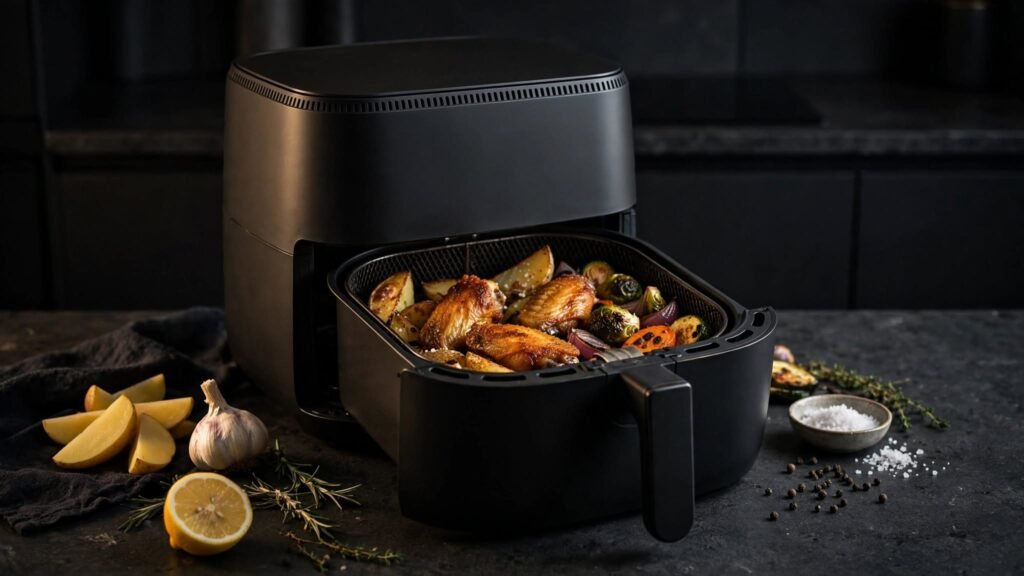
Using an air fryer is fairly simple, but getting consistently good results involves more than putting food in the basket and pressing a button. Food thickness, basket space, oil, temperature, cooking time, and airflow can all affect the final result.
An air fryer can cook much more than French fries. Depending on the model, you can use it for chicken, vegetables, frozen foods, reheating leftovers, snacks, and small baked dishes.
This guide explains how an air fryer works, what you can cook in it, how to use it properly, common mistakes, safety considerations, cleaning, and when an air fryer is a better choice than a conventional oven.
What Is an Air Fryer?
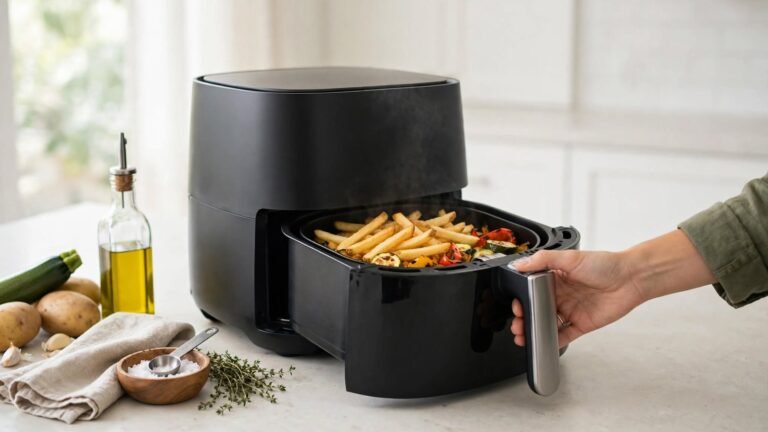
An air fryer is a countertop appliance that cooks food with heated, rapidly circulating air.
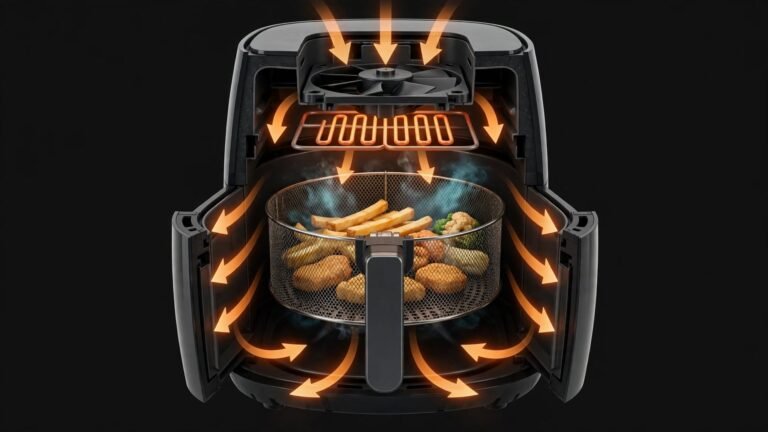
Most air fryers contain:
- A heating element
- A fan
- A cooking basket or tray
- Temperature controls
- A timer
Unlike a deep fryer, an air fryer does not submerge food in hot oil. Instead, heated air moves around the food while the surface loses moisture and browns during cooking.
Some foods need no added oil at all. Others benefit from a light coating of oil for browning or crisping.
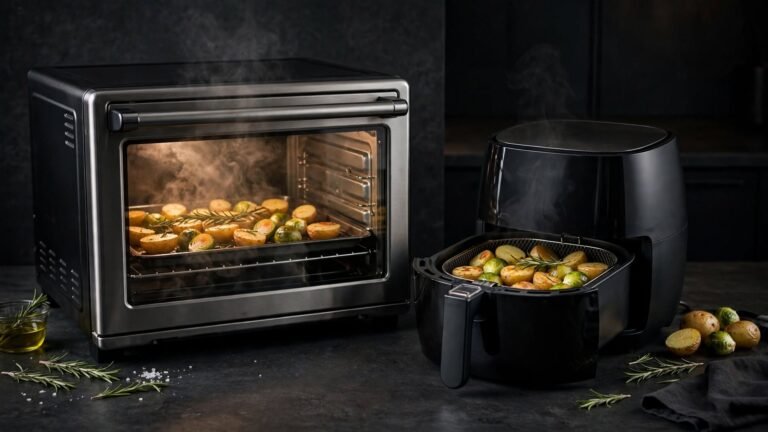
Air fryers come in several designs. Basket-style models are common, while oven-style models may use racks or trays and provide more cooking space.
The exact controls, capacity, accessories, and operating instructions vary by model, so the manufacturer’s manual should always take priority over general advice.
How Does an Air Fryer Work?
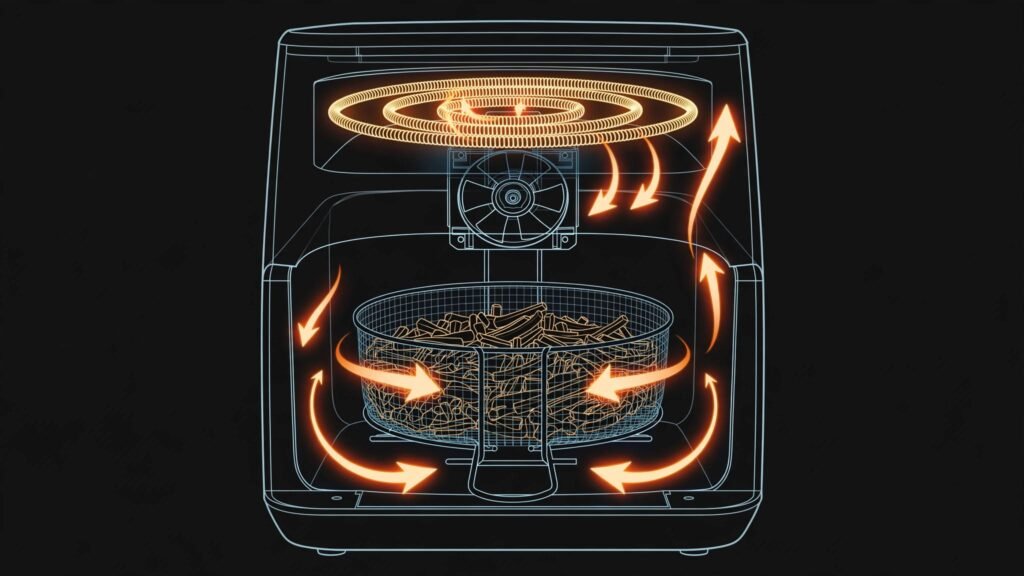
An air fryer uses heat and moving air to cook food.
The heating element raises the temperature inside the cooking chamber, while a fan circulates the heated air around the food. That moving air transfers heat to the food and helps remove moisture from its surface.
As the surface dries and heats, browning can occur. This is why foods such as potatoes, breaded foods, vegetables, and chicken can develop a browned or crisp exterior.
Air frying is not exactly the same as deep frying. Deep frying surrounds food with hot oil, while air frying primarily uses circulating heated air.
That difference affects texture. An air fryer can produce crisp results, but some foods will not have exactly the same texture as their deep-fried counterparts.
What Can You Cook in an Air Fryer?
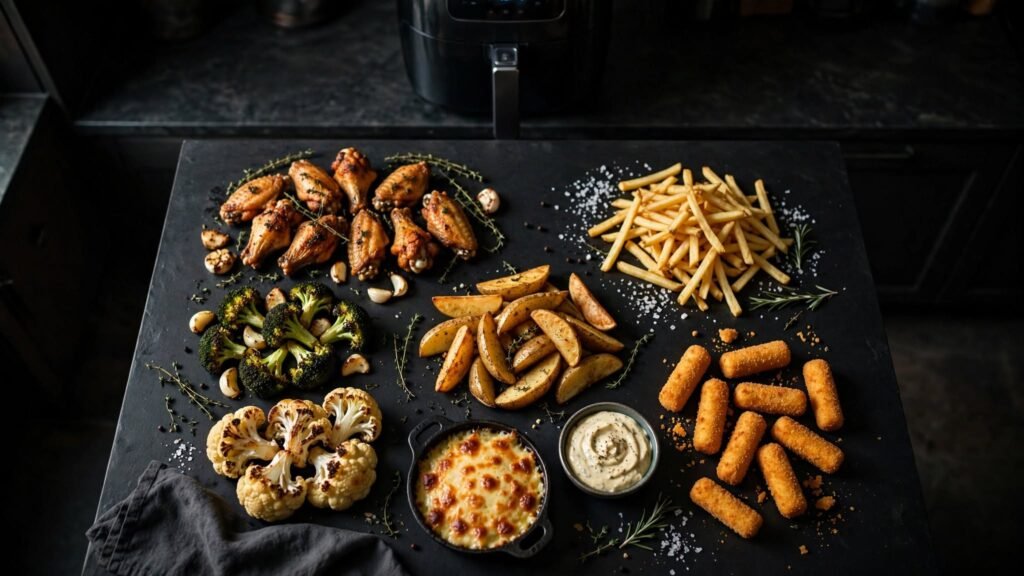
An air fryer is useful for a surprisingly broad range of foods.
Chicken and Meat
Depending on the appliance and recipe, you can cook:
- Chicken wings
- Chicken thighs
- Chicken breasts
- Chicken tenders
- Meatballs
- Pork chops
- Sausages
- Other appropriately sized cuts of meat
Cooking time varies according to thickness, quantity, starting temperature, and the particular air fryer.
For meat and poultry, don’t rely only on appearance or a recipe’s cooking time when food safety depends on internal temperature. Use a food thermometer.
Vegetables
Many vegetables work well with circulating dry heat, including:
- Broccoli
- Cauliflower
- Zucchini
- Bell peppers
- Carrots
- Potatoes
- Sweet potatoes
A small amount of oil can help some vegetables brown more evenly.
Cutting vegetables into reasonably similar sizes can also help them finish at a similar rate.
Frozen Foods
Air fryers are particularly convenient for many frozen foods.
Examples include:
- Frozen French fries
- Chicken nuggets
- Hash brown patties
- Mozzarella sticks
- Breaded snacks
- Some frozen vegetables
If the package provides air-fryer instructions, use those as your starting point. They are generally more useful than automatically converting oven instructions.
Reheating Leftovers
An air fryer can be especially useful when you want reheated food to retain some crispness.
Pizza, fries, roasted vegetables, and some fried foods can often be reheated in an air fryer without becoming as soft as they can in a microwave.
For meat and poultry leftovers, reheating should still be done safely. Crispness is not a substitute for checking that food has been heated properly.
Baking
Many air fryers can handle small baked dishes, pastries, and desserts.
The main limitation is space. Use cookware that fits safely inside the cooking chamber and is suitable for the temperature being used.
Do You Need to Preheat an Air Fryer?
Not always.
Whether preheating is necessary depends on the air fryer and the recipe.
Some manufacturers and recipes recommend preheating, while others are designed to start cooking without it.
The best approach is to follow your model’s instructions and the recipe you’re using.
Preheating can affect the cooking time, especially for foods that cook quickly. If a recipe was developed for a preheated appliance, starting with a cold basket can change the result.
When you’re learning a new recipe, keep your method consistent. That makes it easier to determine whether the cooking time needs adjustment.
How Much Oil Should You Use?
An air fryer does not have to be completely oil-free.
Some foods contain enough natural fat that additional oil isn’t necessary. Other foods, particularly certain vegetables and fresh potatoes, may benefit from a light coating.
The purpose of the oil is usually to help with browning, crisping, or preventing certain foods from drying out.
Don’t Pour Excess Oil Into the Basket
More oil does not automatically produce crispier food.
Pouring a large amount of oil into the basket can create smoke and make cleanup more difficult. In many recipes, lightly coating the food is enough.
The right amount depends on the food and recipe.
How to Arrange Food in an Air Fryer Basket
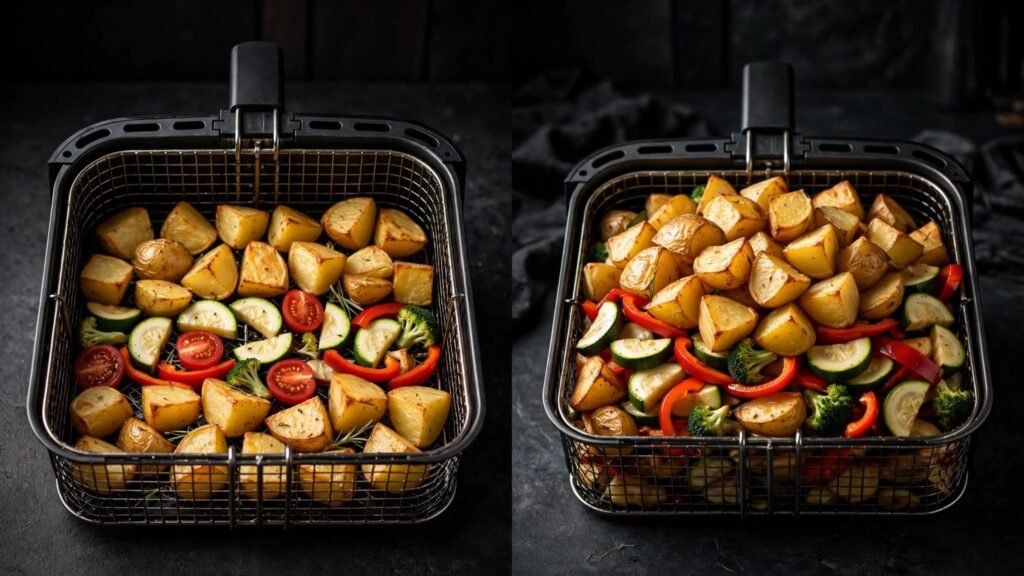
Airflow is one of the most important factors in air frying.
Whenever practical, arrange food in an even layer with some space between pieces.
This allows heated air to reach more of the food’s surface.
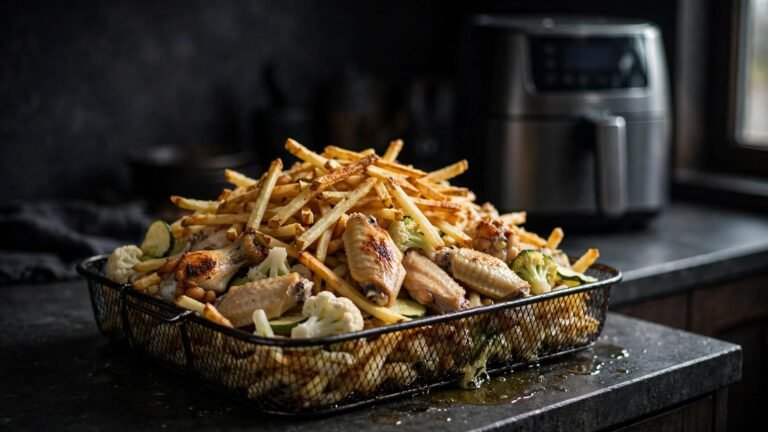
Avoid Overcrowding
An overloaded basket can result in:
- Uneven browning
- Soft spots
- Longer cooking times
- Less crisp food
If you have more food than comfortably fits in the basket, cooking in batches is often better than simply increasing the cooking time.
This is particularly important for foods where crispness is the goal.
A basket full of food is not automatically a productive basket. Sometimes giving the food more room does more for the result than changing the temperature.
Should You Shake or Turn the Food?
Sometimes.
Small foods such as fries and chopped vegetables can benefit from shaking the basket during cooking. This redistributes the pieces and exposes different surfaces to the circulating heat.
Larger pieces may be easier to turn with tongs.
Whether food needs to be shaken or turned depends on:
- Food size
- Food shape
- Recipe
- Basket design
- Cooking method
Don’t interrupt every recipe simply because a timer reaches the halfway point. Follow the recipe when it specifies turning or shaking, and use your judgment based on how the food is cooking.
How Do You Know When Air-Fried Food Is Done?
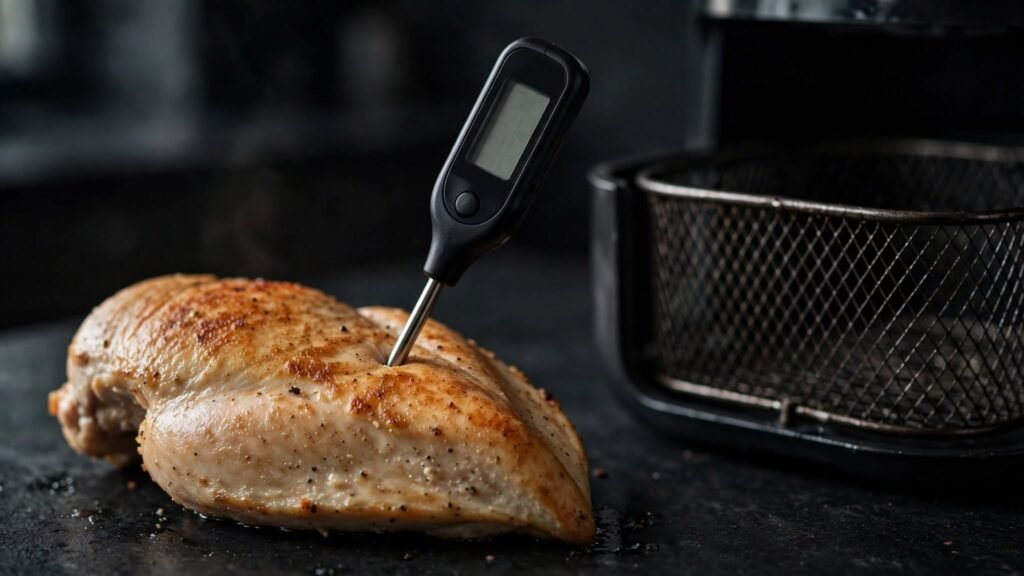
Cooking time is a starting point, not a guarantee.
Air fryers can differ in:
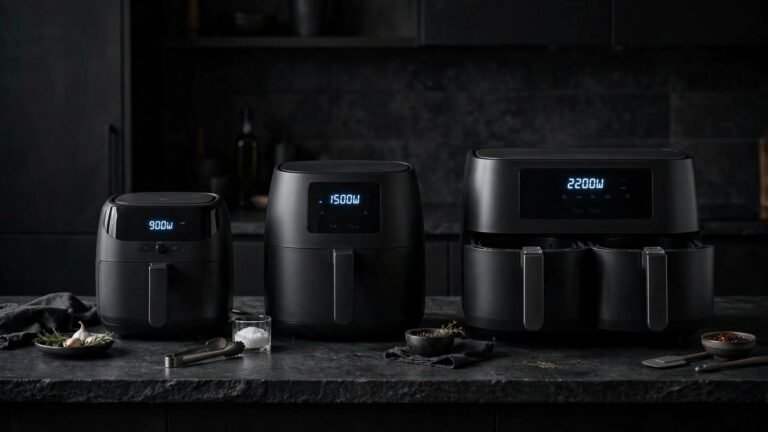
- Wattage
- Airflow
- Basket shape
- Heating-element position
- Cooking capacity
The food itself also makes a major difference.
A thin chicken breast and a thick chicken breast may require different cooking times even when their weights are similar. A lightly filled basket can also behave differently from a crowded one.
When making a recipe for the first time, begin checking toward the earlier part of the expected cooking time.
For foods where internal temperature determines safety, use a food thermometer rather than relying on color alone.
Chicken and Poultry
The USDA recommends that poultry reach an internal temperature of 165°F (73.9°C), measured with a food thermometer.
That means a timer should help you estimate when to check the food. It should not replace checking the internal temperature when poultry safety is involved.
How to Convert an Oven Recipe for an Air Fryer
You can adapt many conventional-oven recipes for an air fryer, but you shouldn’t assume the oven’s temperature and cooking time can simply be copied.
An air fryer has a smaller cooking chamber and a different airflow pattern.
A useful starting point for many conventional-oven recipes is to reduce the temperature by about 25°F and reduce the cooking time by roughly 20%.
For example:
400°F for 30 minutes → 375°F for about 24 minutes
That is a starting point, not a universal rule.
Food thickness, quantity, basket arrangement, and the specific air fryer can all change the result.
What About Convection-Oven Recipes?
Be more cautious when adapting a recipe written specifically for a convection oven.
A convection oven already uses a fan to circulate heated air. An air fryer also uses circulating air, although the cooking chamber and airflow are different.
Therefore, you should not automatically apply the full conventional-oven adjustment to every convection recipe.
Start close to the recipe’s instructions and monitor the food.
Why Air Fryer Size Matters
The same recipe can behave differently in two different air fryers.
A compact basket model may place food relatively close to the heating element, while an oven-style air fryer may have multiple racks and a larger cooking chamber.
Capacity also affects airflow.
A small amount of food spread across a basket may cook differently from a large batch packed tightly into the same space.
This is why cooking charts should be treated as useful starting points rather than absolute guarantees.
Common Air Fryer Mistakes to Avoid
1. Overcrowding the Basket
Too much food restricts airflow and can leave you with unevenly cooked or soft food.
Better approach: Cook in batches when necessary.
2. Using Too Much Oil
Adding more oil does not automatically make food crispier.
Better approach: Use only the amount appropriate for the food and recipe.
3. Using One Temperature for Everything
Different foods have different cooking requirements.
A thin vegetable, frozen snack, and thick chicken breast should not automatically be treated as the same cooking problem.
Better approach: Use food-specific cooking instructions whenever possible.
4. Ignoring Food Thickness
Thickness can affect cooking time significantly.
Two pieces with similar weights can cook differently if one is much thicker.
5. Waiting Until the Exact Timer Ends
A listed cooking time is an estimate.
Better approach: Check food before the expected finish when you’re using a recipe for the first time.
6. Assuming Air-Fried Means Automatically Healthy
Air frying can reduce the amount of added oil compared with deep frying, but the cooking method doesn’t transform highly processed food into a nutritious meal.
Ingredients, portions, and overall meal composition still matter.
7. Forgetting to Clean the Appliance
Grease and food residue can accumulate inside an air fryer.
Regular cleaning helps prevent buildup and unwanted smells or smoke.
Are Air Fryers Healthier Than Deep Fryers?
There isn’t a simple answer that applies to every food.
Air frying generally requires much less added oil than traditional deep frying. If reducing added cooking oil is your goal, that can be an advantage.
But the nutritional quality of the meal depends on more than the appliance.
Vegetables, fish, lean proteins, and minimally processed ingredients can be part of a balanced meal whether they’re cooked in an air fryer, oven, or another suitable method.
Likewise, a highly processed or heavily breaded food doesn’t become automatically nutritious because it was cooked with hot air.
The better question is not simply whether an air fryer is “healthy.” It’s what you’re cooking, how you’re preparing it, and how much you’re eating.
Air Fryer vs. Conventional Oven
| Feature | Air Fryer | Conventional Oven |
|---|---|---|
| Cooking space | Smaller | Larger |
| Small portions | Very convenient | May use more space than necessary |
| Large meals | Limited by capacity | Better suited |
| Crisping small portions | Often very effective | Depends on oven and food |
| Reheating crispy foods | Convenient | Can work well but may take longer |
| Multiple dishes | Limited | Better suited |
| Cooking flexibility | Good | Excellent |
An air fryer is particularly useful for small portions and foods that benefit from rapid circulating heat.
A conventional oven is generally more practical for large dishes, multiple trays, or meals that require substantial cooking space.
Neither appliance is the winner for every cooking job.
Air Fryer Safety Tips
An air fryer contains hot surfaces, an electrical heating system, and moving air. Basic kitchen safety matters.
Read the Manufacturer’s Instructions
Before using the appliance, check the manual for information about:
- Maximum fill levels
- Accessories
- Cookware
- Ventilation
- Temperature limits
- Cleaning
- Preheating
Different models can have different requirements.
Use a Stable, Heat-Resistant Surface
Place the air fryer on a stable surface that can safely handle the heat generated during operation.
Keep ventilation openings clear and provide the clearance recommended by the manufacturer.
Be Careful With Oil
Avoid excessive oil.
Too much oil can produce smoke and create a messy cooking environment.
Keep Water Away From the Electrical Unit
Never immerse the main electrical unit in water.
Clean removable components according to the manufacturer’s instructions.
Handle the Basket Carefully
The basket, tray, and food can become extremely hot.
Use appropriate protection when handling hot components, and be careful of hot steam when opening the appliance.
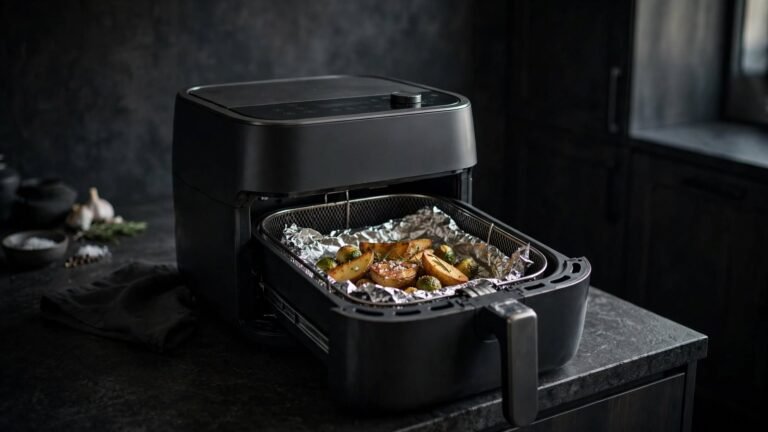
Can You Put Aluminum Foil in an Air Fryer?
Aluminum foil can be suitable for some air-fryer applications, but it must be used correctly.
It should not interfere with necessary airflow or come into contact with the heating element.
Because air-fryer designs differ, check your model’s instructions before using foil.
For a detailed explanation of proper placement and what to avoid, see our Can You Put Aluminum Foil in an Air Fryer? guide.
Can You Use Parchment Paper in an Air Fryer?
Parchment paper can be useful for certain recipes, particularly when reducing sticking or making cleanup easier.
However, it should be suitable for the cooking temperature and positioned securely enough that it cannot move toward the heating element.
Do not place loose parchment into an empty preheating air fryer unless the manufacturer’s instructions specifically allow it. Lightweight paper can move when exposed to strong airflow.
Always follow the instructions for your particular appliance and parchment product.
How to Clean an Air Fryer
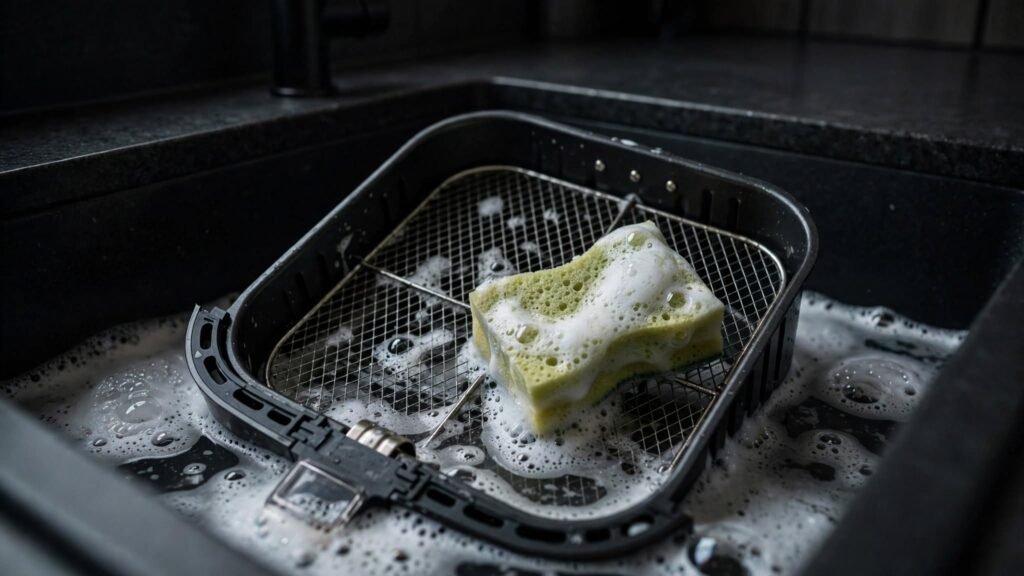
Regular cleaning removes grease, crumbs, and food residue before they accumulate.
1. Let the Air Fryer Cool
Unplug the appliance and allow hot components to cool before cleaning.
2. Clean the Basket and Tray
Remove the basket and tray.
Wash them according to the manufacturer’s instructions.
For stuck-on food, soaking removable parts in warm, soapy water can help loosen residue.
3. Wipe the Interior
Use an appropriate damp cloth or sponge to clean accessible interior surfaces.
Do not pour water into the electrical unit.
4. Check Around the Heating Area
Once the appliance is unplugged and completely cool, inspect accessible areas around the heating element for grease or food particles.
Clean these areas only according to the manufacturer’s instructions.
5. Wipe the Exterior
A damp cloth can remove grease, fingerprints, and food splashes from the outside.
6. Dry the Components
Allow removable components to dry completely before putting them back into the appliance.
How Often Should You Clean an Air Fryer?
The basket and other removable cooking components should generally be cleaned after use.
The interior and heating area should also be inspected regularly for food residue and grease.
If you notice unusual smoke, odors, or visible buildup, stop and clean the appliance before continuing to use it.
What Should You Not Put in an Air Fryer?
Don’t assume that something is safe to use simply because it is labeled oven-safe.
An air fryer has its own basket, heating element, airflow, and space limitations.
Before using cookware, accessories, foil, parchment, or unusual materials, make sure they are suitable for your specific model and the temperature involved.
Avoid loose lightweight materials that could move toward the heating element.
When you’re uncertain, check the manufacturer’s manual instead of guessing.
How to Get Better Results From an Air Fryer
Once you understand the basics, consistent results usually come down to a handful of habits:
- Don’t overcrowd the basket.
- Give food enough space for air to circulate.
- Use only as much oil as the recipe needs.
- Cut food into reasonably similar sizes.
- Check food before the expected finish time.
- Shake or turn food when appropriate.
- Use a food thermometer when internal temperature determines safety.
- Follow your air fryer’s instructions for accessories.
- Cook in batches when necessary.
- Clean grease and food residue regularly.
These details often make a bigger difference than constantly changing the temperature.
Frequently Asked Questions
What is an air fryer mainly used for?
An air fryer can cook, roast, reheat, and crisp many foods, including chicken, vegetables, potatoes, frozen foods, snacks, and some baked dishes.
Do you need oil in an air fryer?
Not always. Some foods need little or no added oil, while others benefit from a light coating for browning or crisping.
Do you have to preheat an air fryer?
No. Preheating depends on the appliance and recipe. Follow the manufacturer’s instructions and the recipe you’re using.
Is air frying healthier than deep frying?
Air frying can reduce the amount of added oil compared with deep frying, but the nutritional quality of a meal depends on its ingredients, preparation, portion size, and overall diet.
Can you put aluminum foil in an air fryer?
It may be appropriate for some uses, but it must be positioned correctly and must not interfere with airflow or contact the heating element. Check your specific model’s instructions before using it.
Can you use parchment paper in an air fryer?
Yes, parchment paper can be suitable for some air-fryer recipes when it is rated for the cooking temperature and positioned correctly. It should not be allowed to move toward the heating element.
How do you know when chicken is done in an air fryer?
Don’t rely only on color or cooking time. The USDA recommends that poultry reach 165°F (73.9°C) internally, measured with a food thermometer.
Why does my air-fried food come out soggy?
The basket may be overcrowded, the food may contain considerable surface moisture, or the pieces may not have enough room for air circulation.
Try cooking a smaller batch and arranging the pieces with more space between them.
Why does food burn in my air fryer?
The temperature may be too high, the food may be thin, or the cooking time may be too long for your particular model.
When trying a recipe for the first time, check the food earlier than the stated finish time.
Can an air fryer replace a conventional oven?
Not completely.
An air fryer is excellent for many small portions and foods that benefit from rapid hot-air circulation. A conventional oven is generally more practical for large dishes, multiple trays, and meals requiring more cooking space.
Final Conclusion
An air fryer is much more than a machine for making fries. It can cook chicken, vegetables, frozen foods, snacks, leftovers, and many small baked dishes while using a different cooking method from traditional deep frying.
The key to using one well is understanding its limitations.
Give food enough room for air to circulate, use an appropriate amount of oil, check cooking progress rather than blindly trusting a timer, and follow your model’s instructions for accessories, cleaning, and operation.
For poultry, don’t use appearance or cooking time as the final safety test. The USDA recommends an internal temperature of 165°F (73.9°C) measured with a food thermometer.
For more guidance on adapting conventional recipes, use our Oven to Air Fryer Conversion Guide as your starting reference.
An air fryer won’t replace every appliance in the kitchen, but when used correctly, it can be a practical tool for everyday cooking, crisping, reheating, and preparing smaller portions.