Air Fryer Safety Tips: 10 Simple Rules You Should Follow
An air fryer is straightforward to use, but it still combines high heat, electricity, moving hot air, and cooking grease in one appliance. Most safety problems are preventable when the fryer is positioned correctly, kept clean, and used according to its instructions.
The important part is not memorizing dozens of warnings. It is knowing the few habits that matter every time you cook.
If you are new to air frying, start with What Is an Air Fryer? to understand the appliance before moving on to these safety rules. For a closer look at the heating and airflow process, see How Does an Air Fryer Work?.
Here are 10 practical air fryer safety tips to keep in mind.
1. Place the Air Fryer on a Stable, Heat-Safe Surface
Put your air fryer on a flat, stable, heat-resistant surface before turning it on.
Avoid placing it on:
- Towels or fabric
- Paper
- Cardboard
- Unstable shelves
- Surfaces that can be damaged by heat
- The top of a stovetop unless the manufacturer specifically permits it
Keep the appliance where it cannot easily be knocked over.
Also pay attention to the power cord. It should not hang over the edge of the counter or run directly against a hot surface.
A stable setup is a simple precaution, but it removes several avoidable risks at once. Electrical Safety First recommends placing an air fryer on a stable, heat-resistant surface and keeping cables away from hot surfaces and worktop edges.
2. Leave Enough Space Around the Air Fryer
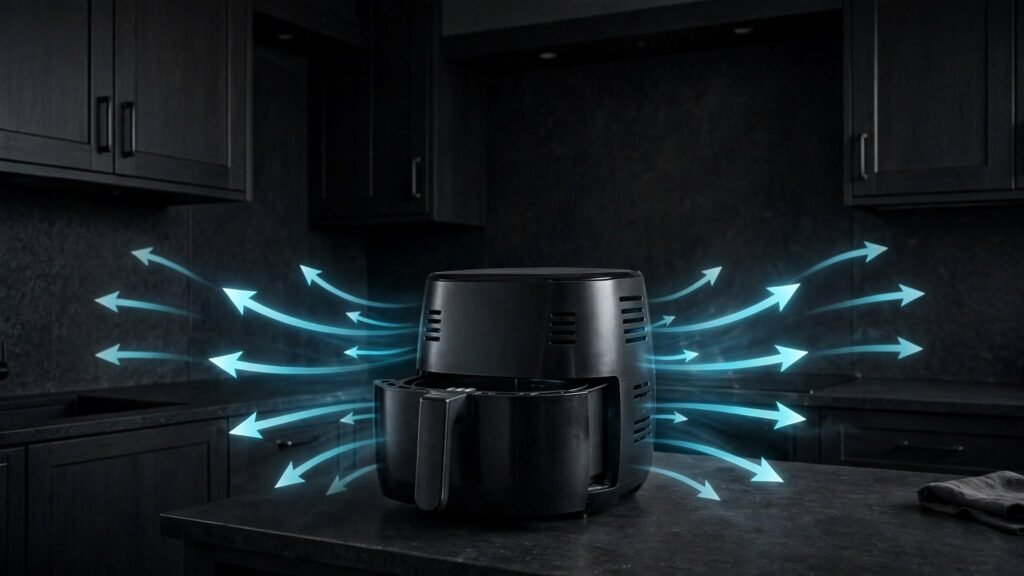
An air fryer needs room to release heat.
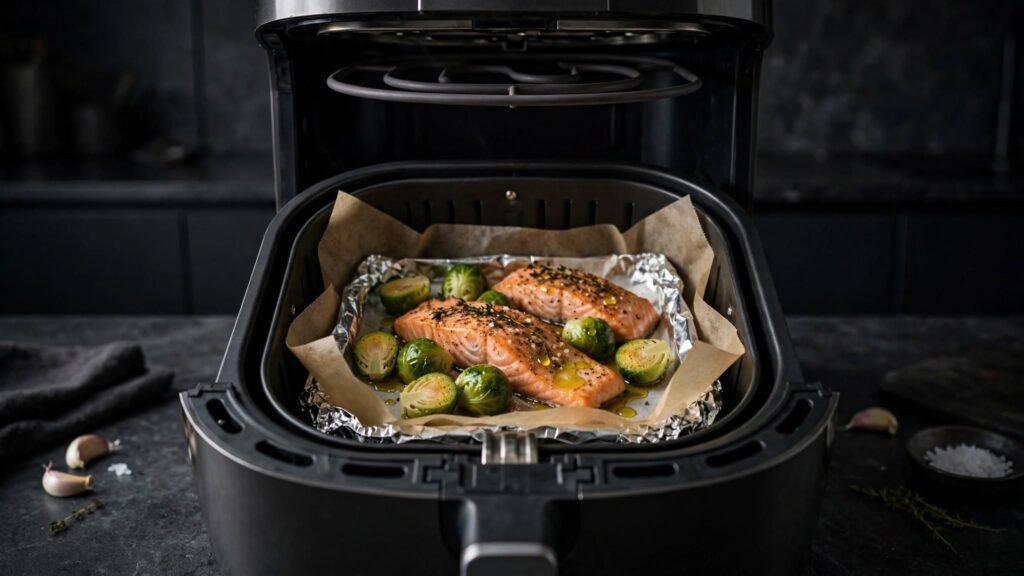
Do not squeeze it tightly against a wall or place objects around its ventilation openings. Avoid operating it in a cramped location where hot air cannot escape properly.
The exact clearance depends on the design of your appliance, so your owner’s manual should take priority over a generic measurement.
A useful rule is simple: keep the air fryer’s vents clear and give the appliance the space specified by the manufacturer.
This also helps explain why airflow matters so much during cooking. If you want the technical explanation, How Does an Air Fryer Work? is the better article for that topic.
3. Don’t Block the Air Vents
Airflow is part of how an air fryer cooks food.
Do not place objects over ventilation openings, cover the appliance with anything while it is operating, or position it where the vents are obstructed.
Be especially careful with accessories such as:
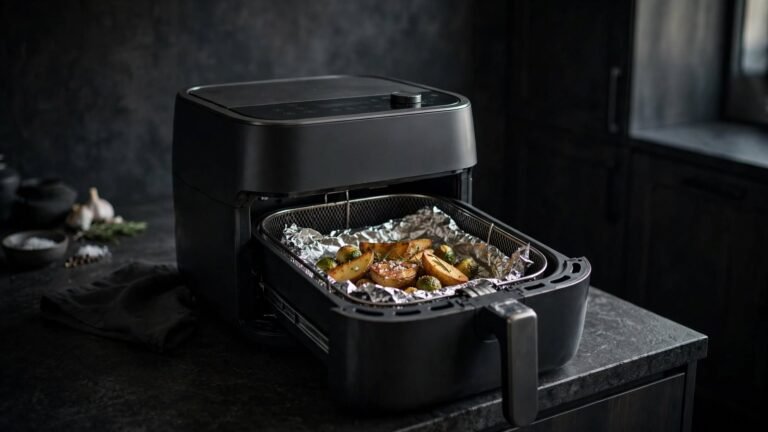
- Aluminum foil
- Parchment paper
- Liners
- Oversized sheets
- Loose lightweight food
The accessory itself is not the only issue. How it is positioned inside the appliance matters.
For a detailed guide specifically about foil, link readers to Can You Put Aluminum Foil in an Air Fryer? rather than repeating that entire subject here.
4. Don’t Overfill the Basket
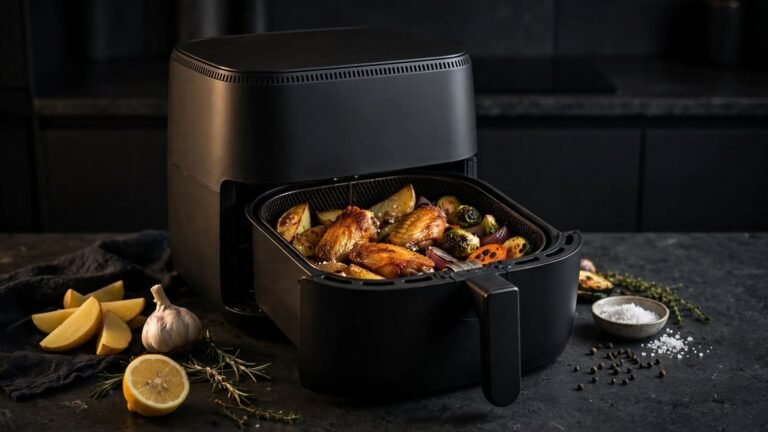
Packing the basket until it is overflowing can create two problems: poor cooking performance and a potential safety issue.
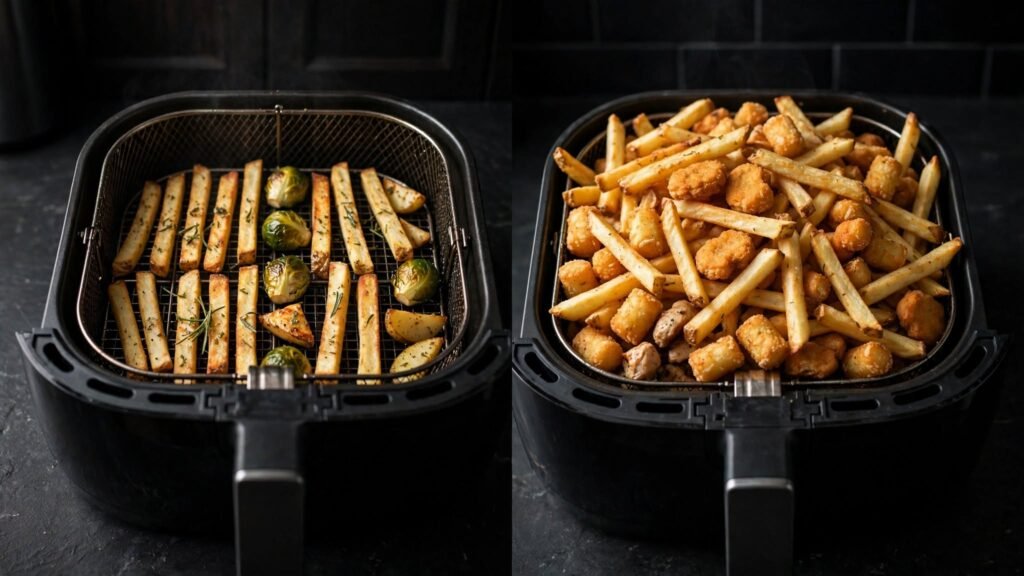
When too much food is packed into the cooking area, hot air cannot move around the food as intended. Food may cook unevenly, take longer, or remain less crisp.
More importantly, overfilling can push food or lightweight ingredients closer to the heating element.
Instead:
- Follow the maximum-fill guidance in your manual.
- Leave appropriate space for air circulation.
- Cook in batches when the basket is too full.
- Keep food below any marked maximum level.
- Avoid stacking food excessively unless your model and recipe are designed for it.
Electrical Safety First specifically advises users not to overfill an air fryer and to follow the manufacturer’s maximum-fill instructions.
5. Keep Loose Food Away From the Heating Element
Small, lightweight pieces can move during cooking.
This matters with foods such as:
- Bread
- Cheese
- Thin slices
- Loose herbs
- Lightweight vegetables
- Small pieces of parchment
Anything that can move upward toward the heating element deserves extra attention.
Do not place loose paper or other lightweight material into an empty, operating air fryer unless your manufacturer’s instructions specifically allow it.
This is particularly important during preheating. A loose liner has no food holding it down and can move with the circulating air.
6. Use Oil, Foil, and Parchment Carefully
An air fryer is not a deep fryer.
You generally do not need to fill the basket with cooking oil. Use oil according to the recipe and the appliance’s instructions rather than treating the basket like a traditional fryer.
Foil and parchment require additional care because manufacturer instructions can differ between models.
Before using either:
- Check your air fryer’s manual.
- Use only the amount required.
- Make sure the material cannot move into the heating element.
- Do not obstruct important airflow.
- Never use an accessory simply because it worked in another air fryer.
Electrical Safety First specifically warns that paper can become dangerous if it is not secured and reaches the heating element, and recommends checking the manufacturer’s instructions before using paper in an air fryer.
For aluminum foil specifically, see Can You Put Aluminum Foil in an Air Fryer?.
7. Clean the Air Fryer Regularly
Grease and food residue should not be allowed to build up inside the appliance.
After cooking, allow the air fryer to cool according to the manufacturer’s instructions, then clean the removable components as directed.
Pay particular attention to:
- Grease
- Burnt food
- Crumbs
- Sticky sauces
- Food residue around the basket
- Areas identified in the cleaning instructions
Do not immerse the electrical portion of the appliance in water unless the manufacturer specifically states that it is designed for that type of cleaning.
Regular cleaning is both a hygiene issue and a safety habit. Electrical Safety First advises regular cleaning and warns against putting the main electrical appliance into water.
8. Protect Yourself From Hot Steam and Surfaces
An air fryer can remain very hot after the cooking cycle ends.
When opening the basket or drawer, keep your face and hands away from escaping steam. Steam can cause burns even when the appliance itself does not look particularly dangerous.
Also remember that:
- The basket can be extremely hot.
- Food may retain heat.
- The cooking chamber may remain hot after shutdown.
- Metal components can stay hot longer than expected.
Use appropriate heat protection when handling hot components and allow the appliance to cool before cleaning.
9. Check the Plug, Socket, and Power Cord
Electrical problems should never be ignored.
Stop using the air fryer if you notice signs such as:
- Burn marks
- Scorching around the plug or socket
- Frayed or damaged cable
- Melted plastic
- Burning electrical smell
- Sparks
- Repeated circuit-breaker trips
- Unusual buzzing or crackling
These are not normal operating conditions.
Electrical Safety First recommends checking plugs and sockets for signs of overheating or damage and seeking appropriate assistance when problems appear.
Also follow your manufacturer’s requirements for connecting the appliance to power. Avoid casually using extension leads or overloaded adapters for a high-powered appliance.
Some air fryers can draw substantial electrical power, so the electrical setup matters just as much as the cooking setup.
10. Don’t Leave the Air Fryer Unattended
You do not need to stand over the basket and watch every second of cooking.
But leaving the house while an air fryer is operating is a different matter.
Consumer and electrical-safety guidance recommends keeping cooking appliances attended while they are operating.
Stay nearby enough to respond if you notice:
- Heavy smoke
- Burning smells
- Unusual sounds
- Electrical problems
- Food contacting the heating element
- Any other abnormal behavior
When cooking is finished, follow your manufacturer’s instructions for shutting down and unplugging the appliance.
What to Do If Your Air Fryer Starts Smoking
A little smoke does not always mean the appliance is on fire. Grease, food residue, or particularly fatty foods can produce smoke.

However, heavy smoke, an electrical burning smell, sparks, or unusual noises should not be ignored.
If your air fryer starts producing significant smoke:
- Stop the appliance if you can do so safely.
- Keep your hands and face away from hot steam.
- Disconnect the power only if it is safe to reach the plug.
- Do not pour water onto an electrical or grease fire.
- If there is an uncontrolled fire, leave the area and contact your local emergency service.
- Do not simply restart the appliance after it cools.
- Identify the cause or contact the manufacturer before using it again.
CPSC cooking-safety guidance also advises against using water on cooking fires.
If the smoke keeps appearing during normal cooking, the problem deserves investigation rather than being treated as a normal feature of air frying.
Air Fryer Safety Checklist
Before starting the appliance, quickly check:
| Safety Check | What to Look For |
|---|---|
| Surface | Stable and heat-resistant |
| Ventilation | Vents are unobstructed |
| Basket | Not overfilled |
| Food | Nothing can reach the heating element |
| Accessories | Approved and positioned correctly |
| Power cord | No damage or contact with hot surfaces |
| Appliance | Clean and free from excessive grease |
| Cooking area | No towels, paper, or other flammable items nearby |
| Supervision | Someone is available while it operates |
| Manual | Model-specific instructions have been followed |
This takes very little time and catches many of the common mistakes before cooking begins.
Are Air Fryers Safe to Use?
Yes, an air fryer can be used safely when it is operated and maintained correctly.
The important point is that “safe” does not mean risk-free. It is still a high-heat electrical cooking appliance.
Safe use means:
- Following the manufacturer’s instructions
- Keeping vents clear
- Avoiding overfilling
- Keeping the appliance clean
- Using accessories correctly
- Watching for electrical damage
- Handling hot steam and surfaces carefully
- Not leaving the appliance unattended
Product recalls also show why owners should pay attention to manufacturer safety notices. For example, CPSC has issued recalls involving air fryers with electrical connections that could overheat and create fire and burn hazards.
Registering your appliance with the manufacturer can also make it easier to receive recall or safety information.
Frequently Asked Questions
Can I leave my air fryer running while I leave the house?
It is better not to. Electrical and consumer-safety guidance recommends not leaving an air fryer unattended while it is operating.
Can you put aluminum foil in an air fryer?
Whether foil is appropriate depends on the appliance and how it is positioned. Always check your manufacturer’s instructions and make sure foil cannot block important airflow or contact the heating element.
For the full explanation, see Can You Put Aluminum Foil in an Air Fryer?.
Can I use parchment paper in an air fryer?
Only when the manufacturer’s instructions and the way you use it make it safe. Loose parchment can move in the circulating air and potentially reach the heating element.
Why is my air fryer smoking?
Possible causes include grease buildup, food residue, fatty foods, or an accessory that has been positioned incorrectly.
Heavy smoke, burning electrical smells, sparks, or unusual noises should not be treated as normal.
Can I put water in an air fryer?
Do not add water or other liquids unless your specific manufacturer says it is safe for your model and intended use.
Should I clean my air fryer after every use?
Clean it according to the manufacturer’s instructions and remove food and grease buildup regularly. The frequency and method can vary by model.
Can an air fryer catch fire?
Any electrical cooking appliance can present a fire risk if it is faulty or used incorrectly. Overfilling, blocked ventilation, accumulated grease, damaged electrical components, and improper accessory use are among the problems worth avoiding. CPSC recalls have documented air-fryer fire and burn hazards associated with electrical faults.
Final conclusion
Good air fryer safety is mostly about proper placement, clear ventilation, reasonable basket loading, regular cleaning, careful accessory use, and paying attention to electrical problems.
You do not need a complicated safety routine. Before cooking, make sure the appliance is stable, the vents are clear, the basket is not overloaded, and the cord and plug are in good condition. During cooking, keep loose materials away from the heating element and stay close enough to notice anything unusual.
Most importantly, your air fryer’s manual takes priority over generic advice, because designs and accessory requirements vary between models.