Why Is My Air Fryer Food So Dry? 9 Common Causes and Easy Fixes
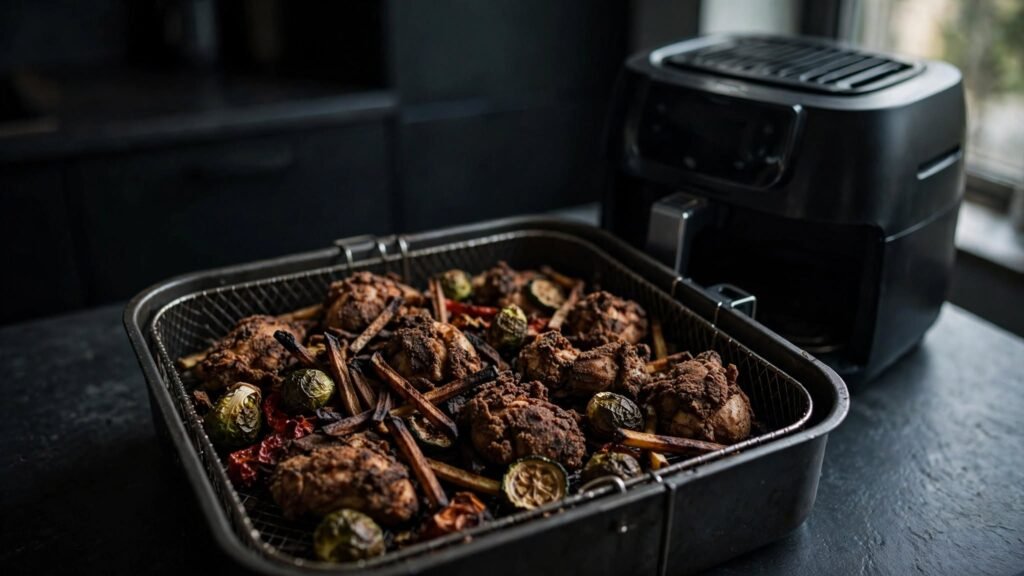
If your air fryer food keeps coming out dry, the problem usually isn’t that air frying itself “dries out” everything. More often, the food has spent too much time exposed to heat, the basket is overloaded, the temperature is too aggressive, or the food simply isn’t well suited to the way it is being cooked.
Chicken breast, fish, vegetables, fries, and leftovers can all become dry, but they don’t necessarily become dry for the same reason.
The good news is that most of these problems are easy to diagnose.
Start with the table below, then use the detailed fixes to narrow down what is happening in your air fryer.
The Most Common Reasons Air Fryer Food Gets Dry
| Problem | What it can cause | What to change |
|---|---|---|
| Cooking too long | Dry, tough interior | Start checking earlier |
| Temperature too high | Dry outside before center is ready | Reduce heat when appropriate |
| Overcrowding | Uneven cooking and longer cook time | Cook in a looser layer |
| Very lean food | Less natural moisture and fat | Use careful timing and suitable preparation |
| Too little oil | Dry or poorly browned surfaces | Add a light coating when appropriate |
| Oven recipe used unchanged | Food cooks faster than expected | Adjust time and temperature |
| No shaking or flipping when needed | Uneven browning | Turn food when the recipe benefits from it |
| Excess surface moisture | Poor browning and prolonged cooking | Pat suitable foods dry |
| Waiting for the timer instead of checking | Overcooking | Treat time as a guide |
The most important point is that dry food is often an overcooking problem, not an oil problem.
Adding more oil won’t rescue chicken that has already been cooked too far.
1. You’re Cooking the Food for Too Long
This is the first thing to investigate.
Air-fryer recipes normally provide a cooking time as a starting point. That time cannot account perfectly for every air fryer, food thickness, starting temperature, basket load, or ingredient variation.
A thin chicken breast and a thick chicken breast can require very different cooking times. The same applies to vegetables cut into small pieces versus large chunks.
Once food has reached the point where it is properly cooked, additional time generally works against moisture retention.
This is especially noticeable with:
- Chicken breast
- Fish
- Lean pork
- Thin vegetables
- Small pieces of meat
- Reheated leftovers
How to fix it
Start checking food toward the earlier part of the suggested cooking range.
For meat and poultry, don’t rely on appearance alone. Use a food thermometer when appropriate.
For poultry, USDA recommends a minimum internal temperature of 165°F (73.9°C) measured with a food thermometer. Color is not a reliable way to determine whether poultry is safely cooked.
The goal is not to cook food for the longest possible time.
It is to cook it enough.
2. The Temperature Is Too High for the Food
A high temperature can produce excellent browning, but more heat is not automatically better.
If the outside of a thick piece of food becomes heavily browned while the center still needs more cooking, you may continue cooking until the middle is done. By then, the exterior can be noticeably drier.
This is particularly relevant for:
- Thick chicken breasts
- Fish fillets
- Large vegetables
- Breaded foods
- Foods with a delicate exterior
How to fix it
If the outside consistently becomes dry before the inside is ready, try a somewhat lower temperature and begin checking earlier.
Don’t apply one temperature rule to every food.
A thin frozen snack, a thick chicken breast, and a tray of vegetables have different cooking characteristics.
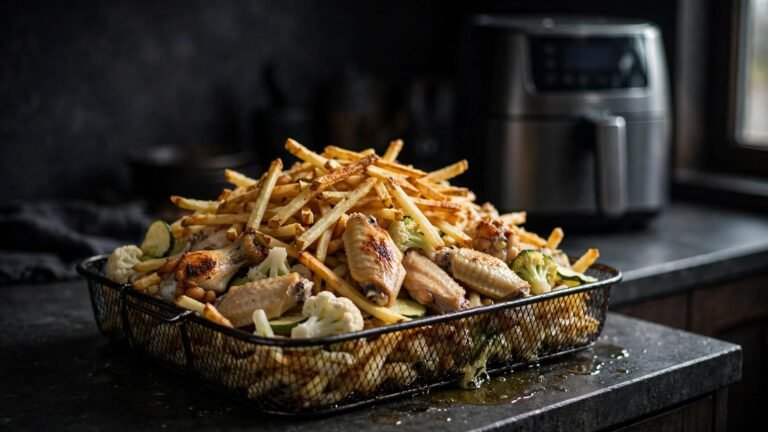
3. The Basket Is Too Crowded
Overcrowding is one of the easiest mistakes to make because the basket looks like it has plenty of room.
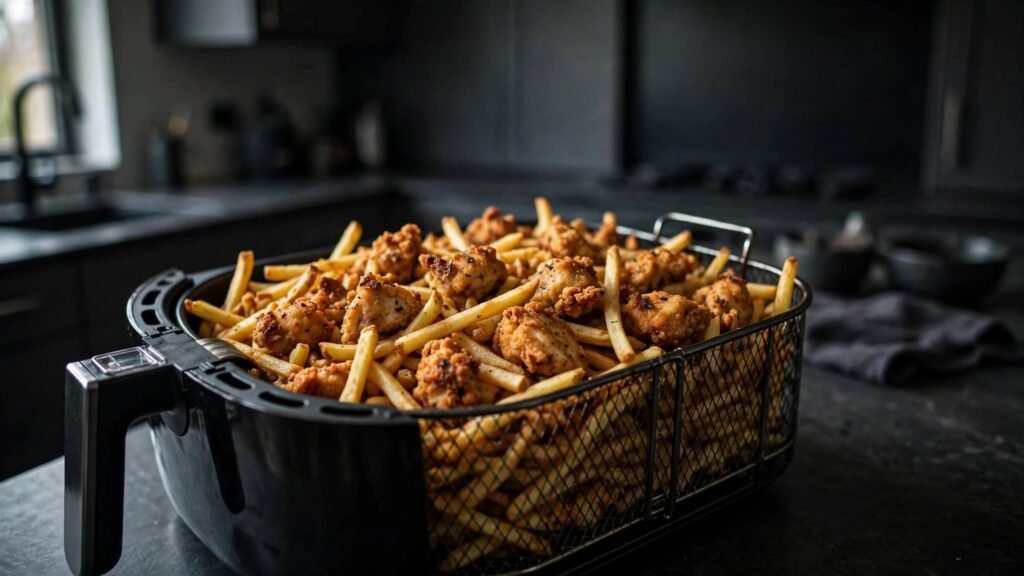
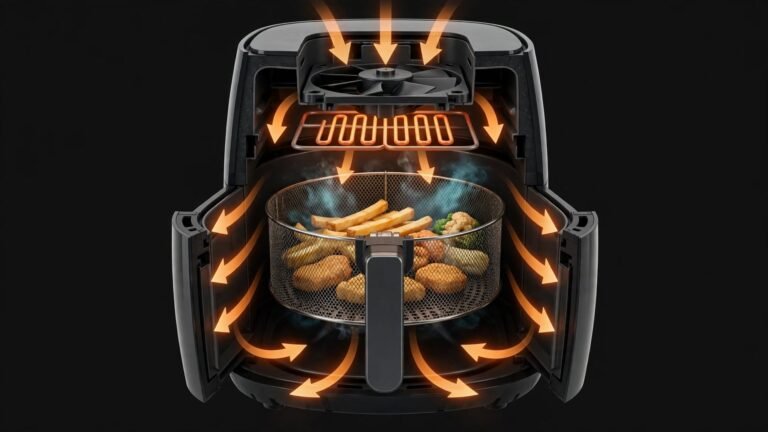
The problem is that air needs to circulate around the food.
When pieces are packed tightly together, some surfaces receive less direct airflow. Moisture can also accumulate between pieces instead of escaping efficiently.
The result may be uneven cooking.
Some pieces remain undercooked while others continue receiving heat. You then extend the cooking time, and the already-cooked pieces become dry.
How to fix it
For foods that need crisping, arrange them with space around the pieces where practical.
If you have substantially more food than the basket can comfortably hold, cook in batches.
That may take longer overall, but it is usually better than extending one overcrowded batch until the outside pieces are overcooked.
4. You’re Cooking a Very Lean Food
Some foods simply have less room for error.
Skinless chicken breast, very lean pork, and certain fish can dry out more readily than foods containing more natural fat.
That doesn’t mean you need to avoid the air fryer.
It means cooking precision matters more.
How to fix lean foods
Pay particular attention to:
- Food thickness
- Cooking temperature
- Cooking time
- Internal temperature
- Marinades or seasonings appropriate to the recipe
- A light coating of oil when useful
For chicken breast, thickness is particularly important. Two pieces with the same weight can still cook differently if one is much thinner than the other.
5. You’re Using Too Little Oil for the Food
Air fryers can cook many foods with little or no added oil, but that doesn’t mean oil is completely irrelevant.
A small amount of oil can improve surface browning and texture for foods such as potatoes and vegetables. It can also help seasonings adhere to the surface.
The important distinction is between using enough oil for the recipe and assuming that more oil will prevent overcooking.
It won’t.
How to fix it
For foods that benefit from oil, use a light, even coating rather than pouring a large amount into the basket.
For example, vegetables can be tossed with a small amount before cooking.
But if chicken is dry because it reached an excessive internal temperature, adding oil afterward isn’t going to restore the moisture that was lost during cooking.
6. You’re Using Oven Instructions Without Adjusting Them
An oven recipe isn’t automatically an air-fryer recipe.
Both appliances use heated air, but their cooking environments are different. Air fryers typically have a smaller cooking chamber and actively circulate hot air around food.
Manufacturers also use different heating and airflow designs. For example, Philips describes RapidAir systems that circulate hot air around the cooking basket, illustrating why airflow is an important part of air-fryer cooking rather than wattage or temperature alone.
How to adapt an oven recipe
When converting an oven recipe:
- Start conservatively rather than copying the oven time blindly.
- Check the food earlier.
- Pay attention to browning.
- Check internal temperature when food safety requires it.
- Adjust the next batch based on the result.
The exact adjustment depends on the food and the air fryer, so there is no single conversion rule that works perfectly for every recipe.
7. You’re Not Shaking or Flipping Food When It Needs It
Air fryers circulate hot air, but that doesn’t guarantee every part of every food receives identical exposure.
Some foods benefit from being shaken or flipped.
This is particularly useful for:
- Fries
- Small frozen foods
- Nuggets
- Small vegetables
- Some breaded foods
Moving the food can expose different surfaces to the circulating heat and help produce more even browning.
But don’t flip everything automatically
A delicate fish fillet may not benefit from repeated handling.
A food that already has good exposure on all sides may also require little intervention.
The better rule is:
Shake or flip when the shape, basket arrangement, or recipe makes it useful.
8. Excess Surface Moisture Is Slowing Browning
This sounds strange when you’re trying to solve dry food, but it can be part of the chain of events.
Food with a lot of surface moisture may take longer to brown and crisp. If you keep cooking because the outside isn’t developing the texture you want, the interior may eventually become overcooked.
This can happen with:
- Wet vegetables
- Foods coming out of a marinade
- Frozen foods releasing moisture
- Foods packed too closely together
How to fix it
For foods where it makes sense, gently pat excess surface moisture away before cooking.
Don’t remove moisture that is an intentional part of the recipe.
The point is to remove unnecessary surface water, not to dry the ingredient itself.
9. You’re Trusting the Timer More Than the Food
This is one of the simplest habits to change.
A recipe might say 12 minutes, but your air fryer doesn’t know:
- How thick your food is
- How much food you added
- Whether it started cold
- Whether your basket is crowded
- Whether your particular model cooks more aggressively
- Whether the pieces are all the same size
So the timer should be treated as a guide, not a guarantee.
What to check
Depending on the food, look at:
- Browning
- Texture
- Thickness
- Internal temperature
- Whether the center is cooked
- Whether smaller pieces are already finished
For meat and poultry, a thermometer provides much more useful information than simply cutting into the food and judging it by color. USDA specifically recommends using a food thermometer for poultry.
How to Keep Air Fryer Food Moist Without Losing Crispiness
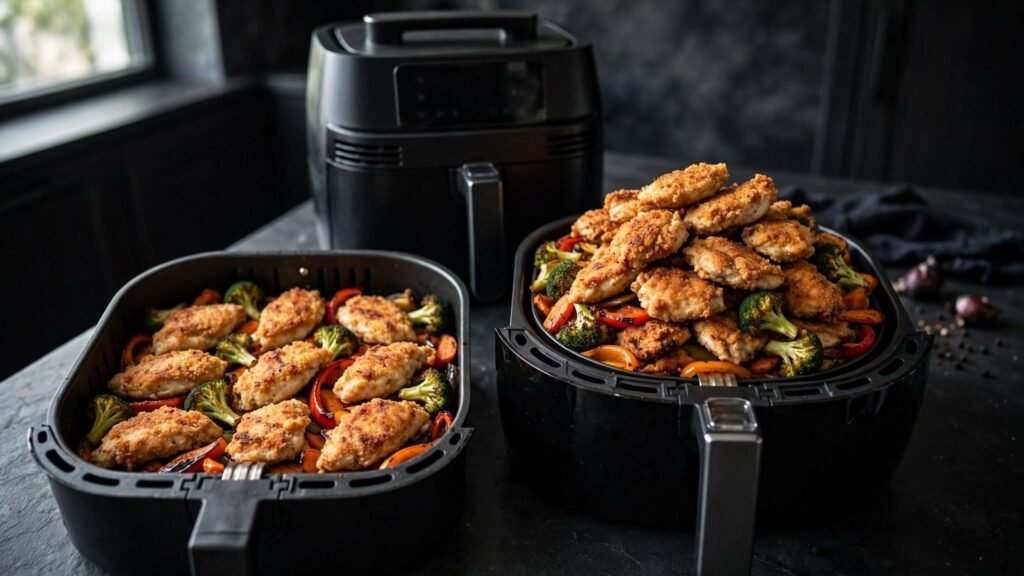
The goal isn’t to make the food soft or wet.
You want the outside to develop the texture you want while avoiding unnecessary moisture loss from the inside.
Use these habits:
Choose a suitable temperature
Don’t automatically use the highest setting.
Start checking early
This is particularly important when you’re cooking a recipe for the first time.
Don’t overcrowd the basket
Give foods that need airflow enough room to cook properly.
Use oil when the food benefits from it
A light coating can improve surface texture, especially with vegetables and potatoes.
Flip or shake when useful
Don’t turn it into a mandatory step for every recipe.
Control surface moisture
Pat suitable foods dry if excess moisture is interfering with browning.
Use a thermometer for meat
Especially with poultry, safe internal temperature matters more than surface color. Poultry should reach 165°F (73.9°C).
Let appropriate foods rest
Some meats benefit from a short rest after cooking. Cutting immediately can release juices that would otherwise remain in the food.
Why the Same Air-Fryer Recipe Can Give Different Results
You can follow a recipe exactly and still get a different result from another person.
That doesn’t necessarily mean the recipe is wrong.
Air fryers differ in:
- Basket dimensions
- Heating-element placement
- Airflow design
- Cooking chamber shape
- Capacity
- Temperature control
- Preset behavior
Even manufacturers offer models with different power and airflow systems. Philips, for example, lists both 1,425W and 1,500W models with different capacities and designs.
That is why cooking times should be treated as practical starting points rather than universal laws.
If your air fryer consistently finishes food sooner than a recipe suggests, start checking sooner.
If it consistently needs longer, investigate the food quantity, basket arrangement, temperature and appliance instructions before simply adding a large amount of extra time.
Why Is My Air Fryer Chicken Dry?
Chicken is one of the easiest foods to overcook in an air fryer, particularly lean chicken breast.
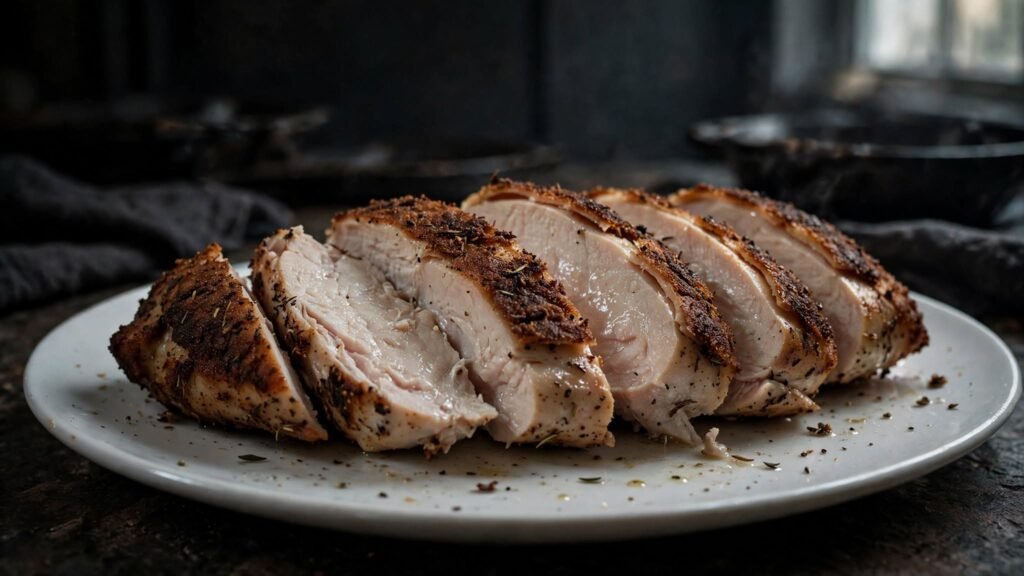
If your chicken repeatedly comes out dry, check these factors:
| What to check | Why it matters |
|---|---|
| Thickness | Thin pieces can finish much sooner |
| Temperature | Excessive heat can dry the exterior |
| Cooking time | Extra minutes can make a major difference |
| Basket load | Crowding can create uneven cooking |
| Internal temperature | Doneness should not be judged by color alone |
| Cut of chicken | Lean meat has less room for error |
| Oil or marinade | May improve surface texture but won’t fix overcooking |
For poultry, use a food thermometer and cook to at least 165°F (73.9°C).
If the chicken has already been seriously overcooked, sauce or gravy can improve the eating experience, but it cannot reverse the moisture lost during cooking.
Why Are My Air Fryer Vegetables Dry?
Vegetables can become dry surprisingly quickly when they are cut into small pieces.
Small pieces have a larger amount of exposed surface relative to their size, so moisture can be lost quickly during cooking.
Try:
- Cutting pieces into reasonably similar sizes.
- Avoiding excessively small pieces.
- Using a light coating of oil when appropriate.
- Checking the food earlier.
- Shaking the basket when it helps.
- Avoiding unnecessary extra cooking time.
If the vegetables are browned but already becoming shriveled, the answer is usually not more heat.
They probably need less cooking.
Why Are My Air Fryer Fries Dry and Hard?
Dry fries can have several causes.
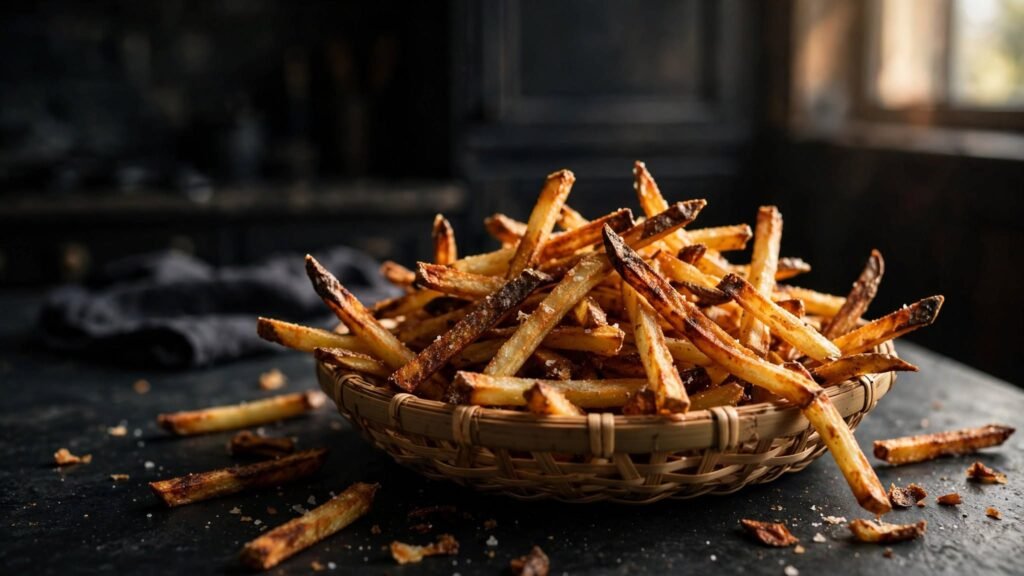
The potatoes may be:
- Cut too thin.
- Overcooked.
- Overcrowded.
- Unevenly sized.
- Cooked with insufficient oil for the preparation.
- Cooked longer than necessary.
Try this approach
Keep the fries in a relatively loose layer, shake them when appropriate, and start checking before the maximum suggested time.
For frozen fries, the package instructions are a useful starting point because products differ in thickness and preparation.
For fresh-cut potatoes, preparation can also affect the final texture.
What About Reheating Food in an Air Fryer?
Reheating is another situation where food can become dry quickly.
Cooked leftovers don’t need to be treated like raw food that needs a long cooking cycle. The objective is to heat them thoroughly without unnecessarily exposing them to heat for longer than needed.
For food-safety purposes, USDA recommends reheating cooked leftovers to 165°F (73.9°C).
For delicate foods, start checking earlier rather than leaving them in until they become heavily browned.
This is especially useful for:
- Chicken
- Fish
- Pizza
- Breaded foods
- Small portions of leftovers
A Simple Troubleshooting Method
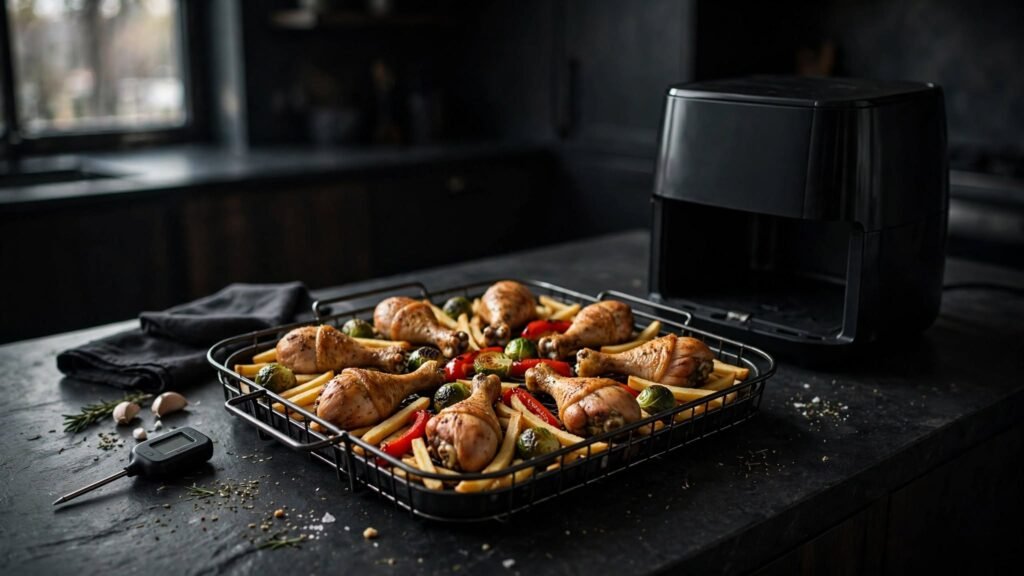
If your air fryer food is dry, don’t change five things at once.
Use this sequence:
Step 1: Reduce unnecessary cooking time.
Step 2: Check whether the temperature is appropriate for the food.
Step 3: Look at the basket. Is it overcrowded?
Step 4: Consider the food itself. Is it particularly lean or cut very thin?
Step 5: Check whether the food benefits from oil.
Step 6: Decide whether shaking or flipping would improve exposure.
Step 7: For meat and poultry, verify doneness with a thermometer.
This makes it easier to identify the actual problem instead of randomly changing the recipe every time.
Common Mistakes That Make Dry Food Worse
When food comes out dry, avoid these reactions:
Adding much more oil
Oil can improve surface texture, but it won’t undo overcooking.
Increasing the temperature
If excessive heat is already causing the problem, more heat is moving in the wrong direction.
Adding extra cooking time
This is particularly problematic when the outside is already dry.
Overloading the basket
More food doesn’t solve an airflow problem.
Copying another air fryer’s cooking time exactly
Different appliances and food quantities can behave differently.
Judging chicken by color alone
USDA notes that color is not a reliable indicator of poultry safety. Use a thermometer instead.
Frequently Asked Questions
Why is my air fryer food so dry?
The most common reasons are overcooking, excessive heat, overcrowding, lean ingredients, unsuitable cooking times, or adapting an oven recipe without adjustment.
How do I stop my air fryer from drying out food?
Start checking food earlier, avoid unnecessary high temperatures, don’t overcrowd the basket, and use oil when the particular food benefits from it.
Does an air fryer dry out chicken?
It can if chicken is cooked too long or at an unsuitable temperature. Lean chicken breast is particularly easy to overcook.
Should I use oil to prevent air fryer food from drying out?
A light amount of oil can improve the surface texture of some foods, but correct cooking time and temperature are more important for preventing overcooking.
Why are my air fryer vegetables dry?
Small pieces can lose moisture quickly. Try larger, more evenly sized pieces, a light oil coating when appropriate, and a shorter cooking time.
Why are my air fryer fries dry and hard?
They may be overcooked, cut too thin, overcrowded, or cooked longer than necessary. Start checking them earlier and give them enough space for airflow.
Should I lower the temperature if my air fryer food is dry?
It can help when the outside is becoming dry or heavily browned before the center is properly cooked. The best adjustment depends on the food.
Does overcrowding make air fryer food dry?
Overcrowding can create uneven cooking. Some pieces may remain undercooked while exposed pieces continue receiving heat and become overcooked.
Do I need to flip food in an air fryer?
Not always. Fries, nuggets, and similar foods often benefit from shaking, while some foods can cook adequately without flipping.
How do I know when chicken is done in an air fryer?
Use a food thermometer rather than relying only on appearance. USDA recommends that poultry reach a minimum internal temperature of 165°F (73.9°C).
Final Conclusion
If your air fryer food is coming out dry, don’t immediately blame the appliance.
Start with cooking time. Then look at temperature, basket crowding, food thickness, and the type of ingredient you’re cooking.
For meat and poultry, check the internal temperature rather than relying on color or the timer alone. For vegetables and fries, pay more attention to piece size, airflow, oil, and when the food actually looks finished.
The goal isn’t to find one magic temperature or one universal cooking time.
It is to understand what your food needs.
If you want to understand why airflow, heat, and the cooking chamber affect these results in the first place, see our guide on How Does an Air Fryer Work? It explains the cooking process behind the results you’re seeing.