Air Fryer Making Noise? What Different Sounds Mean & How to Fix Them
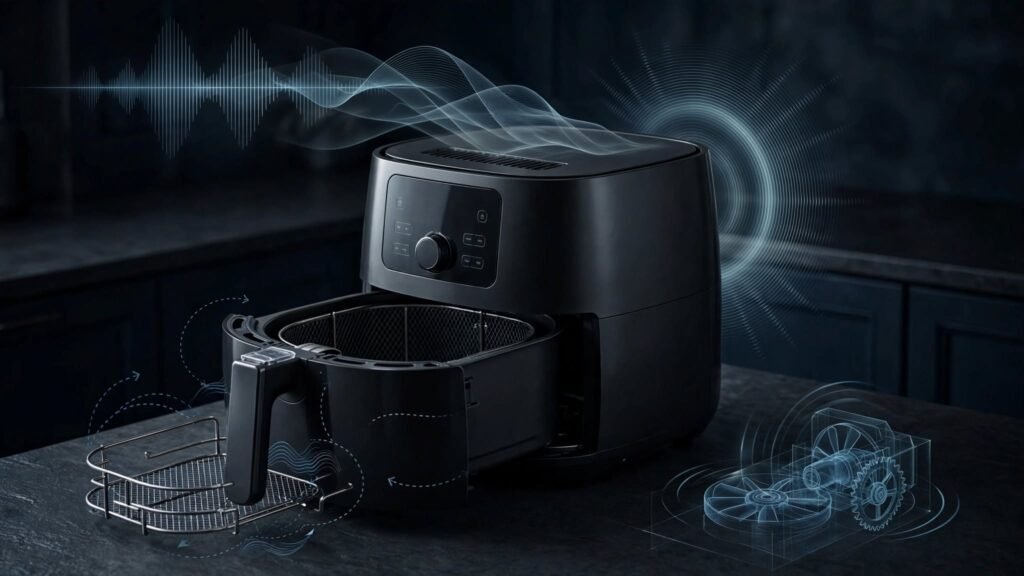
Your air fryer is supposed to make some noise. The fan moves hot air, the motor runs at high speed, and airflow naturally creates a steady hum.
The concern is usually not whether your air fryer makes noise, but whether the sound has suddenly changed.
A loose basket can cause rattling. Crumbs or lightweight food can move around inside the cooking chamber. Parchment or foil can also shift if it is not being used correctly. But grinding, scraping, severe vibration, sparks, or a strong electrical smell are different warning signs.
Before doing anything else, stop the cooking cycle, let the appliance cool, and check the simple things first. This guide explains what common air fryer sounds can mean, what you can safely check yourself, and when troubleshooting should stop.
Air Fryer Making Noise? Start With This Quick Check
If your air fryer suddenly sounds different, don’t immediately assume that the motor has failed.
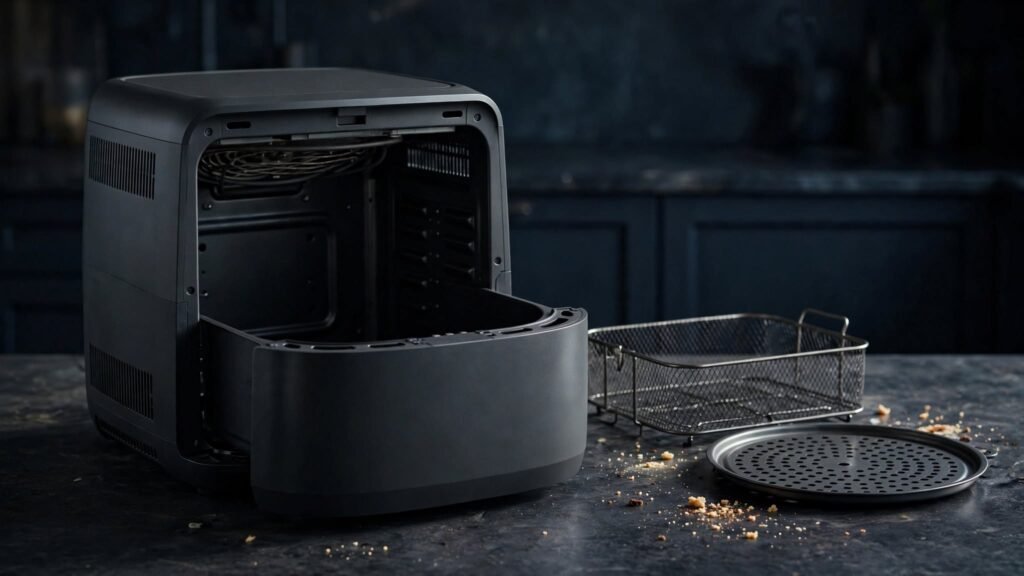
Start with these basic checks after the appliance has cooled:
- Is the basket or drawer seated correctly?
- Is the crisper plate positioned properly?
- Are crumbs or small pieces of food trapped in an accessible area?
- Is the air fryer sitting flat on a stable surface?
- Is it touching another appliance, wall, or object?
- Is any foil, parchment, liner, or other lightweight accessory moving?
- Does anything removable appear loose or damaged?
- Does the sound occur only with certain food or accessories?
- Has the sound changed compared with the air fryer’s normal operation?
That last point matters.
A steady fan hum that has always been present is usually less concerning than a new grinding, scraping, rattling, or unusually loud sound.
If you want to understand why the fan creates these sounds in the first place, see our guide on how an air fryer works.
Quick Air Fryer Noise Diagnosis
The sound itself can provide a useful starting clue, although it cannot identify an internal fault with certainty.
| Air Fryer Sound | Possible Cause | What to Check |
|---|---|---|
| Soft humming | Normal motor and fan operation | Compare it with the appliance’s usual sound |
| Rattling | Loose basket, tray, crumbs, food, or vibration | Reseat removable parts and clean accessible debris |
| Buzzing | Normal operation or an unusual change in sound | Check whether the buzzing is new or unusually loud |
| Whistling | Airflow or a lightweight accessory moving | Check airflow and accessories |
| Clicking | Model-specific operating sounds or a developing problem | Watch for continuous clicking or other warning signs |
| Grinding | Possible rubbing or internal mechanical problem | Stop using it if the sound persists |
| Scraping | Possible mechanical interference | Stop using the appliance and follow manufacturer guidance |
| Very loud fan | Airflow issue, vibration, debris, or possible fault | Check accessible areas and appliance placement |
| Sparks or electrical smoke | Potential electrical or safety problem | Stop using the appliance |
This table is a starting point, not a diagnosis. Air fryer designs vary, so the same sound can have different causes on different models.
What Different Air Fryer Sounds Mean
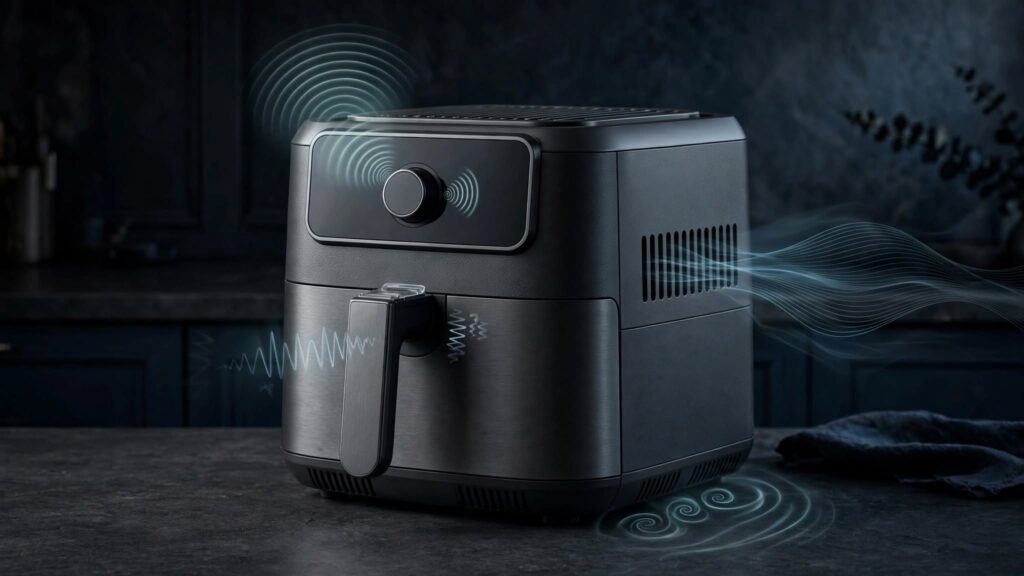
Rattling or Shaking Noise
A rattling sound often means something is loose, vibrating, or moving inside the cooking area.
Possible causes include:
- A basket or crisper plate that is not seated correctly
- Food crumbs moving around
- Lightweight food or breading
- An unstable countertop
- A loose accessory
- Severe vibration from the appliance
Start by letting the air fryer cool. Remove the basket and crisper plate, then check for visible food debris and make sure the removable parts are positioned correctly.
Also check the surface underneath the air fryer. A hard, stable, level surface can help prevent normal fan or motor vibration from becoming amplified.
If the rattling appears to come from deep inside the appliance and continues after the removable parts are correctly positioned, don’t open the housing to investigate it yourself.
Buzzing or Humming Noise
A certain amount of humming is normal because an air fryer uses a motor and fan to circulate heated air.
The more useful question is:
Has the buzzing changed?
If your air fryer has always produced a quiet hum, that may simply be part of its normal operation.
However, a buzzing sound that suddenly becomes much louder, changes character, or occurs alongside grinding, scraping, smoke, burning odors, or other unusual behavior deserves attention.
Check the basket, appliance placement, and accessible areas first. If the unusual sound remains, stop troubleshooting rather than repeatedly running the appliance to reproduce it.
Whistling or High-Pitched Noise
A whistling sound can sometimes result from the way air is moving through the appliance.
Air fryers rely on strong airflow, so changes in the airflow path can sometimes change the sound.
Check:
- Whether the air intake or exhaust area is obstructed
- Whether parchment or foil is moving
- Whether a lightweight liner is being used incorrectly
- Whether an accessory is loose
- Whether the noise only occurs with a particular food arrangement
If removing an accessory eliminates the sound, you may have identified the immediate cause.
A new persistent high-pitched noise that remains without the accessory should not simply be dismissed as normal fan noise.
Clicking Noise
An occasional click does not automatically mean the air fryer is defective.
Depending on the design, an appliance may produce small operating sounds during cooking. What matters is the pattern.
Pay attention if the clicking is:
- New
- Continuous
- Increasing in frequency
- Unusually loud
- Accompanied by smoke or a burning smell
- Accompanied by sparks or malfunction
If clicking occurs together with a serious warning sign, stop using the air fryer.
Grinding or Scraping Noise

Grinding or scraping is a sound I would not ignore.
These sounds may indicate that something is rubbing or that an internal mechanical component is not operating normally.
First, turn off the appliance and allow it to cool. Check the removable basket, tray, and other accessible components for obvious problems.
If everything appears correctly positioned but the grinding or scraping continues, stop using the air fryer.
Do not open the housing to inspect the motor, fan, wiring, or electrical components. Internal appliance repair is not a suitable DIY troubleshooting step for most users.
Loud Fan or Roaring Noise
Air fryers are designed to move hot air quickly, so a noticeable fan sound is normal.
But a sudden change in fan noise is worth investigating.
A much louder fan can sometimes be associated with:
- Something affecting airflow
- Debris in an accessible area
- Appliance vibration
- A loose removable component
- An internal problem
First, make sure the air fryer has adequate space around it and isn’t pressed against another object.
If the fan suddenly becomes extremely loud, starts rattling, or sounds as though something is rubbing against it, stop using the appliance if the problem persists after the basic checks.
Why Is My Air Fryer Making Noise?
Once you identify the type of sound, you can narrow down the possible causes.
The Basket or Crisper Plate Isn’t Sitting Properly
A removable part that isn’t positioned correctly can vibrate during operation.
Remove it after the appliance has cooled. Check for:
- Crumbs
- Food residue
- Misalignment
- Visible damage
- Anything preventing the basket or tray from sitting normally
Then reinstall it according to your model’s instructions.
Never force a basket into position.
Food or Crumbs Are Causing the Noise
Small pieces of food can move when the fan circulates air.
Lightweight crumbs, loose breading, or small food particles may bounce around the cooking chamber and produce rattling or vibrating sounds.
After the appliance cools, remove visible debris using the cleaning method recommended for your model.
For broader cleaning guidance, see our guide to how to clean an air fryer.
Grease or Food Residue Has Built Up
Grease and food residue can contribute to smoke, odors, and airflow problems.
In some situations, loose debris may also move around during operation and create unusual sounds.
Regular cleaning is therefore more than a cosmetic chore.
However, don’t pour water into the main appliance body or attempt to clean electrical components yourself. Only clean areas and parts that your model’s instructions allow you to clean.
The Air Fryer Is Vibrating on the Counter
Sometimes the appliance itself isn’t the only thing making noise. The countertop can amplify vibration.
Make sure the air fryer is:
- On a flat surface
- Stable
- Not rocking
- Not touching nearby objects
- Positioned with appropriate clearance around its airflow openings
A small change in placement can sometimes make a surprisingly large difference in perceived noise.
Foil, Parchment, or Another Accessory Is Moving
Lightweight materials can move in strong airflow if they’re used incorrectly or aren’t held down by appropriate food.
If you use parchment, foil, liners, or another accessory, make sure it is appropriate for your particular model and used according to its instructions.
For more guidance, see our article on whether you can put aluminum foil in an air fryer.
The same principle applies to parchment and liners: don’t assume that an accessory suitable for one air fryer is automatically suitable for every design.
The Fan or Another Internal Component May Have a Problem
If you’ve checked the obvious causes and the sound still appears to come from inside the appliance, an internal component may be involved.
Grinding, scraping, severe rattling, or another persistent mechanical sound should not be treated as ordinary fan noise simply because air fryers are naturally noisy.
This is where your troubleshooting should stop.
Don’t open the appliance yourself to inspect its motor, wiring, fan assembly, or other electrical components.
If the appliance is under warranty, contact the manufacturer or an authorized service provider.
How to Troubleshoot an Air Fryer Making Noise
Once the air fryer has completely cooled, work through these checks one at a time.

1. Turn Off and Cool the Air Fryer
Don’t inspect a hot appliance.
Give the cooking chamber and removable components enough time to cool before checking them.
2. Remove and Reseat the Basket
Take out the basket and crisper plate.
Check for crumbs, food particles, or anything that prevents the parts from sitting normally.
3. Clean Accessible Debris
Remove visible food particles from areas that your model’s cleaning instructions allow you to access.
Don’t disassemble the appliance.
4. Check the Air Fryer’s Position
Make sure it is sitting securely on a flat, stable surface and isn’t touching nearby objects.
5. Check Accessories
Inspect foil, parchment, liners, racks, or other accessories.
If something is loose or moving in the airflow, remove it.
6. Consider Whether the Food Is Causing the Sound
If the noise only occurs with a particular food or arrangement, look for loose breading, lightweight pieces, or an accessory that may be moving.
Don’t repeatedly run the air fryer simply to reproduce a serious mechanical noise.
7. Stop if the Noise Persists or Becomes Severe
If the sound remains grinding, scraping, severely rattling, or otherwise abnormal after the basic checks, stop using the appliance and contact the manufacturer.
What Not to Do With a Noisy Air Fryer
Troubleshooting doesn’t mean taking the appliance apart.
Avoid these mistakes:
- Don’t open the air fryer housing to inspect the motor or wiring.
- Don’t insert objects into ventilation openings.
- Don’t continue running a severely noisy appliance just to see what happens.
- Don’t use a damaged power cord or plug.
- Don’t ignore sparks or electrical smoke.
- Don’t block the appliance’s airflow openings.
- Don’t force a basket or accessory into position.
- Don’t assume an accessory is suitable simply because it worked in another air fryer.
The goal is to identify simple, accessible causes, not perform internal electrical repairs.
Is It Normal for an Air Fryer to Make Noise?
Yes.
An air fryer isn’t designed to operate silently.
The fan circulates hot air while the motor powers the airflow system, so you can normally hear some combination of:
- Fan noise
- Airflow
- A steady hum
- Occasional model-specific operating sounds
The key is what is normal for your particular appliance.
A consistent fan sound that has been present since you started using the air fryer is very different from a sudden grinding or scraping noise.
A new sound deserves investigation, especially if it is getting louder or appears alongside another problem.
When Should You Stop Using a Noisy Air Fryer?
Some noises can be investigated safely. Others are warning signs.
Stop using the air fryer if you notice:
- Sparks
- Flames
- Smoke coming from the electrical area or appliance housing
- A strong electrical or burning-plastic smell
- Melted plastic
- A damaged power cord or plug
- Severe or unusual vibration
- Persistent grinding
- Persistent scraping
- A serious electrical or operating malfunction
If you can safely do so, switch off and unplug the appliance.
What About Smoke From Food?
Not all smoke has the same meaning.
Fatty foods or accumulated grease can sometimes produce cooking smoke. That’s different from smoke coming from the cord, plug, electrical area, or appliance housing.
If you see smoke from an electrical area or smell burning plastic or an electrical odor, treat it as a safety issue rather than normal cooking smoke.
For general air fryer safety guidance, you can also review our Air Fryer Safety Tips.
Should You Replace an Air Fryer That Makes Noise?
Not necessarily.
A strange sound doesn’t automatically mean the air fryer needs to be replaced.
If the cause is something simple, such as a loose basket, food debris, an unstable surface, or an incorrectly positioned accessory, correcting that issue may solve the problem.
But an appliance with a persistent internal mechanical noise, damaged electrical components, or serious safety symptoms should not be kept in service simply because it still turns on.
If the appliance is under warranty, contacting the manufacturer is usually a better next step than attempting a repair yourself.
You can also start with our main Air Fryer guide if you’re comparing air fryer types or considering whether a different design would better suit your needs.
Frequently Asked Questions
Why is my air fryer making a rattling noise?
A rattling noise can come from a loose basket, crisper plate, crumbs, lightweight food, an accessory moving in the airflow, or vibration from the countertop. Let the appliance cool, check the removable components, clean accessible debris, and make sure the air fryer is stable.
Why is my air fryer making a buzzing noise?
A soft hum or buzz can be part of normal fan and motor operation. If the buzzing suddenly becomes much louder or is accompanied by grinding, scraping, smoke, burning odors, or malfunction, stop using the appliance and investigate the issue safely.
Is it normal for an air fryer fan to be loud?
Some fan noise is normal because air fryers need strong airflow. What matters is whether the sound is consistent with the appliance’s normal operation. A sudden increase in fan noise, especially with rattling or scraping, deserves attention.
Why does my air fryer make a grinding noise?
Grinding can indicate that something is rubbing or that an internal mechanical component may not be operating normally. Check the removable parts after the appliance cools. If the grinding continues, stop using the air fryer rather than opening the housing yourself.
Can crumbs make an air fryer noisy?
Yes. Small crumbs or loose food particles can move around while the fan is operating and may create rattling or vibrating sounds. Let the appliance cool and clean accessible areas according to its instructions.
Why does my air fryer make a whistling sound?
Whistling can sometimes result from airflow or a lightweight accessory moving during operation. Check the airflow path and accessories. If the high-pitched sound is new and continues after those checks, stop using the appliance if the noise remains abnormal.
When should I stop using a noisy air fryer?
Stop using it when the noise is accompanied by sparks, flames, electrical smoke, a strong electrical or burning-plastic smell, damaged wiring, severe vibration, persistent grinding, scraping, or another serious malfunction.
Final Conclusion
An air fryer is not supposed to be completely silent. Fan and airflow noise are part of normal operation, but a new or unusually severe sound deserves attention.
Start with the simple checks: let the appliance cool, reseat the basket, remove accessible crumbs, check the cooking accessories, and make sure the air fryer is stable and has appropriate airflow clearance.
If the noise is grinding, scraping, severely rattling, or accompanied by sparks, electrical smoke, a burning smell, damaged wiring, or severe vibration, don’t keep testing the appliance. Stop using it and follow the manufacturer’s safety guidance.
The goal isn’t to make your air fryer silent. It’s to recognize the difference between normal operating noise and a sound that tells you to stop.
For more practical guidance on choosing and using these appliances, explore our air fryer resources and related guides on how an air fryer works and air fryer safety.