Why Is My Air Fryer Smoking? 7 Common Causes and Easy Fixes
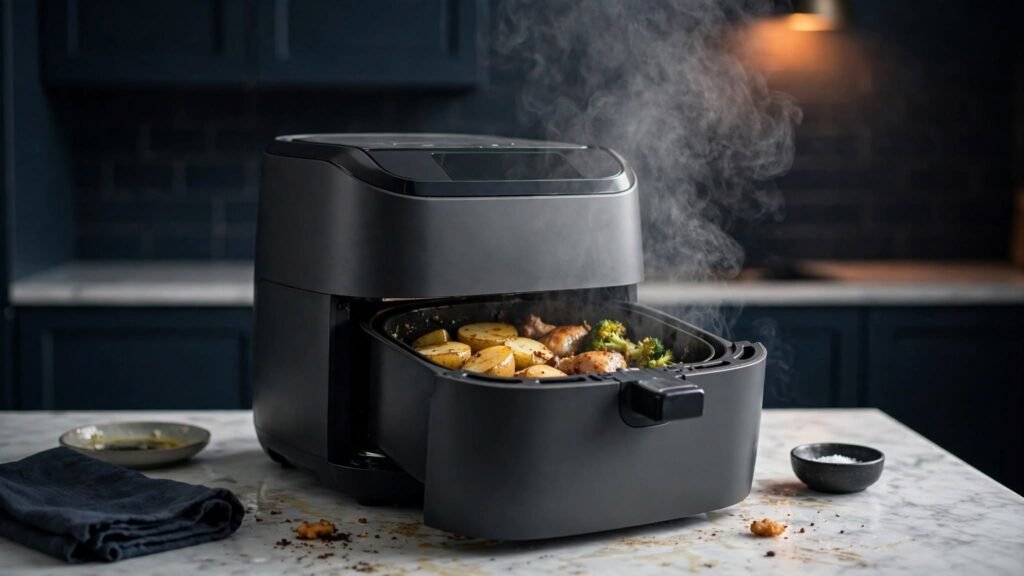
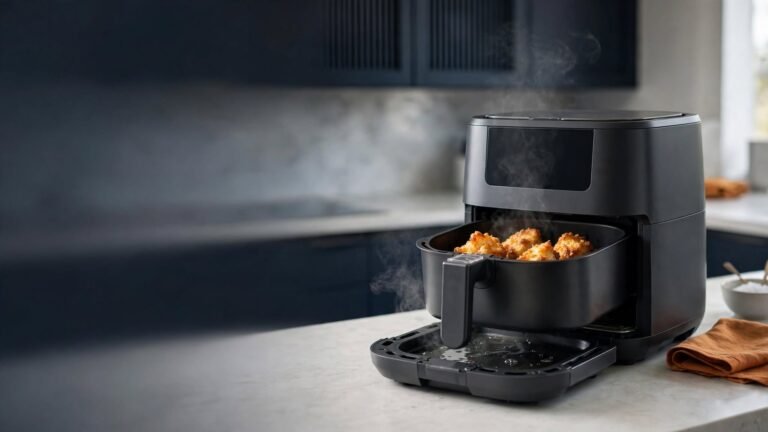
An air fryer can produce a little steam, food smoke, or even a burnt smell depending on what you are cooking. But if you suddenly see smoke coming from your air fryer, it is reasonable to stop and check what is happening.
In many cases, the source is fairly simple: excess grease, old food residue, loose crumbs, high heat, or a food that releases a lot of fat while cooking. However, smoke accompanied by sparks, flames, electrical odors, or smoke from the cord or appliance housing is a different situation.
The important thing is to identify where the smoke is coming from and what it smells like before continuing to cook.
This guide explains the seven common causes of air fryer smoke, what you can safely check, how to prevent it, and when smoking means you should stop using the appliance.
Quick Answer: Why Is My Air Fryer Smoking?
The most common causes of air fryer smoke are:
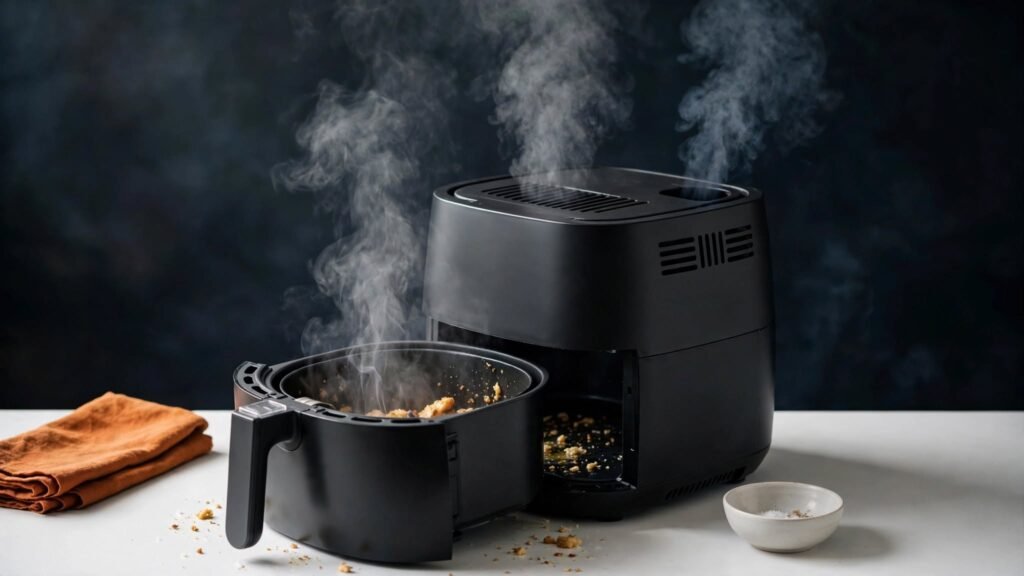
- Excess grease or fat
- Old food residue
- Loose crumbs or lightweight food
- Cooking at a temperature that is too high for the food
- An overcrowded basket
- Sauces, marinades, or sugary coatings burning
- Steam being mistaken for smoke
If the smoke has a burnt food or greasy smell, start by checking the food, basket, and accessible cooking areas after the appliance has cooled.
If you notice flames, sparks, smoke from the cord or appliance housing, a strong electrical smell, or a burning-plastic odor, stop using the air fryer and follow the manufacturer’s safety instructions.
What to Do If Your Air Fryer Starts Smoking
If you suddenly see smoke, don’t keep cooking just to see whether it gets worse.
First, stop the cooking cycle. If there are flames, sparks, electrical smoke, or another serious warning sign, disconnect the appliance from power only if you can do so safely.
Allow the air fryer to cool before inspecting it.
Once it is cool enough to handle safely, check:
- The basket and crisper plate
- Visible grease or food residue
- Accessible areas of the cooking chamber
- Loose crumbs or burnt food
- The food you were cooking
- The cooking temperature
- Any liner, foil, or accessory being used
Do not open the appliance housing or attempt to inspect internal electrical components yourself.
Why Is My Air Fryer Smoking?
There isn’t always one single explanation for smoke. The food, temperature, grease, cooking chamber, and accessories can all play a role.
Here are seven common causes worth checking.
1. Excess Grease or Fat Is Smoking
Fatty foods are one of the most common reasons an air fryer may start producing smoke.
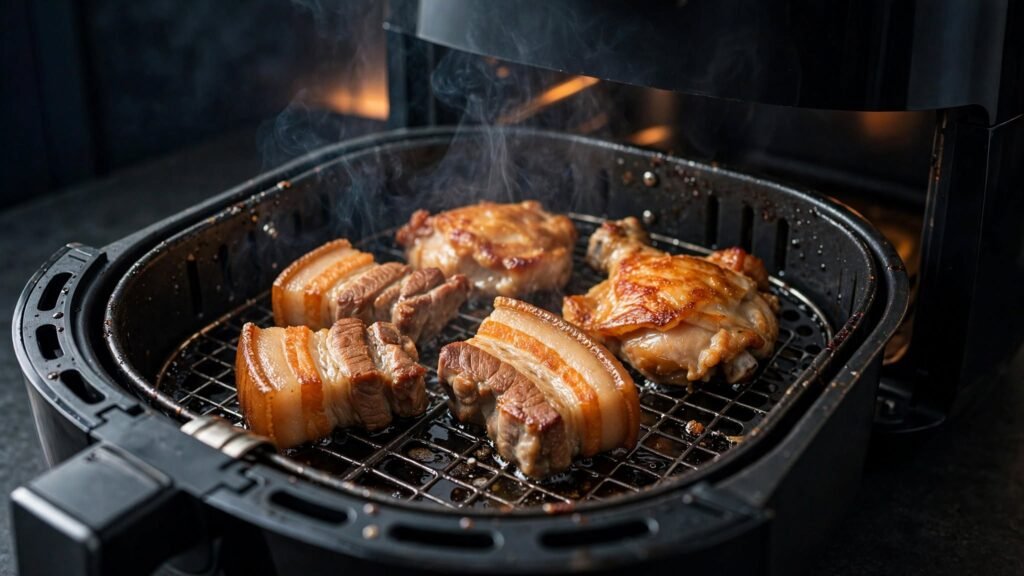
Foods such as
- Bacon
- Sausages
- Burgers
- Fatty cuts of meat
- Chicken with a lot of skin
can release a considerable amount of fat during cooking.
That grease can collect in the cooking area and become hot enough to produce smoke, particularly when the cooking temperature is high.
What to do
Stop the cooking cycle and allow the air fryer to cool.
Once it is safe to handle:
- Remove excess grease
- Clean the basket
- Check for visible residue
- Clean accessible areas according to your model’s instructions
You may also want to reduce additional oil when cooking foods that already contain plenty of fat.
More oil isn’t automatically better for air-fried food.
2. Old Grease or Food Residue Is Burning
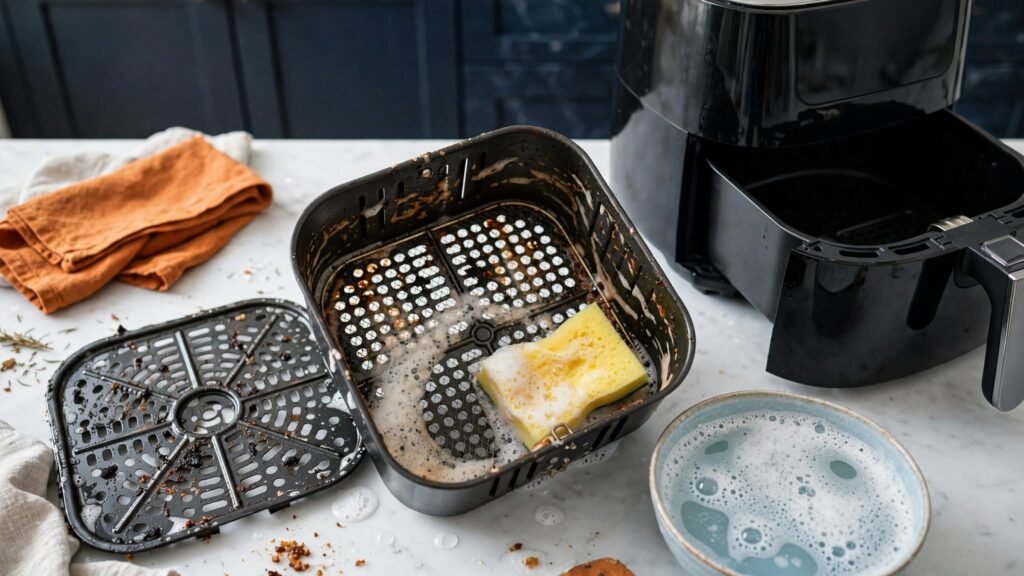
Sometimes the basket looks reasonably clean while residue remains elsewhere in the cooking chamber.
Grease, crumbs, and small pieces of food can accumulate over repeated cooking sessions. When those residues become hot again, they may burn and produce smoke.
This is one reason simply washing the basket may not solve every smoking problem.
After the appliance has completely cooled, inspect the accessible areas of the cooking chamber for:
- Old grease
- Burnt food
- Crumbs
- Food particles
- Residue from sauces or marinades
Clean only the areas and components your model’s instructions allow you to clean.
For more cleaning guidance, see our guide on How to Clean an Air Fryer.
3. Loose Food or Crumbs Are Burning During Cooking
Air fryers circulate hot air quickly, so lightweight food particles can move around during cooking.
Loose breading, crumbs, herbs, and small food pieces can sometimes end up against hot surfaces depending on the design of the appliance.
You may notice:
- A small amount of smoke
- A burnt-food smell
- Charred crumbs after cooking
How to reduce the problem
Avoid leaving loose food particles in the cooking chamber.
Also be careful with lightweight ingredients and foods with loose coatings.
If you find burnt crumbs after cooking, clean them out before the next use.
Don’t assume every instance of smoke means the heating element has failed. Look for the simple food-related causes first.
4. The Cooking Temperature Is Too High
High heat can make grease, sauces, and food residue smoke more quickly.
For example, a food that works well at a moderate temperature may produce smoke when cooked at the highest setting.
Instead of automatically choosing the maximum temperature, follow the temperature recommended for the food or recipe.
If you reduce the temperature and the smoke disappears, that gives you a useful clue.
However, don’t assume temperature is the only possible cause. If smoke continues after you’ve corrected the cooking temperature and removed obvious food-related causes, investigate further.
5. The Basket Is Too Full
Overcrowding isn’t necessarily a direct cause of smoke, but it can affect airflow, cooking, and how grease collects around the food.
When the basket is packed tightly:
- Food may cook unevenly
- Airflow can be restricted
- Pieces may touch each other
- Grease may collect differently
- Cooking can take longer
If you’re filling the basket right to the top, try cooking the food in two smaller batches.
You may spend a little more time cooking, but better spacing can improve airflow and cooking consistency.
If your goal is simply to understand how airflow affects an air fryer, our guide on How Does an Air Fryer Work? explains the basic cooking process.
6. Sauce, Marinade, or a Wet Coating Is Burning
Sauces and marinades can behave very differently from dry foods.
A sugary sauce can darken or burn at high temperatures. A wet marinade may drip into the bottom of the cooking area, while a thick coating can leave residue behind.
If your air fryer only starts smoking when you’re cooking a particular saucy or heavily marinated food, the coating may be part of the problem.
Try this.
- Use less sauce during the main cooking stage when appropriate
- Add delicate sauces closer to the end when the recipe allows
- Avoid excessive sugary coatings at very high temperatures
- Follow the cooking instructions for the specific food
The goal isn’t to eliminate sauces. It’s to prevent a thick layer of sauce or marinade from becoming the hottest thing in the cooking chamber.
7. It May Be Steam, Not Smoke
Not every white cloud coming from an air fryer is smoke.
Foods with high moisture content release water vapor as they cook. That steam can look like a white cloud coming from the appliance.
Steam is more likely when:
- The food contains a lot of water
- The cloud disappears quickly
- There is no burnt smell
- The food itself isn’t charred or burning
Smoke is more likely when:
- You notice a burnt or charred odor
- The cloud persists
- Grease or food residue is present
- You see burnt food
- The problem appears with fatty or heavily coated foods
Appearance alone isn’t always enough to identify the source, so consider the smell, the food, and what was happening immediately before the smoke appeared.
Air Fryer Smoking and Smelling Like It’s Burning
A burning smell deserves a closer look, but not every burning smell means the same thing.
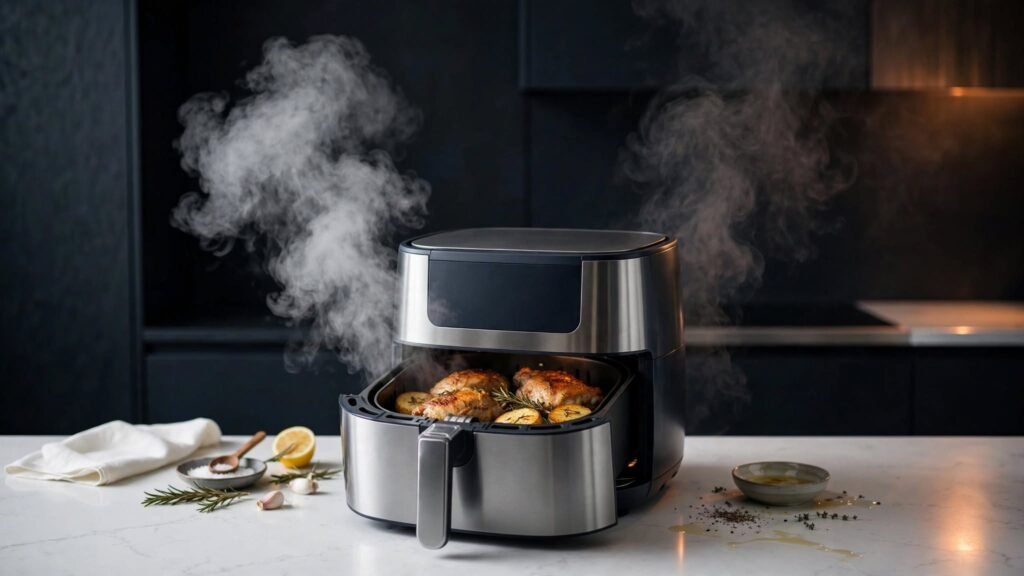
Burnt Food or Grease Smell
If the smell resembles:
- Burnt food
- Charred crumbs
- Old grease
- Burnt sauce
Then inspect the food and cooking chamber after the air fryer has cooled.
There may be residue that is becoming hot during cooking.
Electrical or Burning-Plastic Smell
This is different.
A strong smell that resembles:
- Burning plastic
- Electrical components
- Wiring
- A hot electrical connection
should not be dismissed as a normal cooking odor.
If you also notice sparks, smoke from the cord or appliance housing, damaged wiring, or unusual electrical behavior, stop using the appliance.
Do not open the housing to investigate internal components.
For broader safety guidance, see our Air Fryer Safety Tips.
Air Fryer Smoke: Quick Diagnosis
| What You Notice | Possible Cause | What to Check |
|---|---|---|
| Greasy smoke | Excess fat or oil | Food, basket, and grease buildup |
| Burnt-food smell | Crumbs or residue | Cooking chamber and accessible areas |
| White cloud with little or no odor | Steam | Moisture in the food |
| Smoke with bacon. | Rendered fat | Excess grease and cooking temperature |
| Smoke with saucy food. | Sauce or marinade burning | Amount of sauce and temperature |
| Smoke after repeated use | Residue buildup | Basket and accessible cooking areas |
| Smoke with an electrical smell | Possible electrical problem | Stop using the appliance. |
| Smoke with sparks or flames | Serious safety issue | Stop using immediately. |
This is a troubleshooting guide, not a way to diagnose an internal electrical fault. When the problem appears to originate inside the appliance, professional or manufacturer support is the safer route.
How to Stop an Air Fryer From Smoking
The right solution depends on what is causing the smoke.
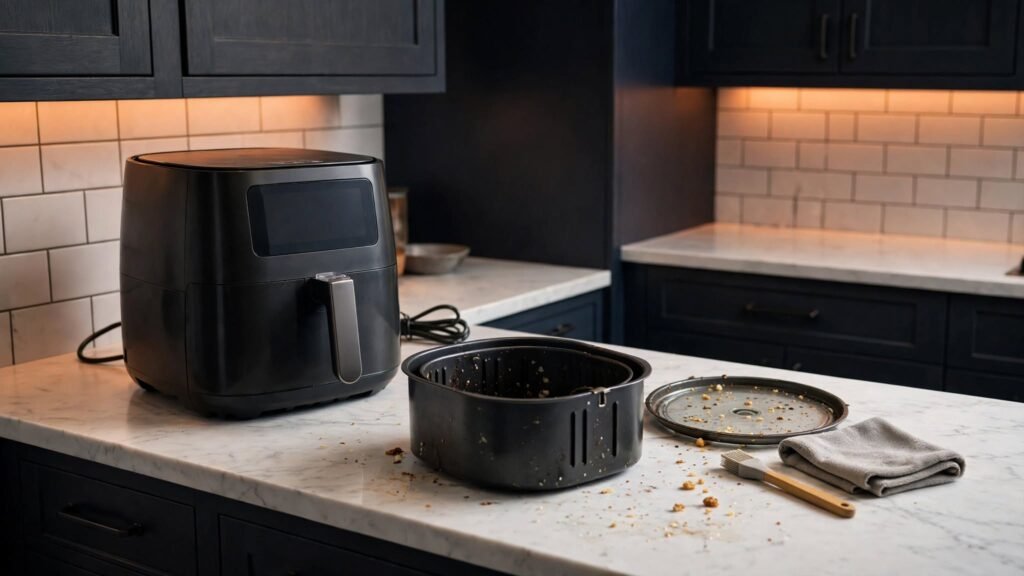
If the source is food or grease, these steps can help:
- Stop cooking and allow the appliance to cool.
- Remove excess grease.
- Clean the basket and crisper plate.
- Check accessible areas of the cooking chamber.
- Remove visible crumbs and burnt food.
- Review the cooking temperature.
- Avoid overcrowding the basket.
- Check sauces, marinades, and coatings.
- Review any foil, parchment, liner, or other accessory being used.
Don’t change five things at once if you can avoid it.
For example, if the smoke appears only when cooking bacon, excessive rendered fat is a more useful starting point than immediately assuming the appliance has a mechanical failure.
How to Prevent Your Air Fryer From Smoking
A little routine maintenance can prevent many food-related smoking problems.
Clean After Greasy Foods
Don’t allow large amounts of grease to sit in the appliance through several cooking sessions.
Remove Crumbs
Small food particles can accumulate over time and become burnt residue.
Use Appropriate Temperatures
Higher isn’t automatically better. Use a temperature appropriate for the food and your particular air fryer.
Avoid Excess Oil
Foods that already contain substantial fat may not need much additional oil.
Don’t Overcrowd the Basket
Give food enough room for the airflow your appliance is designed to provide.
Be Careful With Sauces
Sugary or oily coatings can burn or leave residue, particularly at higher temperatures.
Check Accessories
If you’re using foil, parchment, liners, racks, or another accessory, make sure it is appropriate for your particular air fryer and doesn’t interfere with airflow.
Why Does My Air Fryer Smoke With Certain Foods?
Some foods are more likely to create smoke than others.
Bacon and Other Fatty Foods
Bacon can release a substantial amount of fat during cooking.
The same can happen with sausages, fatty meat, and chicken with a lot of skin.
If smoke appears mainly with these foods, check for excess rendered grease and consider whether the cooking temperature is higher than necessary.
Frozen Foods
Frozen foods don’t automatically cause an air fryer to smoke.
However, some products may contain added oil, coatings, breading, or sauces that behave differently at higher temperatures.
If a particular frozen food repeatedly produces smoke:
- Check its cooking instructions
- Avoid unnecessary extra oil
- Don’t overcrowd the basket
- Watch for burnt coating or residue
If the same problem occurs with many different foods, the food itself may not be the whole explanation.
Saucy Foods
Sugary, oily, or thick sauces can burn more readily than plain foods.
If smoke appears mainly when cooking sauced food, try adjusting when the sauce is added or reducing the amount used during the high-heat portion of cooking.
Is It Normal for a New Air Fryer to Smoke?
A new air fryer may have a noticeable smell during its first uses, depending on the model and the manufacturer’s instructions.
Before using a new appliance, read its setup and first-use instructions. Some manufacturers specify particular cleaning or preparation steps.
However, don’t automatically assume that heavy smoke, flames, sparks, or a strong electrical or burning-plastic smell is normal just because the appliance is new.
If something seems unusual, stop and check the manufacturer’s instructions before continuing.
What Not to Do When Your Air Fryer Smokes
A smoking air fryer isn’t an invitation to start taking the appliance apart.
Avoid these mistakes:
- Don’t keep cooking just to see whether the smoke gets worse.
- Don’t touch hot internal components.
- Don’t pour water into the main appliance body.
- Don’t spray cleaner into ventilation or electrical openings.
- Don’t open the housing to inspect wiring or the motor.
- Don’t use a damaged power cord or plug.
- Don’t repeatedly test an appliance that shows electrical warning signs.
- Don’t assume that every type of smoke is harmless.
If the problem appears to be inside the appliance rather than coming from food or grease, stop using it and seek manufacturer or qualified service guidance.
When Should You Stop Using an Air Fryer?
Not every small puff of food-related smoke means the appliance is broken.
But some warning signs should not be ignored.
Stop using the air fryer if you notice:
- Flames
- Sparks
- Smoke coming from the cord, plug, or appliance housing
- A strong electrical smell
- A burning-plastic smell
- A damaged power cord or plug
- Unusual electrical behavior
- Persistent heavy smoke after obvious food-related causes have been addressed
If you can safely disconnect the appliance from power, do so. Then follow the manufacturer’s safety instructions.
Don’t attempt an internal electrical repair unless you are properly qualified to perform that work.
The important distinction is this:
Food or grease smoke calls for troubleshooting. Electrical warning signs call for stopping use.
Frequently Asked Questions
Why is my air fryer smoking?
Common causes include excess grease, food residue, loose crumbs, high cooking temperatures, overcrowding, sauces or marinades, and fatty foods. Sometimes what looks like smoke is actually steam from moist food.
Why is my air fryer smoking with bacon?
Bacon releases fat during cooking, and that rendered grease can become hot enough to smoke. Check the amount of grease collecting in the cooking area and consider whether the cooking temperature is appropriate.
Why is my air fryer producing white smoke?
It may actually be steam from moisture in the food. If the cloud disappears quickly and there is no burnt smell, steam is a reasonable possibility. Persistent smoke with a burnt odor should be investigated for grease, residue, or food.
Why does my air fryer smell like it’s burning?
Burnt food, grease, crumbs, and sauces can create a burning smell. A smell resembling burning plastic or an electrical component is different and should be treated as a warning sign.
Can a dirty air fryer cause smoke?
Yes. Old grease, crumbs, and food residue can become very hot and produce smoke. Cleaning the basket may not be enough if residue has collected in other accessible areas of the cooking chamber.
Why is my air fryer smoking with frozen food?
Some frozen foods contain added oil, breading, coatings, or sauces that can produce smoke under certain cooking conditions. Check the food’s instructions, avoid unnecessary extra oil, and make sure the basket isn’t overcrowded.
Is it normal for a new air fryer to smoke?
A slight smell during initial use can occur depending on the appliance and its manufacturer’s instructions. Heavy smoke, flames, sparks, or a strong electrical or burning-plastic smell should not automatically be considered normal.
Should I stop using my air fryer if it smokes?
If the smoke clearly comes from food or grease, stop cooking, let the appliance cool, and investigate the cause. If you see flames or sparks, smell burning plastic or electrical components, see smoke from the cord or appliance housing, or notice another serious electrical warning sign, stop using the appliance.
Final Conclusion
An air fryer smoking doesn’t automatically mean the appliance is broken.
In many cases, the cause is something relatively simple: excess grease, old food residue, loose crumbs, high heat, an overcrowded basket, or a sauce that is burning. Moist foods can also produce steam that looks like smoke.
Start with the obvious causes. Stop cooking, let the air fryer cool, check the food and basket, inspect accessible areas for grease or residue, and consider whether the cooking temperature or food itself is contributing to the problem.
But don’t treat every type of smoke the same way.
Food or grease smoke calls for careful troubleshooting. Sparks, flames, electrical smoke, a burning-plastic smell, or smoke coming from the appliance’s electrical areas are safety warnings.
In those situations, stop using the air fryer and follow the manufacturer’s safety guidance rather than repeatedly testing the appliance.
The goal isn’t simply to make the smoke disappear. It’s to understand why your air fryer is smoking and whether the cause is something you can safely address or a problem that requires the appliance to be taken out of service.