Air Fryer Corn on the Cob: Easy, Juicy & Crispy
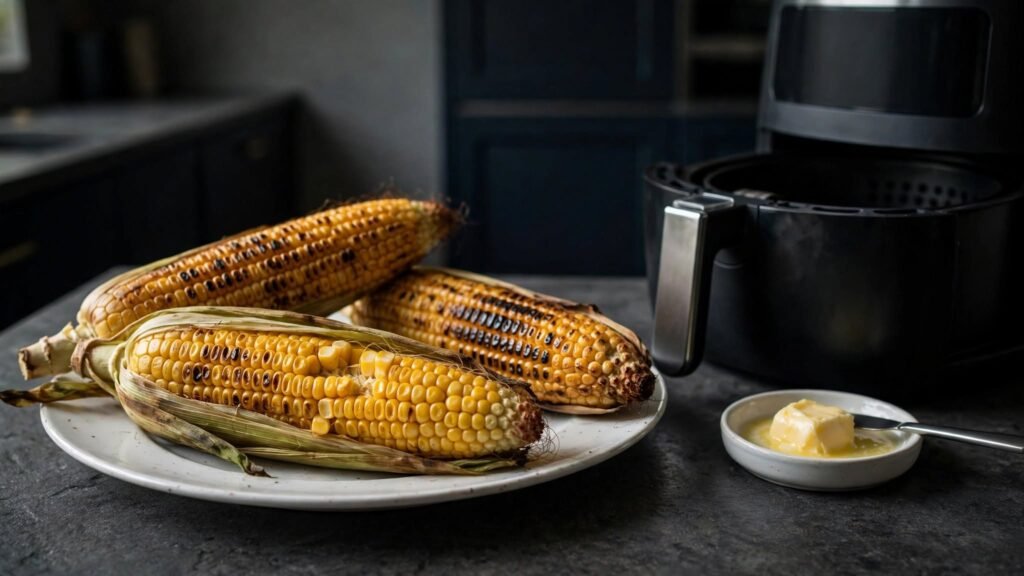
How long does Air Fryer Corn on the Cob take in an air fryer? You’ll find answers ranging from several minutes to around 20 minutes, and that variation is understandable. Ear size, starting temperature, desired browning, basket space, and the air fryer itself can all change the result.
This guide gives you a practical starting range instead of pretending there is one magic number. You’ll also learn how fresh and frozen corn differ, whether you need oil or butter, when to leave the husk on, how to get deeper browning, and what to do when corn comes out dry or pale.
Why Make Corn on the Cob in an Air Fryer?
Boiling is straightforward, but it does not give the kernels any roasted browning. Grilling produces stronger char and smoke, but it requires a grill and a little more setup.
An air fryer sits somewhere between those methods. Its circulating dry heat can brown the outside of the corn while the kernels cook through, giving you a roasted texture without needing a grill.
It is also convenient when you only want a few ears rather than a large batch.
Air Fryer Corn Temperature and Time
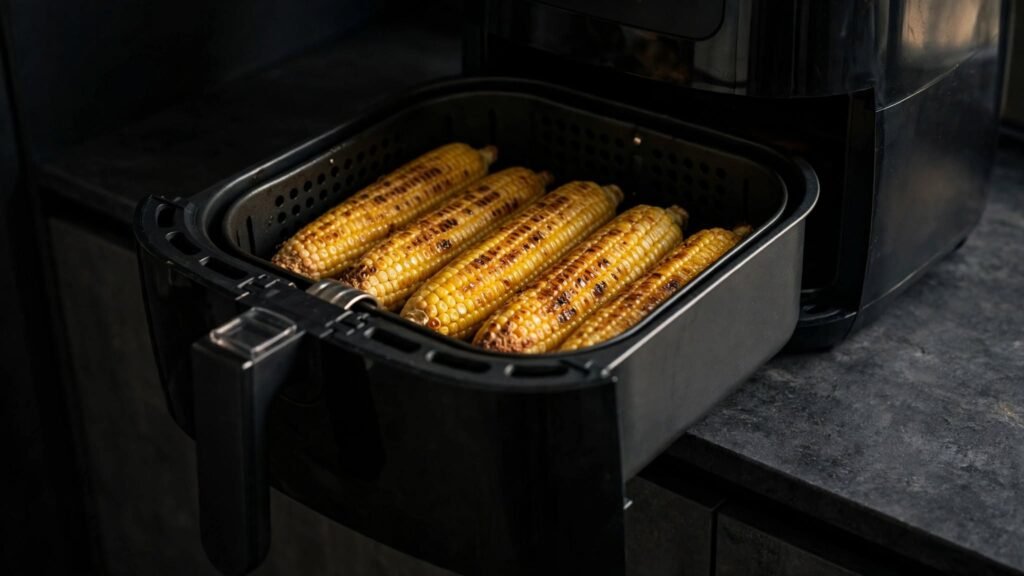
There is no single cooking time that works perfectly for every air fryer or every ear of corn. Current air-fryer guidance also reflects this variation. For example, COSORI’s cooking chart lists whole corn on the cob at 380°F for 10–18 minutes, while its own corn recipes use somewhat different settings and times.
Use the following as starting points, then adjust based on the size of the ears and how much browning you want.
| Result | Temperature | Starting Time |
|---|---|---|
| Lightly browned | 375°F | 8–10 minutes |
| Golden with moderate browning | 390–400°F | 10–15 minutes |
| More deeply browned | 400°F | 13–16 minutes |
| Frozen corn on the cob | 375–400°F | Start checking around 15 minutes |
| Reheating cooked corn | Around 350°F | Start checking after 3–5 minutes |
The times are not guarantees. A smaller ear can finish sooner, while a thick ear may need additional time.
For a batch containing different sizes, check the smaller ears first so they do not continue cooking simply because the largest ear needs more time.
How to Cook Fresh Corn on the Cob
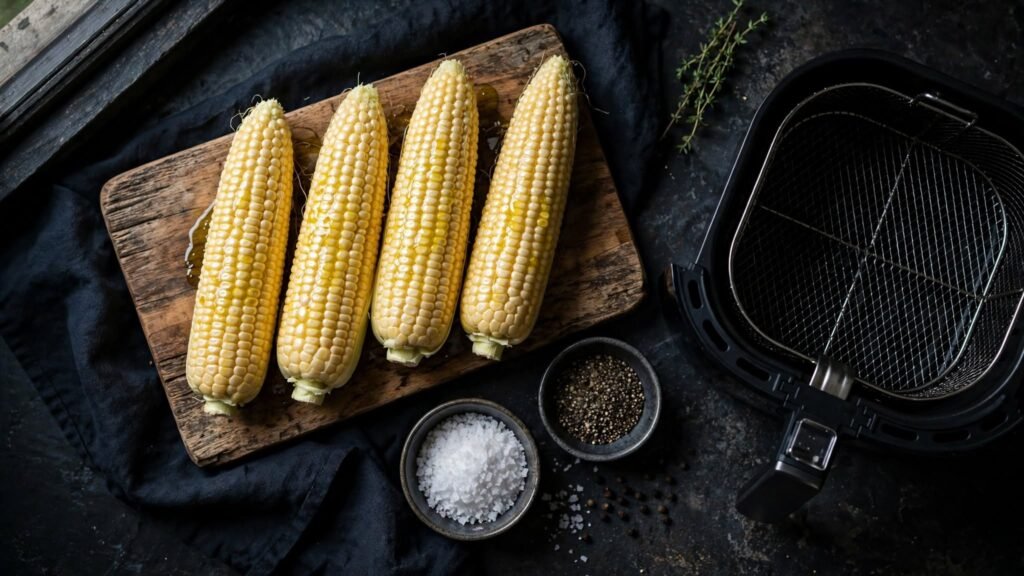
Ingredients
- 4 ears fresh corn on the cob
- 1–2 tablespoons neutral oil or olive oil
- Salt, to taste
- Black pepper, optional
- Butter, for serving
- Optional seasonings such as garlic powder, chili powder, paprika, or lime juice
Step 1: Prepare the Corn
Remove the husks and silk, then rinse the ears if needed.
Pat the corn dry before adding oil. Excess surface moisture can slow browning and encourage more steaming during the early part of cooking.
Step 2: Add a Light Coating of Oil
Rub each ear with a thin layer of oil.
You do not need to soak the corn. A light coating is enough to help seasoning stick and encourage more even browning.
Season with salt now, or add your preferred seasoning after cooking.
Step 3: Arrange the Corn
Place the ears in the air-fryer basket with some space around them.
If the ears are too long for the basket, cut them in half rather than forcing them into an awkward position.
Step 4: Air Fry
Set the air fryer to 375–400°F.
For lightly browned corn, begin checking around 8–10 minutes. For stronger browning, you may need closer to 13–16 minutes at 400°F.
Turn the ears about halfway through cooking so different sides have a chance to brown.
Step 5: Check for Doneness
The kernels should be tender when you bite into one. If they are still firm, continue cooking for a few more minutes and check again.
The ideal stopping point depends on your preference. Some people want bright yellow, tender kernels with only a little browning, while others prefer darker roasted patches.
Fresh vs. Frozen Corn
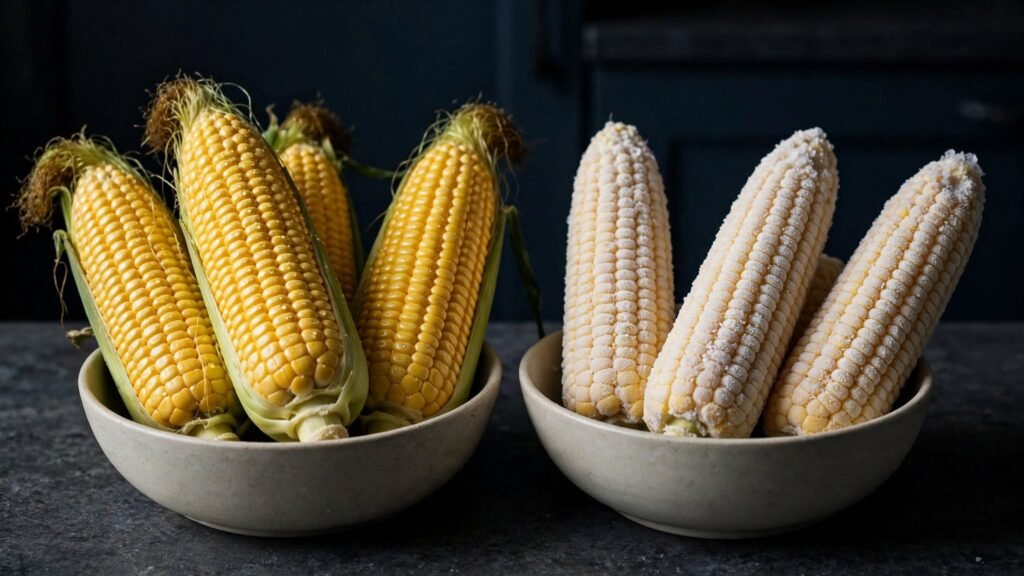
Fresh and frozen corn can both work in an air fryer, but they behave differently.
Fresh corn is usually the easier choice when your priority is browning and a tender roasted texture.
Frozen corn on the cob is convenient and can be cooked without thawing first. Because the frozen surface releases moisture as it heats, browning can take longer.
If you have time, thawing frozen corn in the refrigerator can make the cooking process more similar to fresh corn. If convenience matters more, cook it directly from frozen and allow extra time.
Do not judge frozen corn by the fresh-corn timing alone. Start checking around 15 minutes and continue until the kernels are hot and tender.
Do You Need Oil or Butter?
No. Corn does not require oil or butter to cook in an air fryer.
A small amount of oil can help with browning and seasoning adhesion, while butter adds flavor and richness.
For the simplest approach, use a light coating of oil before cooking and add butter afterward.
Adding butter after cooking also gives you more control over browning. At higher temperatures, butter can darken quickly, especially when it sits directly on the hot surface for the entire cooking time.
For a straightforward classic version:
- Lightly coat the corn with oil.
- Air fry until tender and browned.
- Rub with butter while hot.
- Finish with salt and black pepper.
Husk On or Husk Off?
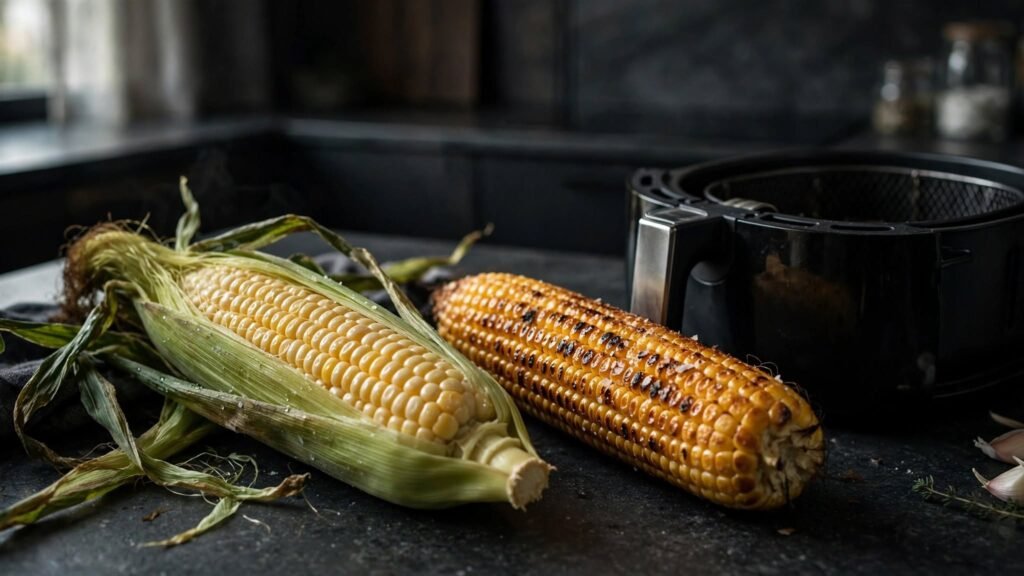
For roasted air-fryer corn, husk off is generally the better starting point.
Removing the husk exposes the kernels directly to the circulating hot air, allowing them to brown.
Leaving the husk on creates a different result. The trapped moisture encourages a softer, more steamed texture and reduces direct browning.
Some methods cook husk-on corn at around 400°F for approximately 20 minutes, but the exact result depends on the ears and the air fryer.
Choose based on the texture you want:
| Method | Expected Result |
|---|---|
| Husk off | More direct browning and roasted flavor |
| Husk on | Softer, more steamed texture |
If your main reason for using an air fryer is browned, roasted corn, remove the husk first.
How to Get Charred Air Fryer Corn
If you want darker browned or charred patches, focus on three things:
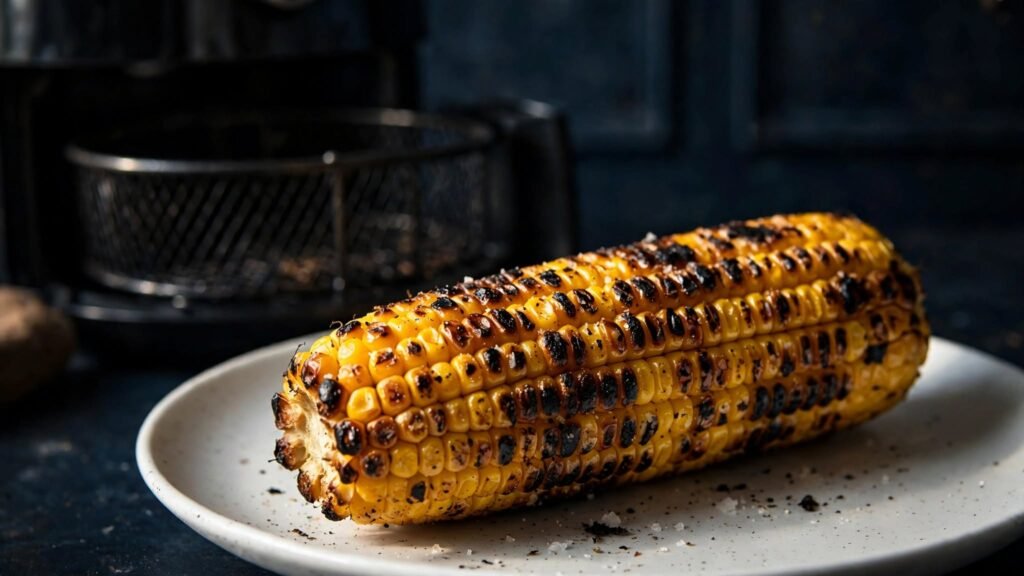
Use Higher Heat
The upper end of the cooking range, around 400°F, gives the corn more opportunity to brown.
Keep the Corn Dry
Pat the ears dry before adding oil. Too much surface moisture can delay browning.
Give the Ears Room
Crowding reduces the amount of hot air that can circulate around each ear. Arrange the corn in a single layer whenever possible.
Turn the ears once or twice during cooking so more of the surface gets direct exposure to the circulating heat.
There is also a limit to how close an air fryer can get to grilled corn. It can create browned and charred patches, but it does not produce the same smoke flavor as cooking over live fire.
What If the Corn Doesn’t Fit?
Whole ears can be surprisingly long compared with the cooking basket.
If an ear does not fit comfortably:
- Cut it in half.
- Arrange the pieces in a single layer.
- Avoid forcing the ears diagonally against the basket or heating element.
- Cook in batches if necessary.
Cutting the ears in half is usually simpler than overcrowding the basket.
Basket space also matters when cooking other vegetables. For another example of how spacing and moisture affect air-fryer browning, see our guide to air fryer cauliflower.
Why Is My Corn Dry or Not Browning?
Dry or pale corn usually points to a different problem than simply needing a much higher temperature.
The Corn Is Dry
Possible causes include:
- Cooking the corn for too long.
- Using very small ears or pieces and treating them like full-size ears.
- Leaving thin ears in the basket while thicker ears finish.
- Reheating for too long.
If the kernels are already tender, do not keep cooking just to chase darker browning. Remove the thinner ears and continue the larger ones if necessary.
The Corn Is Not Browning
Check these factors first:
1. The corn was very wet.
Pat it dry before cooking.
2. The basket is overcrowded.
Give the hot air enough room to circulate.
3. The husk is still on.
This produces more of a steamed result.
4. The corn needs more cooking time.
If the kernels are tender but still pale, a few additional minutes can deepen the browning.
5. Foil is trapping moisture.
Wrapping corn in foil can reduce direct exposure to the circulating air and encourage a softer, steamed result.
Increasing the temperature is not always the best first fix. Check moisture, spacing, and cooking time before changing everything at once.
Flavor Variations

Once the corn is cooked, you can take the same basic method in several directions.
Classic Butter and Salt
Rub hot corn with butter and finish with salt and black pepper.
Garlic Butter
Mix melted butter with garlic and chopped parsley, then brush it over the hot corn.
Elote-Style Corn
Spread mayonnaise or Mexican crema over the cooked corn, then add cotija cheese, chili powder, lime juice, and cilantro.
COSORI’s current air-fryer elote recipe also cooks shucked corn first and adds the creamy topping and cotija after cooking.
Garlic Parmesan
Add melted butter, garlic powder, and freshly grated Parmesan while the corn is still hot.
Spicy Chili-Lime
Finish with chili powder, a little smoked paprika, salt, and fresh lime juice.
Air Fryer Bhutta
For a South Asian-inspired version, rub the hot corn with lemon juice, salt, and red or Kashmiri chili powder.
The bhutta-style finish is especially good when you want something tangy and spicy rather than buttery.
Storage and Reheating
If you have leftover corn, refrigerate it promptly in a covered container.
USDA guidance recommends refrigerating leftovers within 2 hours and using refrigerated leftovers within 3 to 4 days.
How to Reheat Corn on the Cob in an Air Fryer
For refrigerated corn:
- Place the corn in the air-fryer basket.
- Heat at around 350°F.
- Start checking after 3–5 minutes.
- Turn the ears if needed.
- Continue until heated through.
The exact time depends on the size and starting temperature of the corn.
For food safety, USDA recommends reheating leftovers to an internal temperature of 165°F.
If the corn is already tender, avoid leaving it in the air fryer longer than necessary because reheating can gradually dry the kernels.
FAQs
Do you need to preheat an air fryer for corn?
Not necessarily. Some air fryers recommend preheating, while others can start cooking from a cold basket. If your model recommends preheating, follow its instructions.
Without preheating, the corn may need a little additional cooking time before it reaches the desired browning.
How long does corn on the cob take in an air fryer?
For fresh corn, a useful starting point is around 8–10 minutes at 375°F for light browning or 13–16 minutes at 400°F for deeper browning.
The actual time depends on ear size, quantity, starting temperature, and the air fryer.
Do you need to boil corn before air frying it?
No. Fresh corn can go directly into the air fryer after removing the husk and silk.
Boiling first is unnecessary unless you specifically prefer the texture produced by par-cooking.
Can you air fry frozen corn on the cob?
Yes. Frozen corn can be cooked directly from frozen.
Start checking around 15 minutes at 375–400°F, then continue cooking as needed until the kernels are hot and tender.
Thawing first can make the cooking process more similar to fresh corn, but it is not required.
Do you need oil to air-fry corn?
No. Oil is optional.
A light coating can help with browning and seasoning adhesion, but the corn will still cook without it.
Can you air fry corn with the husk on?
Yes. Husk-on corn will generally have a softer, more steamed texture and less direct browning.
If you want roasted or charred patches, remove the husk before air frying.
How do you know when air fryer corn is done?
Taste a kernel from the thickest ear. It should be tender rather than firm or crunchy.
Then check the color. If you want roasted corn, look for the level of golden or browned patches you prefer.
Can you reheat corn on the cob in an air fryer?
Yes. Start around 350°F for 3–5 minutes for refrigerated corn, checking early.
For food safety, reheat leftovers to 165°F and avoid cooking longer than necessary to prevent the kernels from drying out.
Final Conclusion
Air fryer corn on the cob does not have one perfect cooking time. Start with around 375°F for lightly browned corn or move toward 400°F when you want deeper browning, then adjust for the size of the ears, quantity, and your particular air fryer.
For the best roasted result, remove the husk, pat the corn dry, use a light coating of oil if desired, and give the ears enough space for air to circulate. If you are storing leftovers, follow USDA guidance for safe storage and reheating, including prompt refrigeration and thorough reheating.