Air Fryer Mistakes That Ruin Your Food: 12 Common Errors and Easy Fixes
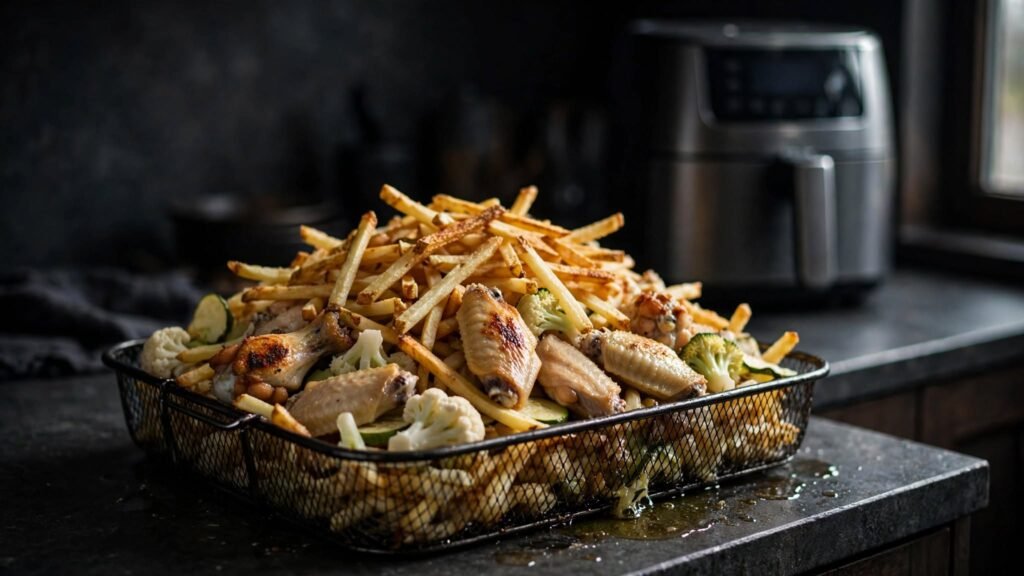
Air fryer food usually goes wrong for a simple reason: the cooking conditions do not match the food.
Too much food can restrict airflow. Excess moisture can prevent browning. Too much heat or cooking time can dry out delicate ingredients. And copying an oven recipe without adjusting it can leave you with food that is overcooked on the outside before the center is ready.
The good news is that most air fryer mistakes are easy to correct once you know what to look for.
Here are the problems worth checking first.
Air Fryer Mistakes at a Glance
| Common mistake | What you may notice | What to change |
|---|---|---|
| Overcrowding | Soggy or uneven food | Cook a smaller batch |
| Too much oil | Greasy food or smoke | Use only the amount the food needs |
| Too little oil | Pale or dry surfaces | Add a light coating when appropriate |
| Skipping preheating | Slower browning | Preheat when the recipe or appliance calls for it |
| Wrong temperature | Burnt outside or raw center | Adjust temperature and cooking time |
| Wet ingredients | Poor browning | Remove excess surface moisture |
| No shaking or flipping | Uneven browning | Turn or shake when appropriate |
| Constant checking | Longer cooking | Check closer to the expected finish |
| Wet batter | Coating falls away | Use a suitable breading |
| Copying oven settings | Overcooked or undercooked food | Adjust for the air fryer |
| Overfilling | Poor airflow | Reduce the amount of food |
| Dirty basket or residue | Smoke or unpleasant smells | Clean according to the manufacturer’s instructions |
These problems can overlap. For example, soggy fries might be caused by both excess moisture and an overcrowded basket. Fixing only one may not completely solve the problem.
1. Overcrowding the Air Fryer Basket
This is one of the easiest mistakes to make.
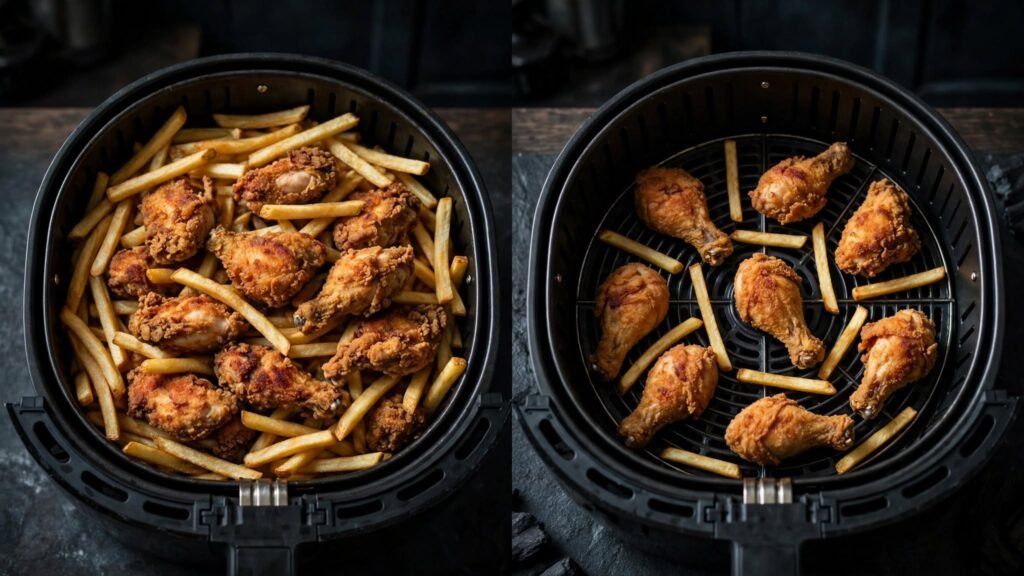
The basket looks large enough, so filling it seems efficient. But air frying depends on hot air moving around the food. When food is packed tightly together, airflow around individual pieces is reduced.
That can lead to softer surfaces, uneven browning, and longer cooking.
Philips specifically advises against overcrowding because it can interfere with air circulation and increase cooking time.
The fix
For foods that need a crisp exterior, spread them into a reasonably even layer when possible.
If you have more food than the basket can comfortably accommodate, cook it in batches.
This matters particularly for:
- French fries
- Chicken wings
- Frozen nuggets
- Onion rings
- Chopped vegetables
- Breaded foods
A slightly smaller batch often produces a better result than filling the basket to its limit.
2. Using Too Much Oil
An air fryer does not need a deep layer of oil to cook food.
Adding excessive oil can make food greasy and may contribute to smoke, particularly when cooking foods that already release a significant amount of fat.
Chicken wings, for example, can release considerable fat during cooking, so adding a large amount of extra oil may be unnecessary.
The fix
Use only the amount of oil appropriate for the food.
For vegetables or potatoes, a light coating can help with browning and texture. For foods that already contain substantial fat or a prepared coating, additional oil may not be necessary.
If your air fryer starts smoking while cooking fatty foods, check for accumulated grease as well as excess oil.
3. Using Too Little Oil When the Food Needs It
The opposite mistake is assuming that because an air fryer uses circulating hot air, every food must be cooked completely without oil.
That isn’t true.
Some foods benefit from a small amount of oil because it can improve surface browning and help seasonings or coatings adhere.
The fix
Think light coating, not soaking.
A small amount may be useful for:
- Fresh vegetables
- Potatoes
- Certain breaded foods
- Some lean foods
But oil will not fix an incorrect cooking temperature or excessive cooking time.
If the food is already drying out, adding more oil is not necessarily the answer.
4. Skipping Preheating When It Matters
Preheating advice varies between air fryers and recipes.
Some models are designed to begin cooking without a traditional preheat, while certain recipes benefit from starting in a hot cooking chamber.
Philips, for example, has published guidance recommending a short preheat for its Airfryer models.
The fix
Check your air fryer’s instructions first.
If the recipe specifically calls for preheating, follow it. If your model says preheating is unnecessary, you don’t need to treat it as a mandatory step for every food.
The important point is consistency. If you change whether you preheat, expect the cooking time and browning to change too.
5. Using the Wrong Temperature
More heat is not automatically better.
A very high temperature can brown the outside quickly while the center still needs more time. If you continue cooking until the middle is done, the exterior may become excessively dark or dry.
The fix
Choose a temperature appropriate for the food instead of automatically selecting the highest setting.
If the outside is burning while the center remains undercooked, reducing the temperature and allowing more time can be more useful than increasing the heat.
For meat and poultry, don’t rely on surface color to determine safety. USDA recommends using a food thermometer, with poultry reaching 165°F (74°C) internally.
6. Not Removing Excess Surface Moisture
Moisture on the outside of food can interfere with browning.
This is particularly noticeable with foods that have been marinated, rinsed, thawed, or stored in liquid.
Instead of browning efficiently, excess surface moisture can keep the exterior wet for longer. You may then compensate by cooking the food for too long.
The fix
For foods where a dry surface is appropriate, gently pat away excess moisture before cooking.
This does not mean drying every ingredient completely. Marinades, sauces, and the natural moisture inside food are part of many recipes.
The goal is simply to remove unnecessary surface water.
7. Forgetting to Shake or Flip Food
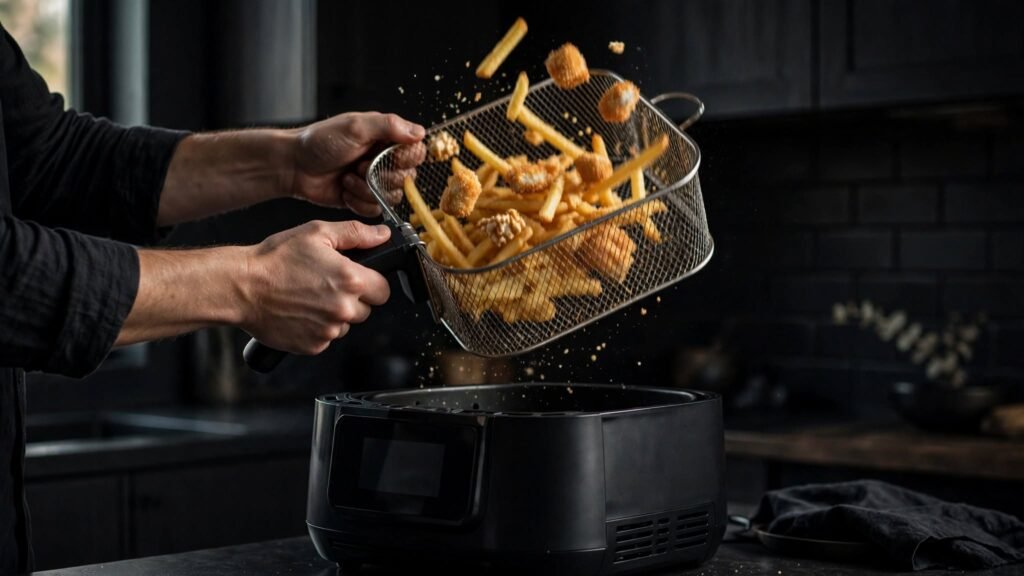
Air fryers circulate hot air, but that does not guarantee every surface receives exactly the same exposure.
Small foods often benefit from being shaken during cooking. Larger pieces may benefit from turning when one side is receiving more direct heat.
Philips also recommends shaking smaller foods such as fries, wings, and croquettes during cooking for more even results.
The fix
Shake or flip when the shape and recipe make it useful.
Good candidates include:
- Fries
- Nuggets
- Small vegetables
- Croquettes
- Smaller breaded pieces
But don’t automatically flip delicate foods that may break apart.
8. Checking the Food Too Often
Opening the basket occasionally is not a disaster, but repeatedly interrupting cooking makes it harder to judge how long the food actually needs.
Every time you check, you also change the cooking environment.
The fix
Check when you are approaching the expected finish rather than constantly opening the basket.
For a new recipe, use the stated cooking time as a starting point, not an absolute guarantee.
Food thickness, quantity, starting temperature, basket arrangement, and air fryer design can all change the result.
9. Using Wet Batter
An air fryer is not a deep fryer.
A loose wet batter designed to be surrounded by hot oil may not behave the same way when exposed to circulating air.
The batter can remain wet, slide away from the food, or drip through the basket before it develops the texture you expect.
The fix
Use coatings designed to work with dry heat and circulating air.
Breaded foods generally work better when the coating adheres firmly to the food rather than being a loose liquid batter.
Pressing the coating onto the food can also help it stay in place.
10. Following Oven Recipes Too Literally
This is one of the most important mistakes for beginners.
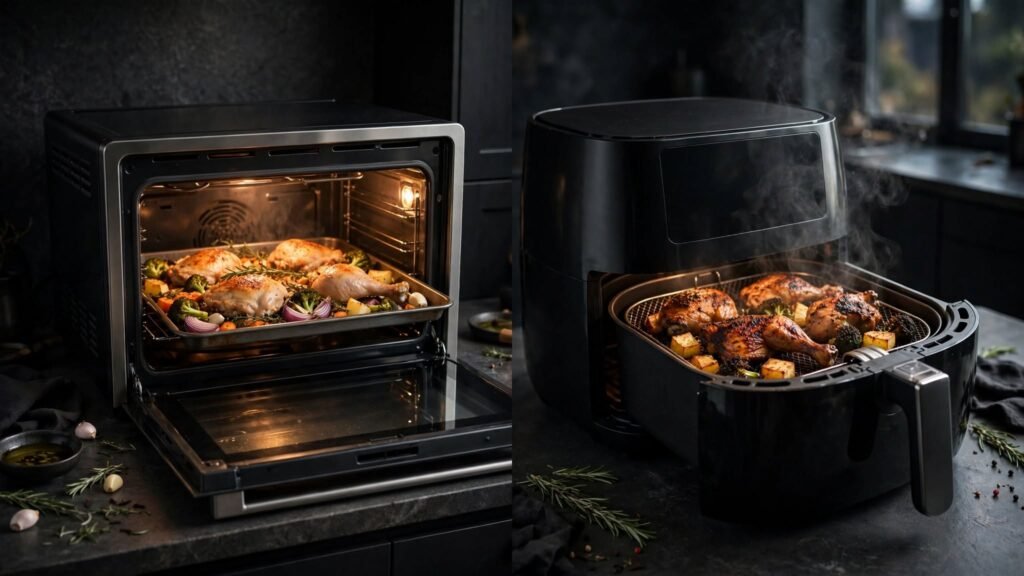
An oven recipe might say 400°F for 25 minutes, but that does not mean an air fryer should automatically use the same temperature and time.
Air fryers differ in chamber size, airflow, heating-element placement, basket design, and cooking capacity.
Even manufacturers acknowledge that conventional oven instructions may need adjustment. Philips, for example, has published a general conversion starting point of reducing conventional oven temperature and cooking time, while explicitly noting that exact settings vary by food.
The fix
When adapting an oven recipe:
- Treat the original temperature and time as a starting reference.
- Begin checking the food earlier.
- Watch the surface closely.
- Adjust temperature if the exterior is browning too quickly.
- Use a thermometer when food safety depends on internal temperature.
There is no single conversion that works perfectly for every food.
For a more detailed explanation, see our Oven to Air Fryer Conversion guide.
11. Ignoring the Air Fryer’s Usable Capacity
A large air fryer does not mean you can fill every inch of the basket and still expect maximum crisping.
Advertised capacity tells you how much space the appliance provides. It does not necessarily tell you how much food can be spread out effectively for a particular recipe.
This distinction matters most for foods such as fries, wings, and vegetables that benefit from good airflow.
The fix
When comparing air fryers, consider both:
- Total basket capacity
- Usable cooking surface
A wide cooking surface can be more useful for certain foods than simply having a deeper basket.
If you regularly need multiple batches because food cannot be spread out properly, the problem may be capacity rather than wattage.
12. Not Cleaning Grease and Food Residue
A dirty air fryer can create problems that have nothing to do with your recipe.
Old grease and food particles can heat up during later cooking. This can contribute to smoke, unpleasant smells, and unwanted flavors.
Foods that release a lot of fat deserve particular attention.
The fix
Clean the basket, tray, and accessible cooking surfaces regularly according to your manufacturer’s instructions.
If an air fryer that normally works well suddenly starts smoking, inspect it for accumulated grease and food residue before assuming the appliance itself has failed.
What to Change When Your Air Fryer Food Goes Wrong
Instead of changing five things at once, start with the symptom.
| Problem | Check first | Best first adjustment |
|---|---|---|
| Soggy fries | Moisture and crowding | Dry potatoes and cook a smaller batch |
| Dry chicken | Time and temperature | Check earlier and verify internal temperature |
| Burnt vegetables | Excess heat or small pieces | Lower heat and check sooner |
| Pale food | Moisture or spacing | Dry the surface and improve airflow |
| Uneven nuggets | Crowding or no shaking | Reduce the batch and shake when appropriate |
| Greasy food | Excess oil or fatty food | Reduce added oil |
| Soft breading | Wet coating | Use a suitable dry coating |
| Raw center | Food too thick or heat too aggressive | Adjust temperature and allow enough cooking time |
| Smoke | Grease, residue, or excess oil | Clean the appliance and reduce unnecessary oil |
| Food finishes too quickly | Air fryer cooks differently from recipe | Start checking earlier |
The useful habit here is to diagnose the result, not just memorize rules.
Food-Specific Air Fryer Problems
Why Are My Fries Soggy?
Start with three things:
- Are the fries crowded?
- Are they carrying excess moisture?
- Have they been shaken during cooking when appropriate?
Fresh-cut potatoes and frozen fries behave differently, so don’t assume the same preparation works for both.
If the fries are soft, adding more cooking time without fixing crowding or moisture may simply make them darker and harder.
Why Is My Chicken Dry?
Chicken breast is particularly sensitive to overcooking because it is relatively lean.
The first things to check are:
- Thickness of the chicken
- Cooking temperature
- Cooking time
- Basket arrangement
- Internal temperature
Do not judge chicken safety by color alone. USDA specifically notes that color is not a reliable indicator of poultry doneness and recommends checking the thickest part with a food thermometer.
Why Are My Vegetables Burnt Outside but Firm Inside?
This often points toward pieces that are too large, inconsistent in size, or exposed to excessive heat for too long.
Cutting pieces more uniformly can help them finish closer together.
If small pieces are becoming dark before larger pieces are tender, consider lowering the temperature and checking earlier.
Why Is My Air Fryer Food Dry?
Dry food usually deserves an investigation of:
- Cooking time
- Temperature
- Food thickness
- Ingredient moisture
- Food type
Lean chicken, fish, and small vegetable pieces can lose moisture relatively quickly when overcooked.
The first adjustment should usually be better control of cooking time, not simply adding more oil.
How Different Air Fryers Change Cooking Results
You should not expect every air fryer to behave identically.
Models can differ in:
- Basket shape
- Cooking surface
- Fan and airflow design
- Heating-element position
- Chamber size
- Preset programming
- Capacity
That is why a recipe’s stated time should be treated as a useful starting point rather than a universal law.
If your air fryer repeatedly finishes foods earlier than published recipes suggest, start checking earlier. If food consistently needs more time, investigate the food quantity and arrangement before assuming the recipe is wrong.
A Better Way to Troubleshoot Your Air Fryer
When something goes wrong, change one major variable at a time.
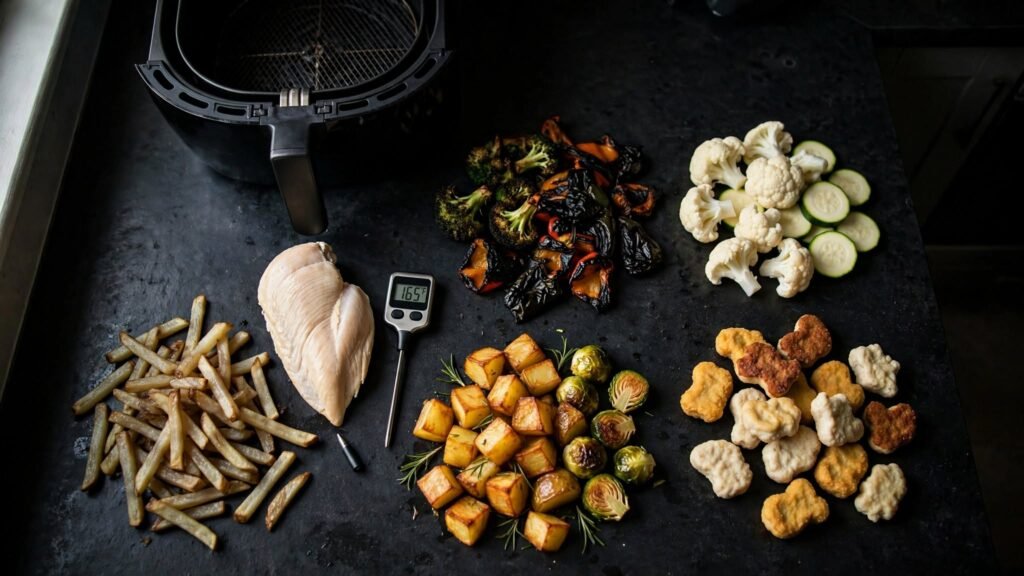
For example, if chicken is dry, don’t simultaneously change the temperature, cooking time, oil, marinade, basket position, and food size.
Start with the most likely cause.
If food is dry
Check cooking time and temperature first.
If food is soggy
Check moisture and overcrowding.
If food is pale
Look at moisture, oil, and airflow.
If food is burning
Check temperature and piece size.
If food is uneven
Check spacing and whether shaking or flipping is appropriate.
If the air fryer is smoking
Check grease buildup, excess oil, and foods that naturally release fat.
This approach makes it much easier to understand what actually changed.
Food Safety Still Comes First
Air-fryer texture is important, but safe cooking matters more.
For poultry, USDA recommends a minimum internal temperature of 165°F (74°C). FDA guidance lists the same temperature for poultry and recommends using a food thermometer.
For leftovers, FDA recommends reheating to 165°F (74°C).
Do not extend or shorten cooking solely to achieve a particular appearance when the food requires a safe internal temperature.
A browned exterior does not prove that the center is safe.
Frequently Asked Questions
What is the most common air fryer mistake?
Overcrowding is one of the most common problems because tightly packed food can restrict airflow and lead to uneven cooking.
Why does my air fryer food come out soggy?
Common causes include overcrowding, excess surface moisture, and insufficient browning. Start by reducing the batch size and removing unnecessary surface moisture.
Why is my air fryer food dry?
Food can become dry when it is cooked too long or at too high a temperature. Lean foods such as chicken breast and fish are particularly sensitive to overcooking.
Do you need to preheat an air fryer?
Not always. Follow your model’s instructions and the recipe’s requirements. Some air fryers and foods benefit from preheating, while others can begin cooking without it.
Should you put oil in an air fryer?
Sometimes. A light coating can improve browning and texture for certain foods, but many foods already contain enough fat or oil.
Why does my air fryer smoke?
Excess oil, accumulated grease, and fatty foods can all contribute to smoke. Clean the appliance according to its instructions and avoid adding unnecessary oil.
Should you shake an air fryer basket?
Some foods benefit from shaking, particularly small pieces such as fries and nuggets. Larger or delicate foods may need to be left alone or carefully flipped instead.
Can you put wet batter in an air fryer?
Loose wet batter generally does not behave like it does in a deep fryer. A suitable dry breading or coating usually works better for air frying.
Why does my air fryer cook unevenly?
Possible causes include overcrowding, inconsistent food sizes, restricted airflow, or differences in the air fryer’s heating and fan design.
Do different air fryers cook differently?
Yes. Basket design, airflow, heating-element placement, capacity, and preset programming can all affect cooking results.
Final Conclusion
Most air fryer problems are not mysterious.
When food comes out soggy, dry, burnt, pale, or uneven, look at the basic cooking conditions first: how much food is in the basket, how wet the food is, how much oil it needs, the temperature, and how long it has been cooking.
Don’t treat every recipe as a fixed set of numbers. Your air fryer may cook differently from another model, and the size and thickness of the food can change the result considerably.
Give foods enough room when airflow matters. Use oil when the food actually benefits from it. Shake or flip when it improves exposure to the circulating heat. Most importantly, start checking food before you have already crossed the line from properly cooked to overcooked.
For a broader understanding of how air fryers work and how to use them correctly, see our guide on How to Use an Air Fryer for the First Time.
And when you’re converting conventional oven recipes, our Oven to Air Fryer Conversion guide can help you adjust temperature and cooking time instead of copying the oven instructions exactly.
The goal isn’t to memorize a dozen air-fryer rules. It is to understand what the food needs and make the small adjustment that actually solves the problem.