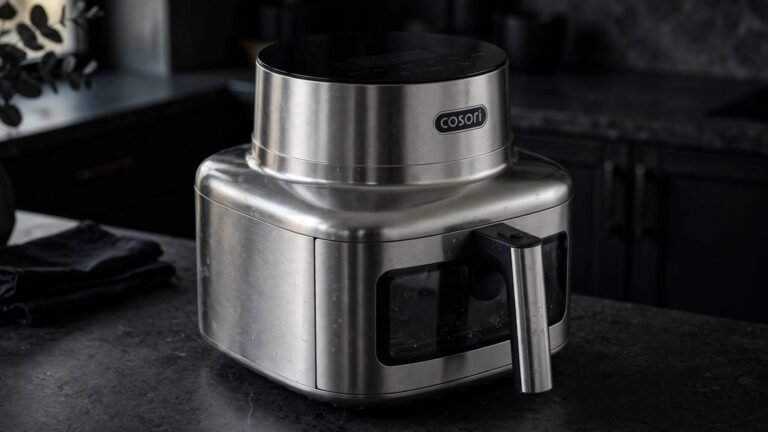
Best Oil for Air Fryer: 9 Oils Compared for Crispier Food

Choosing the Best Oil for Air Fryer is not just about picking the oil with the highest smoke point. The amount of oil, cooking temperature, food you’re preparing, and even whether the food already contains fat can change what works best.
For most air-fryer cooking, you only need a light coating of oil, not a pool of oil like you would use for deep frying.
Refined avocado oil is a versatile choice for higher-temperature cooking, while canola oil is an affordable everyday option. Olive oil is also useful when you want its flavor, particularly with vegetables, chicken, and fish.
But there isn’t one oil that wins for every food.
This guide compares nine commonly used oils for air frying, explains their strengths and limitations, and shows how to choose the right one without overcomplicating your cooking.
Quick Answer: What Is the Best Oil for an Air Fryer?
If you want one versatile option, refined avocado oil is a strong choice because of its mild flavor and suitability for higher-temperature cooking.
For everyday cooking on a budget, canola oil is practical and widely available.
If flavor matters, olive oil can be an excellent choice, especially for vegetables, chicken, and fish.
| Oil | Best For | Main Advantage | Main Limitation |
|---|---|---|---|
| Refined Avocado Oil | High-temperature cooking | Mild flavor and versatile | More expensive |
| Olive Oil | Vegetables, chicken, fish | Good flavor | Type of olive oil matters |
| Canola Oil | Everyday cooking | Affordable and mild | Less distinctive flavor |
| Peanut Oil | Fries and chicken | Good for higher temperatures | Not suitable for peanut allergies |
| Grapeseed Oil | General cooking | Neutral flavor | Can cost more than basic oils |
| Vegetable Oil | Everyday air frying | Affordable and accessible | May be a blend of different oils |
| Sunflower Oil | Everyday cooking | Mild flavor | Properties vary by type |
| Refined Coconut Oil | Selected recipes | Useful at higher temperatures | Higher in saturated fat |
| Ghee | Rich savory foods | Buttery flavor | Not a neutral oil |
Does an Air Fryer Need Oil?
No. An air fryer can cook many foods without adding oil.
Frozen foods such as fries, nuggets, fish sticks, and some breaded products may already contain enough fat to brown and crisp during cooking.
Fresh foods are different.
A small amount of oil can help seasonings adhere, improve browning, and encourage a more appealing surface texture. It can also help prevent some lean foods from becoming overly dry.
The important part is how much oil you use.
Air frying isn’t deep frying. Pouring a large amount of oil into the bottom of the basket usually doesn’t provide the same benefit as lightly coating the food.
For most recipes, think:
Light coating, not soaking.
What Makes an Oil Good for Air Frying?
There are several things worth considering before choosing an oil.
1. Cooking Temperature
Different oils behave differently when heated. The smoke point is the temperature at which an oil begins producing visible smoke.
However, smoke point should not be treated as a magic number that tells you whether an oil is good or bad.
Your actual cooking temperature, the specific oil, how it was processed, and how long it is heated all matter.
2. Flavor
Some oils are almost neutral. Others can noticeably change the flavor of your food.
For example, ghee adds a buttery character, while some olive oils contribute a more distinctive flavor.
3. Processing
The same general type of oil can behave differently depending on whether it is refined or less processed.
This is particularly important with oils such as olive, avocado, and coconut oil.
4. The Food You’re Cooking
An oil that works beautifully with vegetables may not be the best choice for fries or delicate fish.
You don’t need to use the same oil for everything.
5. Cost
There’s no reason to spend a premium price on specialty oil when an affordable everyday oil does the job perfectly well.
1. Refined Avocado Oil
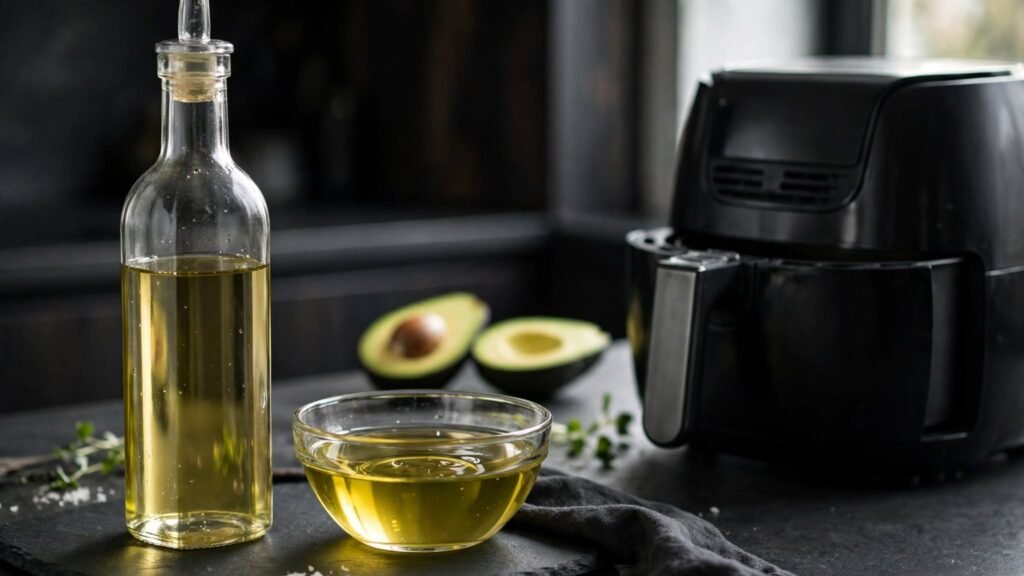
Best for: Higher-temperature cooking and general air frying
Refined avocado oil is one of the most versatile choices for air-fryer cooking.
Its relatively mild flavor means it doesn’t usually overpower the food, making it suitable for vegetables, chicken, potatoes, and many other foods.
The word refined matters here. Refined avocado oil is different from less processed avocado oils, so don’t assume every avocado oil product behaves identically.
Refined Avocado Oil Pros and Cons
| Pros | Cons |
|---|---|
| Mild flavor | Usually more expensive |
| Versatile for many foods | Quality and processing can vary between products |
| Suitable for higher-temperature cooking | Not necessary for every low-cost everyday recipe |
| Works well with vegetables, chicken, and potatoes | Premium price may not be worthwhile for simple cooking |
Best Use
Use refined avocado oil when you want a mild-tasting oil that gives you flexibility across different air-fryer temperatures.
2. Olive Oil

Best for: Vegetables, chicken, fish, and recipes where flavor matters
Yes, you can use olive oil in an air fryer.
The important detail is that olive oil isn’t one single product. Extra virgin olive oil, virgin olive oil, and refined olive oil have different characteristics.
For air frying, the best choice depends on the recipe and temperature rather than simply assuming one type is always superior.
Olive oil works particularly well when its flavor complements the food.
Olive Oil Pros and Cons
| Pros | Cons |
|---|---|
| Excellent for vegetables | Stronger varieties can affect delicate foods |
| Works well with chicken and fish | Different olive oil types behave differently |
| Adds useful flavor | Can be more expensive than basic cooking oils |
| Easy to use with a brush or sprayer | Not every recipe needs its flavor |
Best Use
Try olive oil with vegetables, chicken, fish, potatoes, and Mediterranean-style recipes.
3. Canola Oil
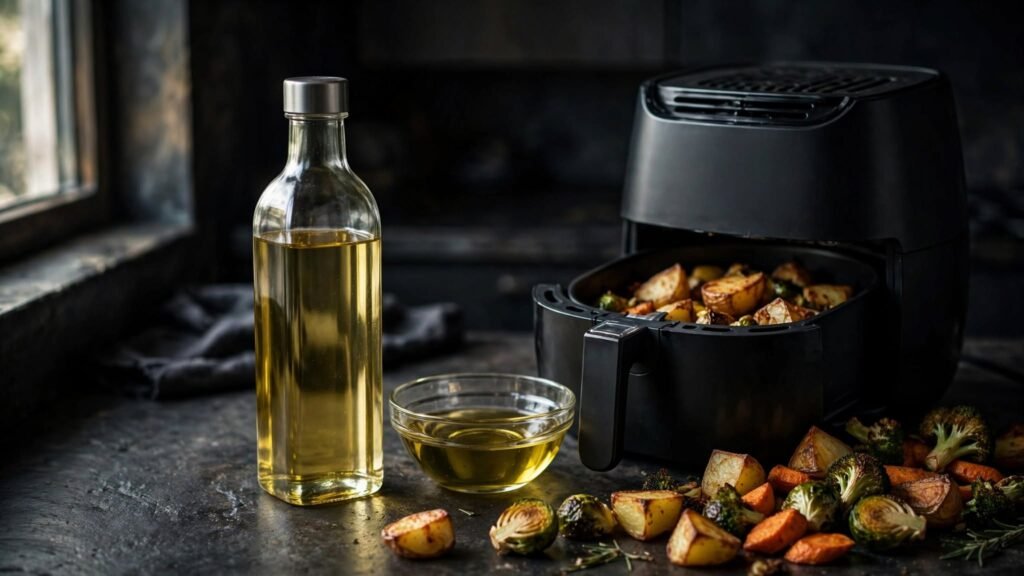
Best for: Affordable everyday air frying
Canola oil is one of the easiest choices when you don’t want your cooking oil to dominate the food.
It has a relatively mild flavor and is widely available.
It’s particularly useful for fries, chicken, vegetables, frozen foods, and recipes where you simply need a thin coating of oil.
Canola Oil Pros and Cons
| Pros | Cons |
|---|---|
| Affordable | Doesn’t add much flavor |
| Mild taste | Less distinctive than specialty oils |
| Useful for everyday air frying | Some people simply prefer other oils |
| Works with many foods | Product formulations can vary |
Best Use
If you want one inexpensive oil for regular air-fryer cooking, canola is a practical option.
4. Peanut Oil
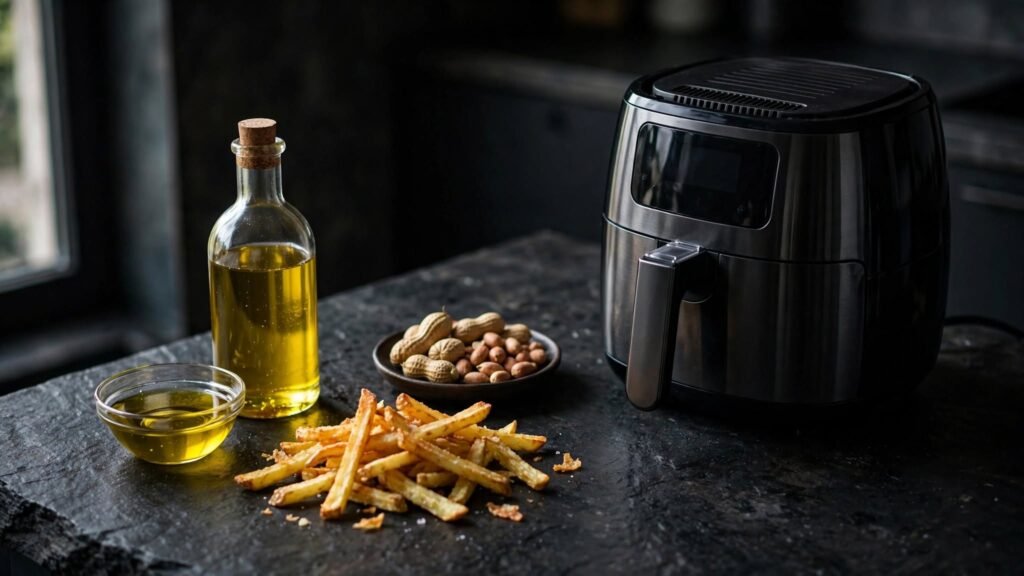
Best for: Fries, chicken, and higher-temperature cooking
Peanut oil is another useful option when you’re cooking foods that benefit from a neutral-to-lightly nutty oil.
It works well with potatoes and chicken, but there’s one obvious consideration: peanut allergy.
If you’re cooking for someone with a peanut allergy, don’t treat peanut oil as a universal option.
Peanut Oil Pros and Cons
| Pros | Cons |
|---|---|
| Suitable for higher-temperature cooking | Not appropriate for people with peanut allergies |
| Works well with fries | Slight nutty character may not suit every food |
| Useful for chicken | Can cost more than basic oils |
| Good choice for savory foods | Not necessary for every recipe |
Best Use
Use peanut oil when its characteristics suit the food and there are no allergy concerns.
5. Grapeseed Oil
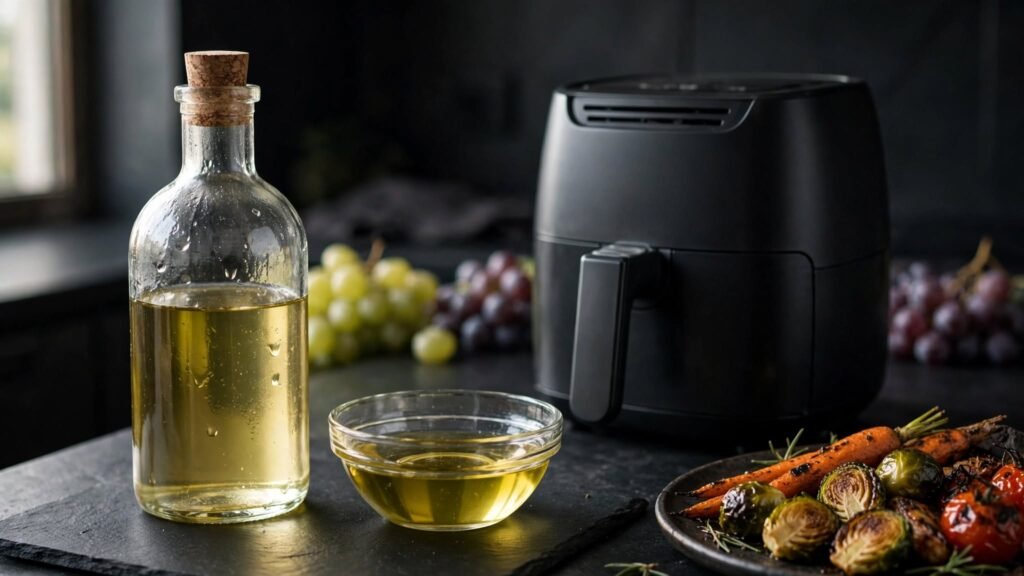
Best for: Neutral-flavored air frying
Grapeseed oil is useful when you want an oil that doesn’t compete heavily with the flavor of the food.
It can work with vegetables, chicken, potatoes, and other general air-fryer recipes.
Grapeseed Oil Pros and Cons
| Pros | Cons |
|---|---|
| Mild, neutral flavor | Can be more expensive |
| Versatile | Less commonly stocked than canola |
| Useful for many foods | Not necessarily better than cheaper alternatives |
| Works well when you don’t want added flavor | Specialty oil may not justify the price for everyone |
Best Use
Choose grapeseed oil when you want a relatively neutral oil and already keep it in your kitchen.
6. Vegetable Oil
Best for: Budget-friendly everyday cooking
Vegetable oil is a practical pantry option.
The important thing to understand is that “vegetable oil” can refer to different oils or blends, depending on the product.
That means you shouldn’t assume every bottle labeled vegetable oil has exactly the same characteristics.
Vegetable Oil Pros and Cons
| Pros | Cons |
|---|---|
| Usually affordable | The exact oil or blend can vary |
| Widely available | Flavor and performance depend on the product |
| Neutral enough for many foods | Less specific than choosing a named oil |
| Useful for everyday air frying | Not always the best choice for specialty recipes |
Best Use
Use it for everyday fries, chicken, vegetables, and other foods where you simply need a light coating.
7. Sunflower Oil
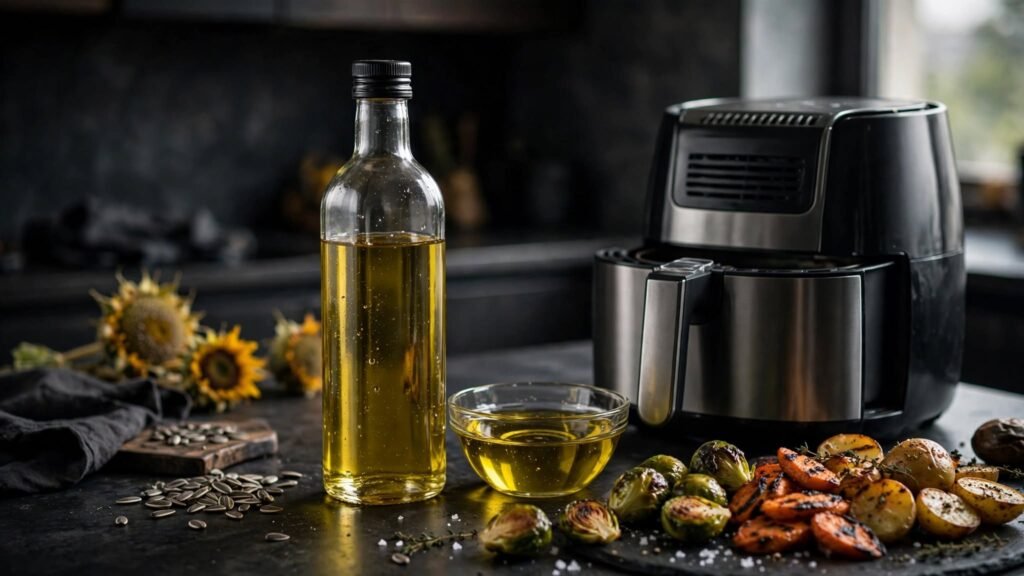
Best for: Mild everyday cooking
Sunflower oil is another common choice for air frying.
One important distinction is between conventional sunflower oil and high-oleic sunflower oil. Their fatty-acid composition and cooking characteristics aren’t identical.
If you’re specifically choosing sunflower oil for higher-temperature cooking, check the product label rather than assuming all sunflower oils are interchangeable.
Sunflower Oil Pros and Cons
| Pros | Cons |
|---|---|
| Mild flavor | Different types have different characteristics |
| Useful for everyday cooking | Conventional and high-oleic versions aren’t identical |
| Easy to use with many foods | May not offer an advantage over cheaper alternatives |
| Works well for light oiling | Product specifications should be checked |
Best Use
Sunflower oil works well for everyday foods when you prefer its flavor and already have it available.
8. Refined Coconut Oil

Best for: Recipes that suit coconut oil
Refined coconut oil can handle relatively high cooking temperatures and has a milder coconut character than unrefined coconut oil.
However, it isn’t necessarily the best everyday choice for everyone.
Coconut oil is relatively high in saturated fat compared with many liquid plant oils, so the reason for choosing it should generally be its cooking characteristics or flavor rather than assuming it is automatically a healthier option.
Refined Coconut Oil Pros and Cons
| Pros | Cons |
|---|---|
| Useful for higher-temperature cooking | Relatively high in saturated fat |
| Refined versions have less coconut flavor | Not ideal when you want a completely neutral oil |
| Works with selected recipes | Can behave differently depending on temperature |
| Useful for specific cooking styles | Not necessary for most everyday air frying |
Best Use
Use refined coconut oil when its characteristics actually suit the recipe.
9. Ghee

Best for: Rich, buttery flavor
Ghee isn’t a neutral cooking oil, but it can be excellent when you want a richer flavor.
A small amount can work particularly well with potatoes, vegetables, chicken, and other savory foods.
Ghee Pros and Cons
| Pros | Cons |
|---|---|
| Rich buttery flavor | More expensive than basic oils |
| Works well with savory foods | Not neutral |
| Useful for roasting-style recipes | Higher in saturated fat than many liquid plant oils |
| A little can add noticeable flavor | Flavor won’t suit every recipe |
Best Use
Choose ghee when flavor is part of the goal, rather than simply looking for an inexpensive neutral oil.
Best Oil for Air Fryer at Different Temperatures
Instead of treating smoke points as exact cooking limits, use them as one factor when choosing an oil.
| Air Fryer Temperature | Practical Oil Choices |
|---|---|
| 325°F to 350°F | Olive, canola, grapeseed, sunflower, vegetable |
| 350°F to 375°F | Canola, olive, grapeseed, peanut, sunflower, vegetable |
| 375°F to 400°F | Refined avocado, canola, peanut, suitable olive and refined oils |
| Above 400°F | Check the specific oil and cooking instructions carefully |
These are practical cooking categories, not universal laboratory cutoffs. The specific oil, formulation, processing method, and cooking conditions can change how it behaves.
If an oil begins smoking in your air fryer, that’s a sign that the temperature or cooking conditions need attention.
Best Oil for Different Air Fryer Foods
You don’t need one oil for every recipe.
| Food | Good Options |
|---|---|
| Chicken | Avocado, olive, canola, peanut |
| French Fries | Canola, vegetable, avocado, peanut |
| Vegetables | Olive, avocado, canola, grapeseed |
| Fish | Olive, avocado, grapeseed, canola |
| Frozen Foods | Often no additional oil needed |
| Potatoes | Olive, avocado, canola, ghee |
| Breaded Foods | Canola, avocado, vegetable |
The best option depends on the food’s existing fat content, desired flavor, and cooking temperature.
How Much Oil Should You Use in an Air Fryer?
More oil doesn’t automatically mean crispier food.
In many recipes, the goal is simply to lightly coat the surface.
Too much oil can make food greasy and may contribute to smoke, especially when the food itself releases fat during cooking.
A useful approach is:
- Put the food in a bowl.
- Add a small amount of oil.
- Toss until the surface is lightly coated.
- Add seasoning.
- Transfer the food to the air-fryer basket.
For small portions, you may need surprisingly little oil.
Oil Spray vs Brushing Oil
Both methods can work.
Oil Spray
A spray can distribute a thin layer across a larger surface.
However, check what is actually inside the spray product. Some cooking sprays contain ingredients in addition to oil.
Brushing Oil
A silicone brush gives you more control over the amount of oil.
This can be useful for foods where you want an even but very thin coating.
Tossing in a Bowl
For fries, potatoes, vegetables, and chicken pieces, tossing the food with a small amount of oil before cooking is often the simplest method.
Can You Pour Oil Directly Into an Air Fryer?
You generally don’t need to pour a pool of oil into the bottom of the basket.
An air fryer is designed to circulate hot air around the food, not operate as a deep fryer.
Instead, lightly coat the food itself.
If your food is particularly fatty, such as certain chicken cuts, additional oil may not be necessary at all.
Can You Use Olive Oil in an Air Fryer?
Yes.
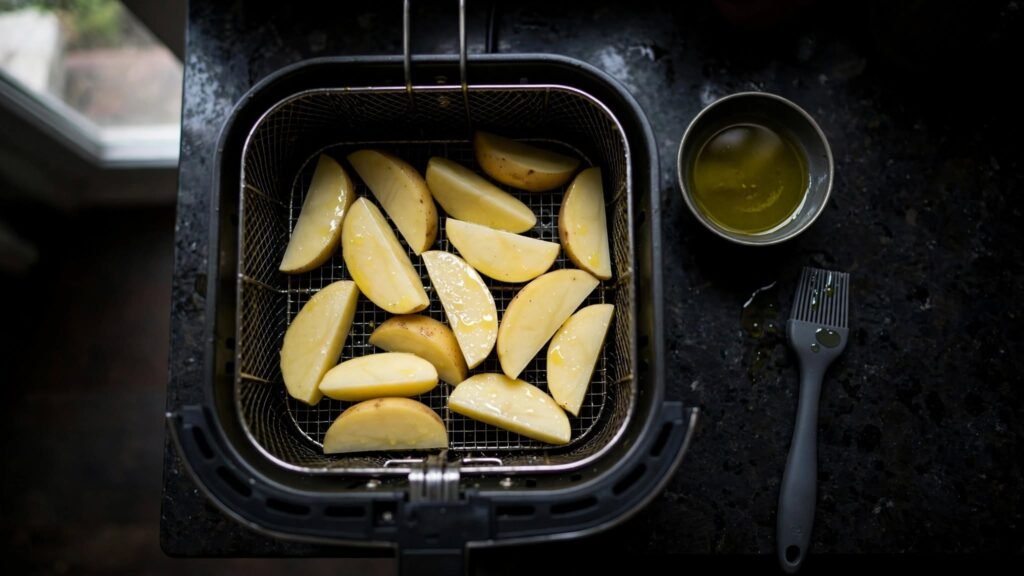
Olive oil can be used for air frying, but the specific type matters.
Extra virgin olive oil has a stronger flavor than refined olive oil, and that flavor may be desirable with vegetables, potatoes, or Mediterranean-style dishes.
The cooking temperature also matters.
Rather than asking whether olive oil is simply “safe” or “unsafe” for an air fryer, consider the specific olive oil, temperature, cooking time, and recipe.
Can You Use Cooking Spray in an Air Fryer?
Yes, but read the product label and your air-fryer manual.
Aerosol cooking sprays can contain propellants or other ingredients in addition to oil. Some air-fryer manufacturers also have recommendations about which sprays should be used on their cooking surfaces.
If you want precise control over oil quantity, a brush or suitable oil mister can be easier.
What Oils Should You Use Carefully?
No oil needs to be placed on a universal “bad oil” list simply because it isn’t the most popular choice.
Instead, consider the situation.
Strongly Flavored Oils
These can change the taste of food significantly.
Unrefined Oils
Their characteristics can differ from refined versions, so consider the cooking temperature and the specific product.
Coconut Oil
It can work well, but its higher saturated-fat content makes it different from many liquid nontropical plant oils.
Ghee
Excellent for flavor, but not the same choice as a neutral everyday oil.
The goal isn’t to find an oil that is perfect in every category. It’s to choose an oil that fits the recipe.
Does Oil Make Air-Fryer Food Crispier?
It can help, but oil isn’t the entire crispiness equation.

If food isn’t crisping properly, check these factors before simply adding more oil:
- Is the basket overcrowded?
- Is the food too wet?
- Are pieces too thick?
- Is there enough airflow?
- Did you shake or turn the food when appropriate?
- Is the cooking time long enough?
- Is the food already coated with enough fat?
A thin oil coating can help browning, but it can’t compensate for poor airflow or excessive moisture.
Stainless Steel vs Nonstick Air Fryer Cooking Surfaces
If you’re choosing an air fryer partly because of the cooking surface, don’t judge the appliance only by its exterior.
A stainless-steel air fryer may still contain coated cooking components.
For example, a stainless-steel appliance can have a ceramic-coated basket or crisper plate.
If you’re interested in understanding the difference between stainless-steel construction, food-contact surfaces, and coated components, see our guide to the Best Stainless Steel Air Fryer.
The important question is:
What material actually touches the food?
Common Oil Mistakes When Using an Air Fryer
Mistake 1: Using Too Much Oil
Air frying needs far less oil than deep frying.
Start with a light coating.
Mistake 2: Assuming More Oil Means More Crispiness
Extra oil can make food greasy without fixing problems caused by moisture or overcrowding.
Mistake 3: Ignoring the Cooking Temperature
An oil suitable for moderate temperatures may not be the best choice for very high-temperature cooking.
Mistake 4: Using the Same Oil for Every Recipe
Flavor matters.
Olive oil may be excellent with vegetables but unnecessary for a recipe where you want a completely neutral taste.
Mistake 5: Ignoring Food That Already Contains Fat
Frozen fries, breaded foods, and fatty meats may already contain enough fat to brown effectively.
Mistake 6: Letting Oil Smoke
If oil starts smoking heavily, don’t simply continue cooking.
Check the temperature, remove excess oil or residue where appropriate, and follow your air-fryer manufacturer’s guidance.
Quick Comparison: Which Oil Should You Choose?
| Oil | Flavor | Best Use | Overall Practicality |
|---|---|---|---|
| Refined Avocado | Mild | Higher-temperature cooking | Excellent |
| Olive | Mild to distinctive | Vegetables, chicken, fish | Excellent |
| Canola | Mild | Everyday cooking | Excellent |
| Peanut | Mild/nutty | Fries, chicken | Very Good |
| Grapeseed | Neutral | General cooking | Very Good |
| Vegetable | Mild/neutral | Budget cooking | Very Good |
| Sunflower | Mild | Everyday foods | Very Good |
| Refined Coconut | Mild | Selected recipes | Good |
| Ghee | Buttery | Flavor-focused recipes | Good |
Frequently Asked Questions
What is the best oil for an air fryer?
Refined avocado oil is a versatile option for higher-temperature cooking. Canola oil is a practical budget-friendly everyday choice, while olive oil works particularly well when you want its flavor.
There isn’t one universally best oil.
Can I use extra virgin olive oil in an air fryer?
Yes. Extra virgin olive oil can be used in an air fryer. Consider the cooking temperature and the flavor you want in the finished food.
Is avocado oil better than olive oil for air frying?
Not universally.
Refined avocado oil is useful when you want a mild-flavored oil suited to higher-temperature cooking. Olive oil can be preferable when its flavor complements the recipe.
Do I need oil for frozen foods?
Not always.
Many frozen foods already contain fat. Check the product and recipe instructions before adding additional oil.
How much oil should I put in an air fryer?
Usually, only enough to lightly coat the food is needed.
The exact amount depends on the food, portion size, and recipe.
Can I use cooking spray in an air fryer?
You can use suitable cooking sprays, but check both the spray label and your air-fryer manufacturer’s instructions. A brush or oil mister can provide more control over the amount applied.
Is canola oil good for air frying?
Yes. Canola oil is a practical choice because it has a mild flavor, is widely available, and works well for many everyday air-fryer foods.
Is coconut oil good for air frying?
Refined coconut oil can work for higher-temperature cooking, but its flavor and higher saturated-fat content make it a more specific choice rather than an automatic everyday winner.
Why is my air-fryer food greasy?
Possible causes include using too much oil, cooking naturally fatty foods, overcrowding the basket, or allowing excess fat to accumulate during cooking.
Try reducing added oil and improving airflow around the food.
Does oil make air-fryer food healthier?
Oil choice alone doesn’t determine whether a meal is healthy.
The overall food, portion size, cooking method, and dietary pattern matter much more than simply choosing one oil over another.
Final Conclusion
The best oil for an air fryer depends on what you’re cooking and how you’re cooking it.
For a versatile higher-temperature option, refined avocado oil is a strong choice. For affordable everyday cooking, canola oil is difficult to argue with. Olive oil is particularly useful when you want its flavor to become part of the dish.
The bigger mistake is focusing entirely on the oil.
A light coating is usually enough. If food isn’t crisping, investigate moisture, overcrowding, food thickness, airflow, temperature, and cooking time before simply adding more oil.
And remember that smoke point is only one part of the equation. The specific oil, how it was processed, the cooking temperature, and the recipe all matter.
Choose the oil that fits the food rather than searching for one bottle that has to do everything.