Air Fryer Cauliflower: How to Make It Crispy and Tender
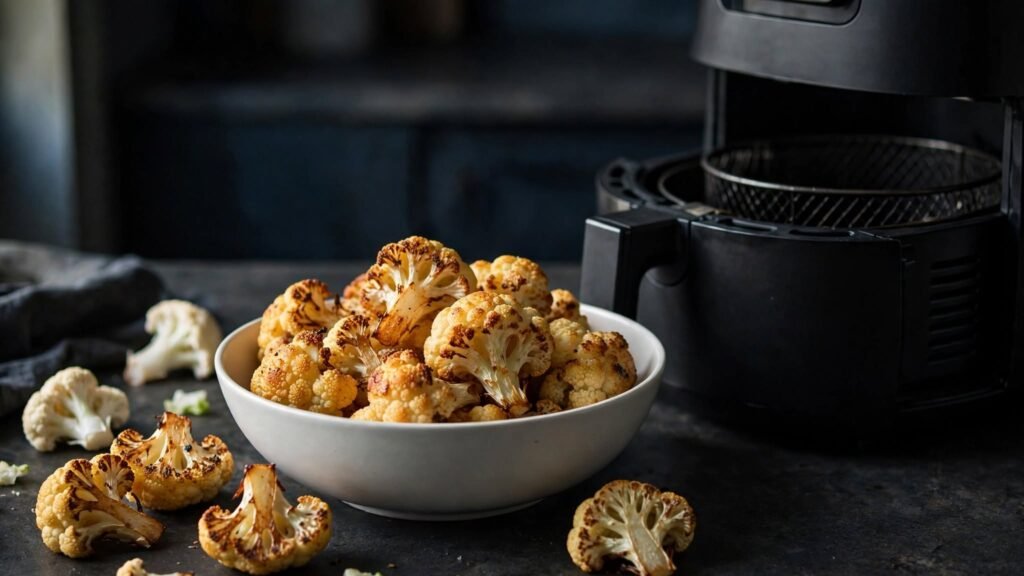
Air fryer cauliflower can be crisp around the edges and tender in the center without turning into a soggy pile of vegetables. The difference usually comes down to a few practical details: how dry the florets are, how evenly they are cut, how much space they have in the basket, and when you add sauces or cheese.
There isn’t one cooking time that works for every air fryer. A small batch of evenly sized florets can brown much faster than a crowded basket of large pieces.
This guide gives you a dependable starting method, explains how to adjust the cooking time, and covers the problems that can leave cauliflower soft, burnt, or unevenly cooked.
The Basic Method
The basic process is straightforward:
- Cut the cauliflower into similar-sized florets.
- Rinse if needed and dry them thoroughly.
- Toss with enough oil to lightly coat the florets.
- Season before cooking.
- Preheat the air fryer if your model or recipe calls for it.
- Arrange the cauliflower with room for airflow.
- Air fry until browned and fork-tender.
- Shake or turn the florets during cooking.
- Add sauces or delicate toppings near the end or after cooking.
The details below explain why each step matters.
Ingredients
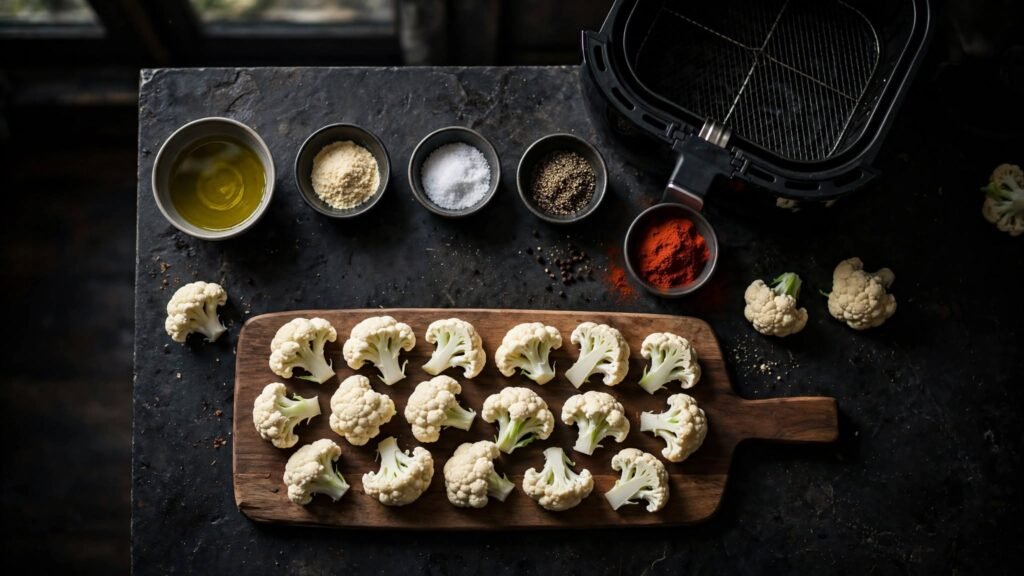
For approximately 4 servings:
- 1 medium head of cauliflower, cut into similar-sized florets
- 1 to 2 tablespoons olive oil, or enough to lightly coat the florets
- ½ teaspoon garlic powder
- ½ teaspoon salt
- ¼ teaspoon black pepper
- ¼ teaspoon paprika, optional
- Red pepper flakes, optional
- Lemon juice, optional, for finishing
The exact amount of oil depends on the size of the cauliflower and how evenly you coat it. The goal is a light coating rather than heavily soaking the florets.
How to Make Air Fryer Cauliflower
1. Cut the Cauliflower Evenly
Cut the cauliflower into florets that are reasonably similar in size.
Pieces around 1½ to 2 inches across are a useful starting point, but you don’t need to measure every piece with a ruler. The important thing is to avoid mixing very small pieces with very large ones.
Small pieces can brown before large pieces become tender.
2. Dry the Florets Thoroughly
Rinse the cauliflower if necessary, then pat it dry with paper towels or a clean kitchen towel.
This is one of the easiest steps to overlook.
Cauliflower that goes into the basket with a lot of surface moisture can take longer to brown because that moisture has to evaporate before the exterior becomes properly crisp.
3. Add Oil and Seasoning
Place the dry florets in a large bowl.
Add the oil, salt, garlic powder, black pepper, and any other dry seasonings you’re using.
Toss until the florets are lightly coated.
You don’t need the cauliflower swimming in oil. A thin, even coating is enough to help with browning and seasoning.
4. Preheat if Appropriate for Your Air Fryer
Preheating can give the cauliflower a fully heated cooking environment from the beginning, but it isn’t essential for every air fryer.
If your model’s instructions recommend preheating, follow them.
As a recipe reference, Well Plated cooks cauliflower at 390°F for 12 to 15 minutes, shaking the basket during cooking. That is a useful example of a specific recipe, not a universal rule for every air fryer.
5. Arrange the Cauliflower in the Basket
Place the florets in as close to a single layer as your basket allows.
A little overlap can happen, especially with a larger batch, but don’t pack the basket tightly.
Air needs to circulate around the cauliflower. If you have more florets than the basket can comfortably hold, cook them in batches.
6. Air Fry at a Moderate-High Temperature
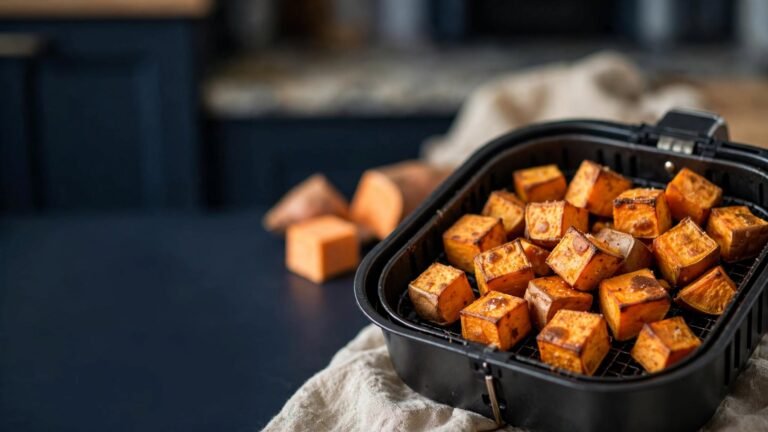
A practical starting range is 375°F to 400°F.
For medium-sized fresh florets, start checking around 10 to 12 minutes.
Depending on the size of the pieces, basket load, and air fryer, the cauliflower may need several more minutes.
Shake the basket once or twice during cooking so the florets brown more evenly.
7. Check for Browning and Tenderness
The cauliflower is ready when:
- the edges are browned,
- the outside has some crisp texture,
- and the center is fork-tender rather than firm and crunchy.
Don’t judge it by color alone. A small floret can become deeply browned while a large one in the same batch is still firm.
Air Fryer Cauliflower Temperature and Time
There is no single correct setting for every air fryer.
Use this as a starting guide:
| Cauliflower Type | Starting Temperature | Approximate Starting Time |
|---|---|---|
| Small fresh florets | 375–400°F | 8–12 minutes |
| Medium fresh florets | 375–400°F | 12–15 minutes |
| Large fresh florets | 375–400°F | 15–18 minutes |
| Frozen florets | 375–400°F | Start checking around 10–12 minutes |
These are starting ranges, not guaranteed cooking times.
Your air fryer’s basket size, airflow, starting temperature, cauliflower quantity, and floret size can all change the result.
If the cauliflower is browned but still firm, continue cooking in short increments. If the edges are becoming too dark before the centers are tender, reduce the temperature slightly.
Fresh vs. Frozen Cauliflower
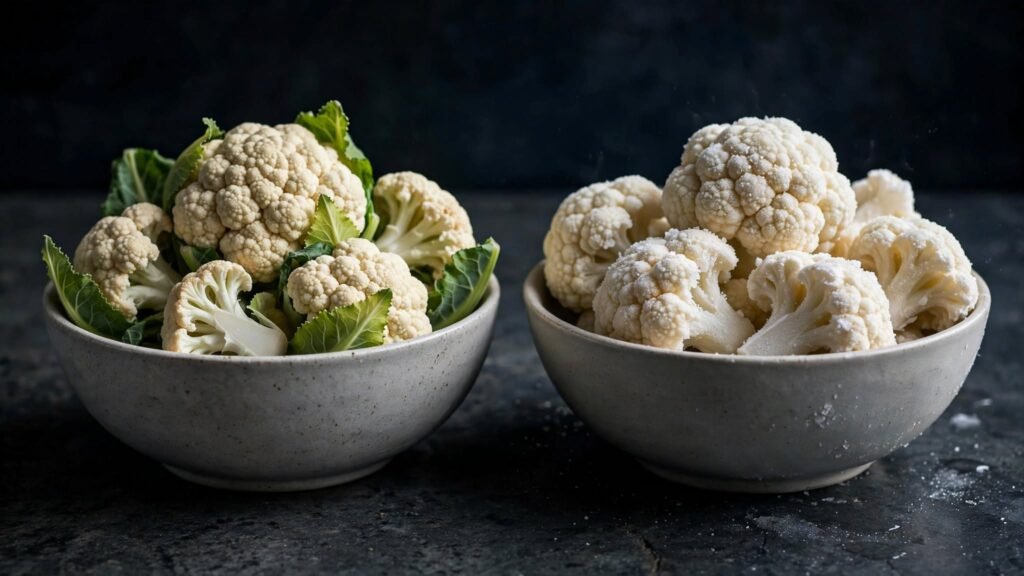
Fresh cauliflower gives you more control over surface moisture because you can dry it thoroughly before cooking.
Frozen cauliflower can also be air fried directly from frozen. There is generally no need to thaw it first.
However, frozen florets can release more moisture as they cook. This can make browning slower, particularly if the basket is crowded.
For the best texture with frozen cauliflower:
- don’t thaw it unless the package instructions call for it,
- avoid overcrowding,
- shake the basket during cooking,
- and allow additional cooking time if needed.
Don’t expect fresh and frozen cauliflower to behave identically. They start with different moisture conditions.
Why Floret Size Matters
Floret size has a direct effect on cooking time.
Small florets have more exposed surface relative to their size, so they can brown quickly.
Large florets have thicker centers and need more time to become tender.
If you combine very small and very large pieces, you can end up with browned small pieces while the larger ones are still firm.
Keeping the pieces reasonably similar in size is one of the simplest ways to improve consistency.
Do You Need to Preheat an Air Fryer for Cauliflower?
Not necessarily.
Preheating can help the cauliflower begin cooking in a fully heated chamber, but some air fryers heat quickly enough that the difference may be small.
If your air fryer’s manual specifically recommends preheating, follow that instruction.
The bigger factors for crisp cauliflower are usually dry florets, adequate airflow, sensible oil use, and avoiding an overloaded basket.
Why Air Fryer Cauliflower Turns Soggy
Soggy cauliflower usually isn’t caused by one mysterious problem.
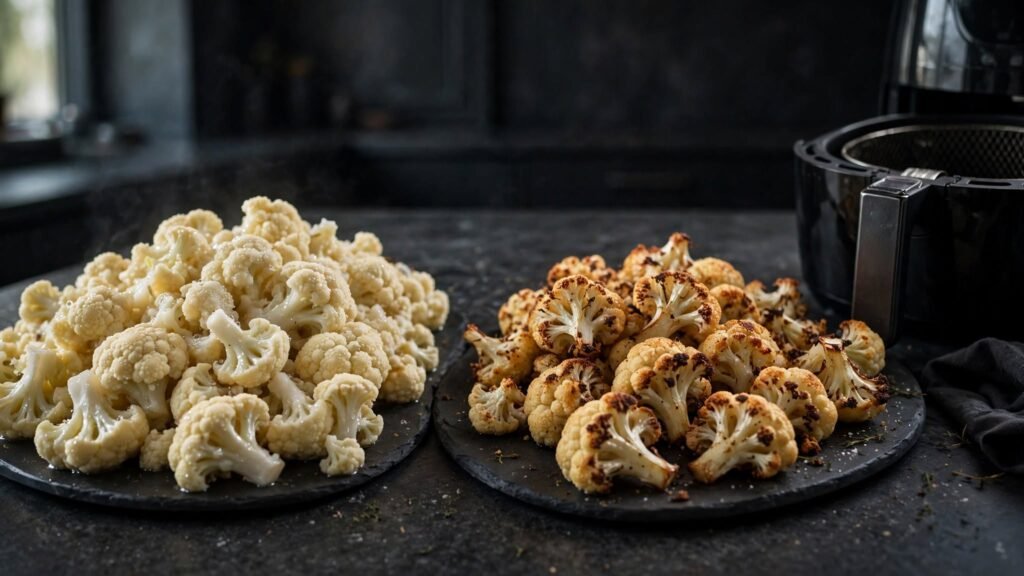
Wet Florets
If the cauliflower is still wet after rinsing, the extra moisture has to evaporate during cooking.
Dry the florets thoroughly before adding oil and seasoning.
Overcrowded Basket
A packed basket makes it harder for hot air to circulate around individual pieces.
If necessary, cook in batches.
Too Much Moisture From Sauce
Buffalo sauce, cheese, or other wet ingredients can soften a crisp exterior.
For the best texture, add sauces after the cauliflower has already browned.
Too Little Cooking Time
Sometimes the cauliflower simply needs more time.
If the center is still firm and the exterior isn’t sufficiently browned, continue cooking in short increments rather than immediately making a large temperature change.
Why the Edges Burn Before the Center Cooks
This usually happens when the florets are too large or unevenly sized, or when the cooking temperature is too aggressive for the batch.
The thinner edges can brown much faster than the dense center becomes tender.
Try:
- cutting large florets into smaller pieces,
- keeping the pieces similar in size,
- lowering the temperature slightly,
- and extending the cooking time.
The goal is to give the center time to soften without allowing the thinner edges to become overly dark.
How to Get Crispy Air Fryer Cauliflower
For better browning, focus on the basics rather than simply increasing the temperature.
Dry It Well
Remove as much surface water as practical before seasoning.
Don’t Overload the Basket
Give the florets enough space for air to move around them.
Use a Light Oil Coating
Too little oil can make browning less consistent, while excessive oil can leave the vegetables greasy.
Shake During Cooking
Shaking helps expose different surfaces to the circulating hot air.
Add Wet Ingredients Later
Sauces are best added after the cauliflower has developed the texture you’re looking for.
Flavor Variations
Once the basic method works, changing the seasoning is easy.
Classic Garlic
Use:
- olive oil
- garlic powder
- salt
- black pepper
Finish with a little lemon juice if desired.
Spicy Cauliflower
Add:
- paprika
- cayenne pepper
- black pepper
- garlic powder
Curry Cauliflower
Try:
- curry powder
- cumin
- turmeric
- salt
- black pepper
Lemon Herb
Season with:
- garlic powder
- oregano
- parsley
- black pepper
Add fresh lemon juice after cooking.
Garlic Parmesan
Cook the cauliflower until nearly crisp, then add grated Parmesan during the final minute or two.
Keep an eye on it because cheese can brown quickly.
How to Make Buffalo Cauliflower

Buffalo cauliflower is best treated as a variation rather than simply pouring sauce over the cauliflower from the beginning.
For a crispier result, cook the cauliflower until browned first, then toss it with buffalo sauce.
If you want a thicker exterior, a separate battered version can work well. Cosori’s official Buffalo Cauliflower recipe, for example, uses a flour-based coating, cooks the cauliflower before adding the sauce, and then returns it to the air fryer briefly after saucing.
Simple Buffalo Method
- Cut the cauliflower into relatively large florets.
- Coat with your chosen seasoning or batter.
- Air fry until browned and crisp.
- Toss with buffalo sauce.
- Return to the air fryer briefly if you want the sauce to set.
- Serve immediately.
Avoid adding a large amount of sauce at the beginning if crispness is your priority.
How to Use Air Fryer Cauliflower
Crispy cauliflower can work as:
- a vegetable side dish,
- a snack,
- an appetizer,
- a grain-bowl topping,
- a salad topping,
- a taco filling,
- or a buffalo-style appetizer.
If you’re building a meal around other air-fryer foods, our Air Fryer Pizza guide is another useful recipe reference.
Storage and Reheating
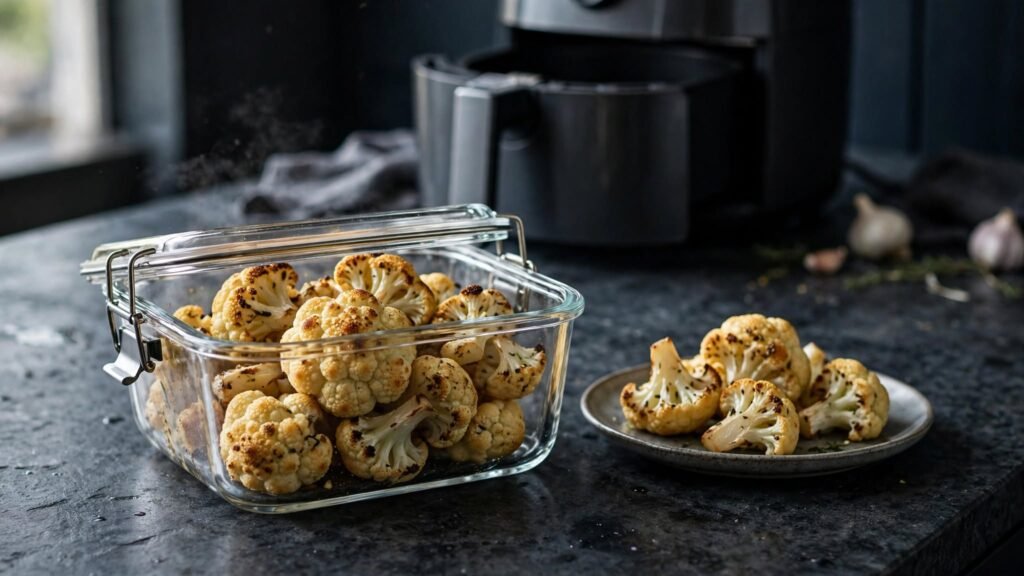
Let cooked cauliflower cool appropriately, then transfer leftovers to an airtight container and refrigerate them.
USDA guidance recommends refrigerating leftovers within 2 hours and using refrigerated leftovers within 3 to 4 days.
For better texture, reheat cauliflower in the air fryer instead of the microwave.
A practical starting point is around 350°F for a few minutes, checking frequently until it is hot and the exterior has regained some crispness.
For food-safety purposes, USDA recommends reheating leftovers to an internal temperature of 165°F.
Common Air Fryer Cauliflower Mistakes
1. Putting Wet Cauliflower in the Basket
Dry the florets before seasoning.
2. Mixing Very Different Floret Sizes
Keep the pieces reasonably uniform.
3. Overcrowding the Basket
Cook in batches when necessary.
4. Using Too Much Oil
The cauliflower only needs a light coating.
5. Adding Sauce Too Early
Wet sauces can interfere with the crisp exterior.
6. Cooking Only by the Timer
Use the clock as a guide, then check browning and tenderness.
7. Increasing the Temperature When the Edges Burn
If the outside is getting too dark, a slightly lower temperature with additional cooking time can be a better adjustment.
8. Expecting Frozen Cauliflower to Behave Like Fresh
Frozen cauliflower carries different moisture conditions, so browning and cooking time can change.
Frequently Asked Questions
How long does cauliflower take in an air fryer?
Fresh cauliflower generally takes around 8 to 18 minutes, depending mainly on floret size, basket load, and temperature. Medium florets often fall around the 12 to 15 minute range.
Treat these as starting points rather than guaranteed times.
How do you make air fryer cauliflower crispy?
Dry the florets thoroughly, cut them into similar sizes, lightly coat them with oil, avoid overcrowding, and shake the basket during cooking. Add wet sauces after the cauliflower has browned.
Can you air fry frozen cauliflower?
Yes. Frozen cauliflower can generally go directly into the air fryer without thawing. Because it can release more moisture, avoid overcrowding and expect the browning time to vary.
Do you need to preheat an air fryer for cauliflower?
No, not necessarily. Preheating can help establish a fully heated cooking environment, but it isn’t required for every model. Follow your air fryer’s instructions when they specify preheating.
Why is my air fryer cauliflower soggy?
The most common practical causes are excess surface moisture, overcrowding, insufficient cooking time, or adding wet sauce too early. Drying the florets and giving them more room usually helps.
Final Conclusion
Good air fryer cauliflower doesn’t depend on one magic temperature or an exact number of minutes.
The more reliable approach is to dry the florets, keep their sizes reasonably consistent, lightly coat them with oil, avoid overcrowding, and check them for both browning and tenderness.
For fresh cauliflower, around 375°F to 400°F is a useful starting range. Frozen cauliflower can also be cooked directly from frozen, but the extra moisture may change how quickly it browns.
If the edges are burning before the center becomes tender, don’t automatically turn up the heat. Adjust the floret size, reduce the temperature slightly, and give the center more time.
Once the basic method is under control, the seasoning is the fun part. Garlic and Parmesan, curry spices, lemon herbs, or buffalo sauce can all take the same basic cauliflower method in a completely different direction.
For leftover safety, follow USDA’s food safety guidance and reheat leftovers thoroughly to 165°F.