Frozen Wings in the Air Fryer: Perfectly Crispy in Minutes
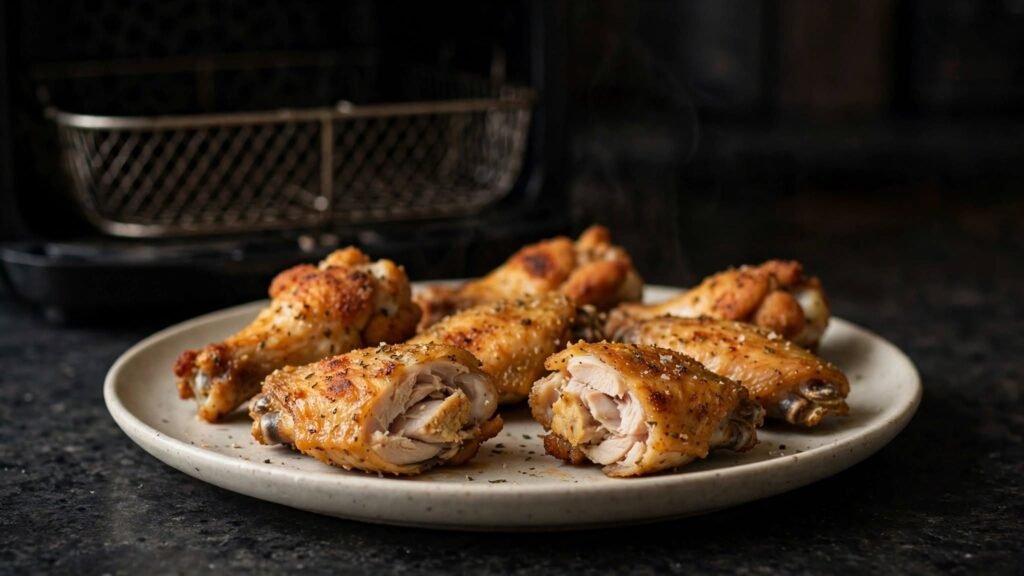
Frozen Wings in the Air Fryer can go straight into the air fryer without thawing first. The trick is knowing what kind of wings you have and giving raw wings enough time to cook through before chasing crispiness.
For raw frozen wings, a short first cooking stage helps separate pieces and remove excess moisture before seasoning. From there, a hotter second stage helps brown and crisp the skin.
Recipe at a Glance
| Detail | Guide |
|---|---|
| Prep Time | 5 minutes |
| Cook Time | About 22–30 minutes for raw frozen wings |
| Temperature | 390–400°F |
| Best For | Raw, unbreaded frozen chicken wings |
| Oil | Light coating, optional but useful |
| Doneness | 165°F in the thickest part |
| Method | Two-stage cooking for raw wings |
Important: Frozen wings are not all the same. Check the package first. Raw wings need to be fully cooked, while fully cooked or breaded products may have different heating instructions.
What Kind of Frozen Wings Do You Have?
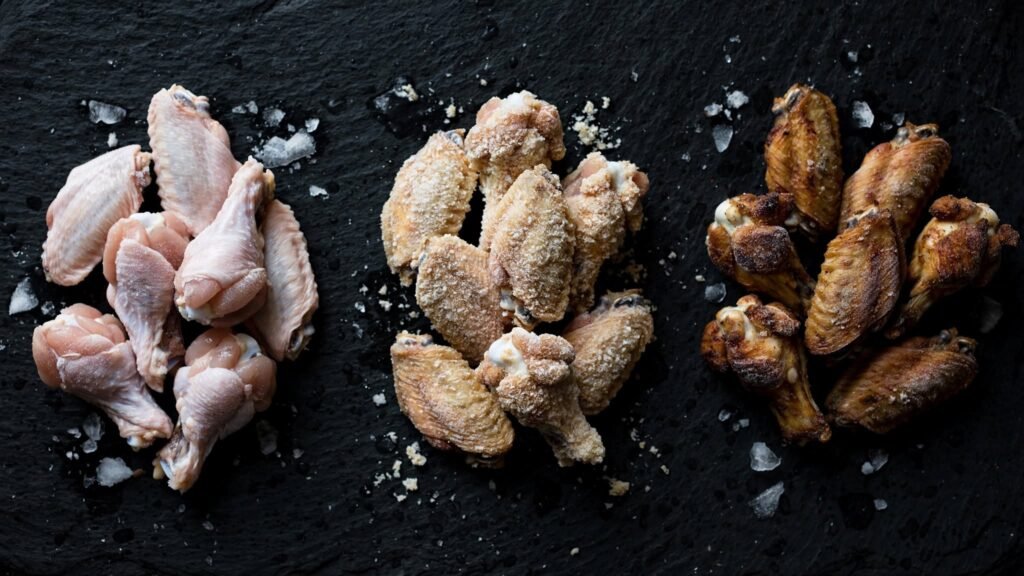
Before setting the air fryer, check the package. The cooking method depends on whether the wings are raw, fully cooked, or breaded.
| Wing Type | Best Approach |
|---|---|
| Raw, unbreaded frozen wings | Cook fully, using the two-stage method below |
| Fully cooked frozen wings | Reheat according to package directions |
| Breaded frozen wings | Follow the package cooking instructions and heat thoroughly |
This distinction matters because a fully cooked wing does not need the same cooking process as raw chicken. If the package gives specific air-fryer instructions, use those as your starting point.
Ingredients
For raw frozen wings:
- Frozen chicken wings, raw and unbreaded
- 1–2 teaspoons oil, or enough for a light coating
- Salt
- Black pepper
- Garlic powder
- Paprika, optional
- Aluminum-free baking powder, optional
- Buffalo, BBQ, or another sauce, optional
You don’t need a heavy coating of oil. The goal is simply to help the seasoning stick and encourage browning.
How to Cook Raw Frozen Wings in the Air Fryer
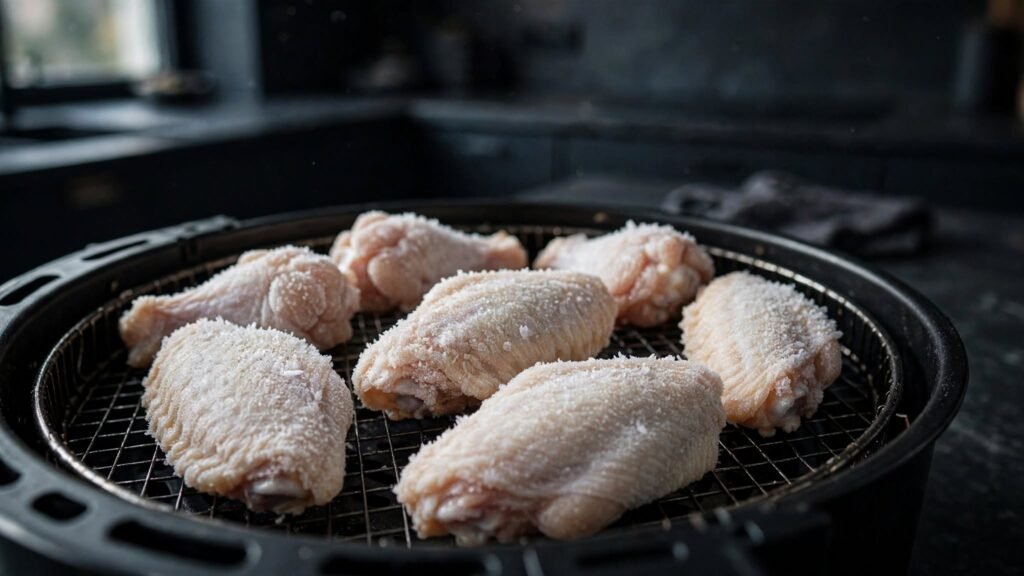
1. Start With the Frozen Wings
Place the frozen wings in the air fryer basket.
If several pieces are frozen together, that’s okay for the first stage. Don’t force them apart with a knife while they’re still solid.
Cook at 390–400°F for about 10 minutes.
This initial stage helps loosen the pieces and releases some of the moisture and rendered fat.
2. Separate and Drain
Carefully remove the basket and separate the wings with tongs.
If a noticeable amount of liquid has collected underneath the wings, carefully drain it before continuing. Excess moisture sitting around the chicken can make the second stage less effective at crisping the skin.
3. Season the Wings
Toss the separated wings with a light coating of oil, then season with salt, pepper, garlic powder, and any other dry seasoning you prefer.
For extra browning, you can add a small amount of aluminum-free baking powder. It can help dry the surface and improve browning, but don’t use too much because it can leave an unpleasant taste.
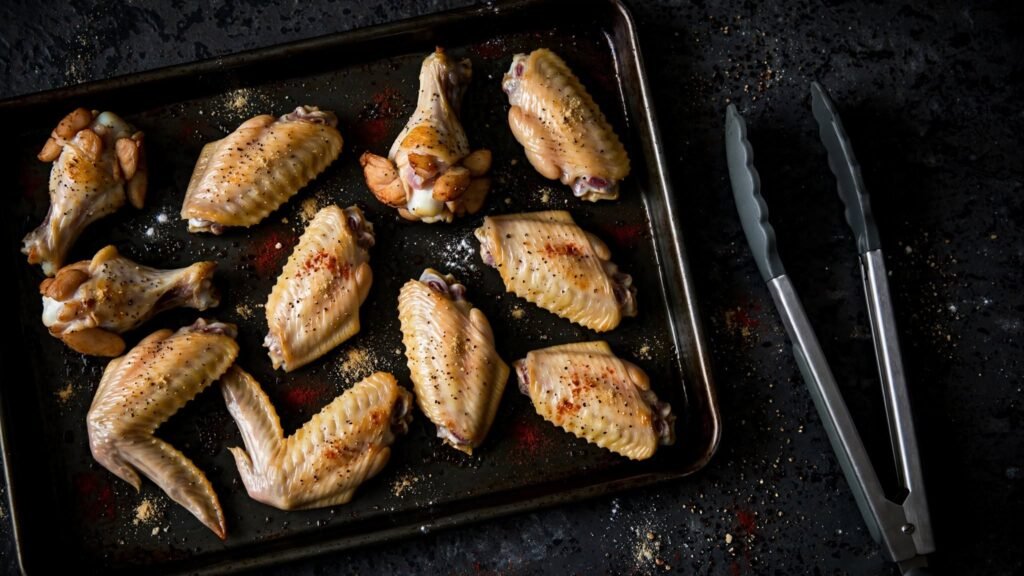
4. Finish at Higher Heat
Return the seasoned wings to the basket in a single layer.
Air fry at 400°F for another 12–20 minutes, turning or shaking them about halfway through.
The exact finishing time depends on wing size, how much food is in the basket, and how efficiently your air fryer circulates heat.
5. Check the Internal Temperature
Don’t judge raw chicken by color alone.
Use a food thermometer in the thickest part of the meat, avoiding the bone. Raw poultry should reach 165°F for food safety.
Once the wings have reached the safe temperature and the skin has reached the level of crispness you want, remove them from the air fryer.
6. Add Sauce After Cooking
If you’re using Buffalo, BBQ, honey garlic, or another sauce, toss the wings after cooking.
Adding a sugary or wet sauce too early can cause it to burn or interfere with browning.
How Long to Cook Frozen Wings
The times below are useful starting points rather than universal guarantees.
| Wing Type | Temperature | Approx. Time | Method |
|---|---|---|---|
| Raw frozen wings | 390–400°F | 22–30 min | Two-stage |
| Fully cooked frozen wings | Follow package | Usually shorter | Reheat |
| Breaded frozen wings | Follow package | Product-dependent | Cook/reheat |
For raw wings, start checking toward the lower end of the range. Larger wings and crowded baskets may need more time.
The thermometer matters more than the clock. USDA recommends cooking poultry to a minimum internal temperature of 165°F.
How to Make Frozen Wings Extra Crispy
Keep the Wings in a Single Layer
Air needs room to circulate around the chicken. If the basket is packed tightly, the wings release moisture into a crowded space and the skin can struggle to crisp.
If necessary, cook in two batches.
Drain Excess Liquid
For raw frozen wings, draining accumulated liquid between the initial and final cooking stages can help prevent the wings from sitting in moisture.
Use Only a Light Oil Coating
More oil doesn’t automatically mean crispier wings. A light coating is enough to help seasoning adhere and encourage browning.
Don’t Add Wet Sauce Too Early
Cook the wings first, then sauce them. This keeps the surface exposed to the hot air while you’re trying to develop crisp skin.
What If the Wings Are Frozen in a Solid Block?
Don’t try to aggressively pull the frozen pieces apart before cooking.
Place the block in the basket for the initial cooking stage. Once the outside has started thawing, separate the wings with tongs.
If the pieces are still firmly stuck together, give them a little more time rather than forcing them apart and damaging the skin.
How Do You Know Frozen Wings Are Done?
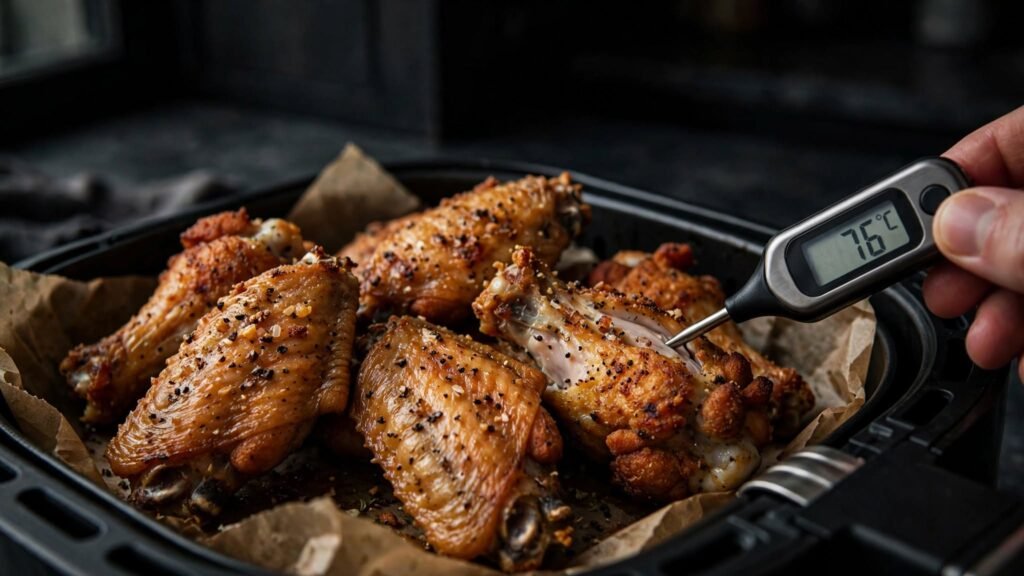
There are two different questions here:
Are they cooked safely?
For raw chicken, check that the thickest part reaches 165°F with a food thermometer.
Are they crispy enough?
That is a texture decision. Once the chicken has reached a safe temperature, you can continue for a short time if you want darker, crispier skin, watching closely so the outside doesn’t burn.
Color alone isn’t a reliable food-safety test. USDA specifically notes that safely cooked poultry can vary in color, so temperature is the better indicator.
Common Problems and Easy Fixes
Wings Are Cooked but Not Crispy
The basket may be too crowded, or excess moisture may be preventing the skin from browning.
Try:
- Cooking fewer wings per batch
- Draining liquid after the initial stage
- Giving the wings more space
- Finishing briefly at 400°F
Wings Are Brown Outside but Not Done Inside
Don’t keep judging by appearance.
Check the thickest part with a thermometer. If raw chicken hasn’t reached 165°F, continue cooking and check again.
Seasoning Falls Off
The wings may be too wet.
After the initial stage, drain excess liquid and lightly coat the wings with oil before adding dry seasoning.
Wings Taste Bitter After Using Baking Powder
Too much baking powder can affect the flavor.
Use only a small amount and make sure you’re using aluminum-free baking powder, not baking soda.
Can You Cook Other Frozen Foods With Wings?
You can build a full freezer-friendly meal around air-fryer foods, but don’t overcrowd the basket just to cook everything at once.
For example, Frozen Hash Brown Patties in the Air Fryer can make an easy side, while Pizza Rolls in the Air Fryer work well as another quick appetizer.
Cook each food according to its own timing rather than forcing everything into the same cycle.
How to Store Leftover Wings
If you have cooked wings left over, refrigerate them promptly in a covered container.
USDA recommends using cooked chicken within 3–4 days when refrigerated at 40°F or below.
Don’t leave cooked wings sitting at room temperature for extended periods. USDA advises refrigerating leftovers within two hours, or within one hour when the surrounding temperature is above 90°F.
How to Reheat Leftover Wings
The air fryer is a good option when you want to bring some crispness back to cooked wings.
A practical starting point is:
- Place the refrigerated wings in a single layer.
- Heat at around 350–375°F.
- Cook until heated through and the coating becomes crisp again.
- Check the internal temperature when needed.
USDA recommends reheating leftovers to 165°F.
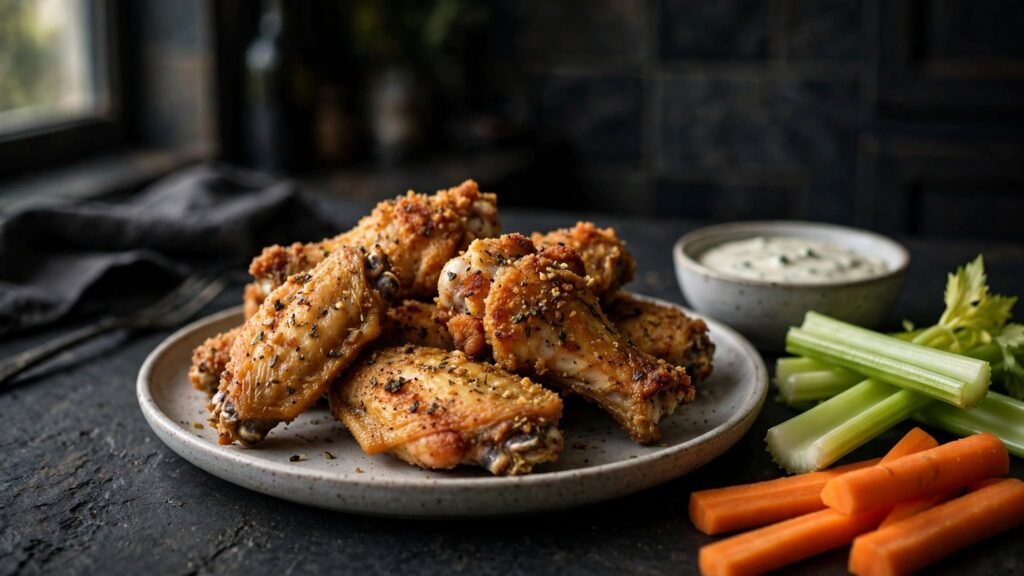
Avoid repeatedly reheating the entire batch. Heat only the amount you’re planning to eat.
Common Mistakes to Avoid
- Treating every frozen wing as the same product: raw, fully cooked, and breaded wings can have different instructions.
- Overcrowding the basket: more wings isn’t always a better batch.
- Skipping the temperature check on raw chicken: crisp skin doesn’t prove the center is safe.
- Using too much baking powder: it can affect the flavor.
- Adding sauce before crisping: wet sauces can interfere with browning.
- Forcing frozen pieces apart: let the initial cooking stage loosen them naturally.
- Following the clock blindly: air fryer performance and wing size vary.
FAQs
Can I cook raw chicken wings straight from frozen?
Yes. Raw frozen wings can be cooked directly in an air fryer. A two-stage approach can make them easier to separate and helps manage the moisture released during the initial cooking stage. Always cook raw poultry to 165°F internally.
Do I need to thaw frozen wings first?
No, not necessarily. The method above starts with the wings frozen. However, if your package provides specific cooking instructions, follow those directions.
Do frozen wings need oil?
A light coating can help raw wings brown and helps dry seasoning stick. You don’t need to drench them in oil.
Why are my frozen wings soggy?
The most likely causes are overcrowding, excess moisture, or not giving the wings enough time to brown after the initial cooking stage.
Can I put sauce on frozen wings before air frying?
It’s better to crisp the wings first and add sauce afterward, particularly when the sauce contains sugar. This reduces the chance of the sauce burning before the chicken is finished.
What temperature should frozen raw wings reach?
Raw chicken wings should reach a minimum internal temperature of 165°F, measured with a food thermometer in the thickest part.
How long can cooked wings stay in the refrigerator?
USDA recommends using cooked chicken within 3–4 days when properly refrigerated.
Final Conclusion
Frozen wings don’t need a complicated setup, but the type of wings and the amount in the basket matter. For raw frozen wings, starting with a short cooking stage helps separate the pieces and manage excess moisture before seasoning and crisping them at higher heat.
Keep the basket from becoming crowded, use only a light coating of oil, and don’t rely on skin color alone to judge raw chicken. The important safety checkpoint is 165°F in the thickest part.
For more detailed poultry safety guidance, USDA’s chicken food-safety guidance is a useful reference.